Proper hollow ultrafiltration membrane storage and maintenance is critical to preserving membrane performance, extending service life, and protecting capital investment in water treatment systems. Improper storage conditions can lead to irreversible membrane damage, biological growth, pore collapse, and permanent flux loss. According to industry data, membranes subjected to improper storage protocols can lose 30-50% of their initial flux within the first three months of idle operation. This guide provides comprehensive procedures for storing, maintaining, and preserving hollow fiber UF membrane modules across various operational scenarios.
Importance of Proper Hollow Ultrafiltration Membrane Storage
Hollow fiber ultrafiltration membranes are sophisticated filtration devices that require specific environmental conditions to maintain their structural integrity and separation performance. Correct hollow ultrafiltration membrane storage matters whenever modules are not in active service — during shipping, installation delays, seasonal shutdowns, or equipment standby — because appropriate preservation measures prevent biological fouling, membrane dehydration, chemical degradation, and physical damage. The global UF membrane market growth has increased the need for standardized storage protocols, particularly as membrane modules may be transported across diverse climate zones before installation. For a review of how UF membranes work and their operating principles, see our hollow fiber ultrafiltration membrane guide.
Key Storage Requirements for Hollow UF Membranes
Influent Water Quality Requirements
Before any storage procedure, the feed water used for membrane preservation must meet specific quality standards to prevent introducing contaminants that could damage the membrane during storage. Water quality is the foundation of every hollow ultrafiltration membrane storage protocol. The key water quality parameters for UF membrane storage are: turbidity below 5 degrees NTU, particle size below 5 microns, suspended solids below 5 mg/L, and pH between 2 and 13. Additionally, the feed water temperature must not exceed 50 °C for polysulfone and PES membranes, and it is recommended to use ultrafiltered water for backwashing and storage preparation to ensure the highest water quality.
Installation Environment Conditions
Ultrafiltration equipment should be installed in a controlled environment with an ambient temperature range of 4 °C to 30 °C. Temperatures below 4 °C risk freezing damage to the membrane fibers and housing, while temperatures above 30 °C accelerate biological activity and chemical degradation of preservation solutions. The installation area should be protected from direct sunlight, which can promote algae growth and degrade polymeric membrane materials through UV exposure. Adequate ventilation is also necessary to prevent condensation and humidity accumulation around the membrane modules.
Long-Term Storage With Chemical Preservation
If an ultrafiltration membrane module or device will not be used for an extended period exceeding one week, a chemical preservation solution must be prepared to fill the membrane module for hollow ultrafiltration membrane storage. The recommended preservation solution is a 2% sodium hypochlorite (NaClO) solution or a 0.5% to 1% hydrogen peroxide (H2O2) solution. These biocidal agents prevent biological growth within the membrane fibers and maintain sterile conditions during storage. The preservation fluid must be replaced every 3 months to maintain its biocidal effectiveness, as the active chemical concentration gradually decreases over time due to decomposition and diffusion. Prior to placing the module back into service, the preservation solution must be thoroughly flushed from the system.
Maintenance and Cleaning Procedures
Chemical Cleaning for Blocked Membranes
When a membrane module becomes blocked after prolonged use and the permeate flux has declined significantly, a systematic cleaning procedure should be implemented. The recommended protocol begins with cleaning using a 1% hydrogen peroxide solution to oxidize organic foulants and disinfect the membrane surface. Following this initial cleaning, the membrane should be soaked in a dilute acid (5-10% citric acid or hydrochloric acid) or dilute alkali (5-10% sodium hydroxide) solution, depending on the nature of the fouling. Acid cleaning is effective for removing inorganic scale and metal hydroxide deposits, while alkaline cleaning targets organic fouling, biofilms, and oil-based contaminants. The cleaning solutions should be circulated through the system repeatedly to maximize contact time and cleaning effectiveness. For the related operating parameters that prevent blocking in the first place, see our ultrafiltration membrane operating parameters guide.
Startup and Flushing Procedures
After any storage period or cleaning procedure, the membrane system must be operated with clean water for a minimum of 1 hour before being placed into normal service. During this startup period, the filtered solution (permeate) must be discharged to waste rather than collected for use. This flushing step is the final stage of every correct hollow ultrafiltration membrane storage cycle, ensuring that any residual preservation chemicals, cleaning agents, or dislodged foulants are completely removed from the system. The flush water should be tested for pH and chlorine residual to confirm that chemical levels have returned to normal operating ranges before directing permeate to the product water stream.
Wet vs. Dry Storage Considerations
The ultrafiltration membrane module or device should always be stored in a wet state and never allowed to dry out completely. Hollow fiber UF membranes that are permitted to dry undergo irreversible pore collapse and structural shrinkage, resulting in permanent flux loss that cannot be recovered through cleaning or conditioning. When membranes are stored wet, the water within the pore structure maintains the integrity of the membrane matrix and prevents the polymer chains from collapsing into a denser, less permeable configuration. This makes wet-state handling the first rule of hollow ultrafiltration membrane storage.
For short-term storage (less than one week), simply keeping the membrane module filled with clean, ultrafiltered water is sufficient. The system should be sealed to prevent evaporation and contamination. For medium-term storage (one week to three months), a chemical preservation solution as described above is required. For long-term storage exceeding three months, the preservation solution should be refreshed quarterly, and the membrane module should be checked periodically for visible signs of biological growth or chemical precipitation.
| Storage Duration | Preservation Method | Key Requirements |
| Short-term (< 1 week) | Clean ultrafiltered water fill | Seal system; prevent evaporation and contamination |
| Medium-term (1 week – 3 months) | 2% NaClO or 0.5-1% H2O2 solution | Biocidal fill; flush thoroughly before restart |
| Long-term (> 3 months) | Chemical preservation, refreshed quarterly | Inspect periodically for bio-growth or precipitation |
Latest Trends in UF Membrane Maintenance (2024-2025)
The UF membrane maintenance industry is evolving with new technologies and best practices. Automated chemical dosing systems with real-time monitoring of preservation solution concentration now enable precise maintenance of biocidal levels during long-term storage, reducing chemical consumption by 20-30% compared to manual replacement schedules. Advanced membrane autopsy services using scanning electron microscopy (SEM) and energy-dispersive X-ray spectroscopy (EDS) allow operators to identify specific fouling mechanisms and tailor cleaning protocols accordingly.
The development of in-situ membrane integrity testing using pressure decay tests and air-liquid displacement methods has made it possible to verify membrane condition before and after storage without removing modules from the housing. Additionally, new generation hollow fiber membranes with enhanced hydrophilic properties and reduced fouling tendencies require less aggressive cleaning protocols, extending the interval between chemical cleanings by 30-50% compared to conventional UF membranes. These advances complement the ultrafiltration membrane performance factors covered in our companion guide, helping operators protect flux and service life through every phase of module life.
Conclusion
Reliable hollow ultrafiltration membrane storage protects the flux, integrity, and service life of hollow fiber UF modules across shipping, standby, and seasonal shutdowns. Keep modules wet at all times, use ultrafiltered water meeting turbidity below 5 NTU and pH 2-13, apply 2% NaClO or 0.5-1% H2O2 preservation for idle periods beyond one week, refresh the solution quarterly, and flush thoroughly for at least 1 hour before returning the system to service. Pairing these storage procedures with routine chemical cleaning and startup checks prevents the 30-50% flux losses seen with improper protocols and maximizes the return on your membrane investment.
Need help selecting, storing, or maintaining UF membranes for your process? Contact us at [email protected], [email protected], or [email protected] for expert guidance and the best price.
FAQ: UF Membrane Storage and Maintenance
Q1: What water quality is required for hollow UF membrane storage?
Turbidity below 5 NTU, particle size below 5 microns, suspended solids below 5 mg/L, and pH between 2 and 13. Feed water temperature must not exceed 50 °C for polysulfone and PES membranes, and ultrafiltered water is recommended for backwashing and storage preparation.
Q2: How long can a hollow UF membrane be stored without chemical preservation?
For short-term storage of less than one week, keeping the module filled with clean, sealed ultrafiltered water is sufficient. Any idle period beyond one week requires a chemical preservation solution such as 2% sodium hypochlorite or 0.5-1% hydrogen peroxide.
Q3: How often must the preservation solution be replaced?
The preservation fluid should be replaced every 3 months, because the active chemical concentration gradually decreases over time through decomposition and diffusion. This quarterly refresh is the maintenance anchor of any hollow ultrafiltration membrane storage plan lasting beyond one quarter. For storage exceeding three months, refresh quarterly and inspect the module periodically for biological growth or chemical precipitation.
Q4: How should a blocked UF membrane be chemically cleaned?
Begin with a 1% hydrogen peroxide solution to oxidize organic foulants and disinfect the surface, then soak in dilute acid (5-10% citric or hydrochloric acid) for inorganic scale and metal hydroxide deposits, or dilute alkali (5-10% sodium hydroxide) for organic fouling, biofilms, and oil-based contaminants. Circulate the solutions repeatedly to maximize contact time.
Q5: Why must UF membranes never be allowed to dry out?
Hollow fiber UF membranes that dry out undergo irreversible pore collapse and structural shrinkage, causing permanent flux loss that cannot be recovered through cleaning or conditioning. Storing modules wet keeps water inside the pore structure, maintaining the membrane matrix and preventing polymer chains from collapsing into a denser configuration.
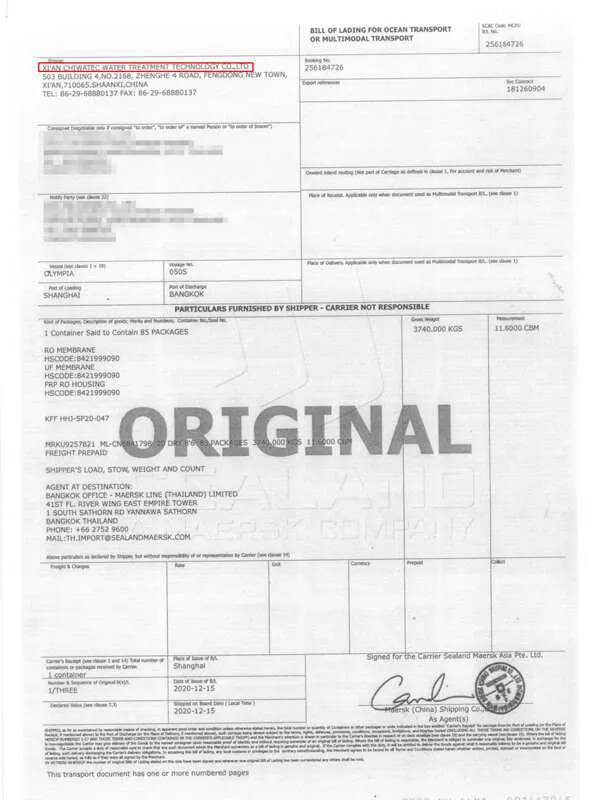
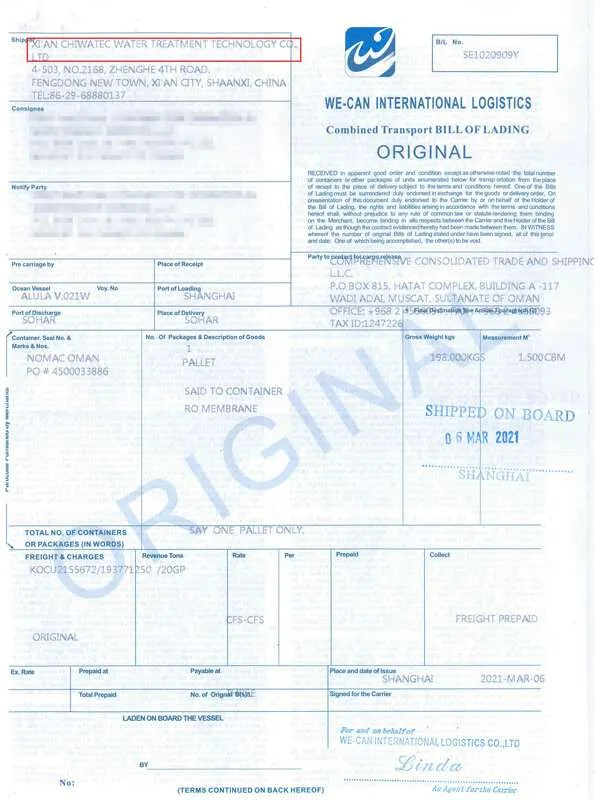
Xi’an CHIWATEC Water Treatment Technology provides RO membranes to clients both inland and overseas with more than 10 years of experience. We manufacture our own Daltonen RO membrane brand and are the official distributor of Dupont, Toray, CSM, Nitto, LG and Vontron RO membranes. Whatever product you need, we can meet your requirement.
Contact us for more information and the best price: [email protected], [email protected], [email protected]