A hollow fiber ultrafiltration membrane is a self-supporting capillary membrane used to separate macromolecules, colloids, and particles from water at pressures far below reverse osmosis. The membrane surface carries a microporous structure: small molecular solutes and water pass through the pores, while larger macromolecules are retained, so the concentration of macromolecules in the feed increases and the permeate is purified. Hollow fiber geometry packs thousands of fine tubes into one module, giving the highest membrane area per unit volume of any configuration. These characteristics make the hollow fiber ultrafiltration membrane the standard technology for drinking water production, wastewater reuse, pharmaceutical water, and ultrapure water pretreatment. This guide covers the separation principles, key characteristics, applications, and benefits of hollow fiber UF membranes. For the fundamental separation physics, see our membrane separation principle guide.
1. Separation Principles of Hollow Fiber Ultrafiltration
The hollow fiber ultrafiltration membrane separates substances through a purely physical sieving mechanism driven by pressure. Feed water flows through the bore of the fiber or around the outside of the bundle, and applied pressure pushes water and small solutes through the microporous membrane wall while macromolecules, colloids, bacteria, and particles above the membrane’s molecular weight cutoff are retained. Unlike reverse osmosis, which separates dissolved salts by diffusion through a dense skin layer, ultrafiltration works at much lower pressure because its pores are larger — typically removing species in the range of 1,000 to 500,000 Daltons. The retained material accumulates on the membrane surface and concentrates in the retentate stream, which is exactly the separation and purification effect the process is designed to achieve.
2. Key Characteristics of Hollow Fiber Membranes
Four characteristics make the hollow fiber ultrafiltration membrane the preferred configuration for large water treatment plants. First, high packing density: the compact design of thousands of fibers per module enables efficient use of space without compromising performance, so a plant can treat a large flow in a small footprint. Second, simple structure: the self-supporting fibers require no feed spacers or pressure vessels, making installation and maintenance user-friendly. Third, energy efficiency: ultrafiltration operates at normal temperatures without phase changes, contributing to energy savings and reducing operational costs compared with thermal or high-pressure processes. Fourth, dynamic filtration: the flow configuration helps prevent or reduce the deposition of retained substances on the membrane surface, maintaining high permeate flow rates over long operating cycles.
| Feature | Hollow Fiber UF | Spiral-Wound RO/NF | Flat-Plate UF |
| Packing density | Highest (thousands of fibers/module) | High | Low |
| Operating pressure | 0.1–0.5 MPa | 1.5–7.0 MPa | 0.1–0.5 MPa |
| Backwash capability | Yes (inside-out or outside-in) | No | Limited |
| Typical removal | Macromolecules, colloids, bacteria | Dissolved salts | Macromolecules, colloids |
The comparison highlights the practical advantage of hollow fiber geometry: it combines high packing density with the ability to backwash, which keeps fouling manageable in drinking water and wastewater duty.
3. Applications in Pharmaceutical and Biopharmaceutical Water
The hollow fiber ultrafiltration membrane is used in GMP-compliant water treatment systems, ensuring sterile conditions for pharmaceutical manufacturing. In pharmaceutical plants, UF membranes produce water for injection (WFI) pretreatment, buffer preparation, and bioprocess feed streams, removing bacteria, endotoxins, and particulates before final purification. The advantage of hollow fiber UF in this duty is reliability: the membrane provides a consistent physical barrier whose performance is verifiable by integrity testing, which is a regulatory requirement in pharmaceutical water systems. Because the fibers can be cleaned and sanitized in place with hot water or chemicals, the system meets the validation requirements of GMP environments without the complexity of disposable filters.
4. Applications in Drinking Water and Wastewater Treatment
In municipal and industrial water treatment, the hollow fiber ultrafiltration membrane is essential for producing high-quality drinking water, reclaiming water, and treating wastewater. UF removes turbidity, colloids, bacteria, and protozoa such as Giardia and Cryptosporidium, providing a barrier that reliably meets drinking water standards even when the feed quality fluctuates. In wastewater reuse, UF is the standard pretreatment ahead of reverse osmosis: it protects the RO membranes from fouling by removing particles and organics that would otherwise plug the spiral elements. The same logic applies in industrial water recycling, where UF systems recover water from process streams and cooling water, reducing fresh water intake and discharge volumes. Because the fibers tolerate backwashing and chemical cleaning, they handle the fouling load of real-world feeds far better than any spiral configuration.
5. Applications in Food, Beverage, and Electronics
The hollow fiber ultrafiltration membrane serves two very different industries with the same requirement: pure water. In food and beverage production, UF provides formulation water for beverages and cosmetics, ensuring product safety and quality by removing microbes and particulates without the taste impact of chemical disinfection. Clarification of juices, wine, and dairy streams is another UF role, where the membrane replaces fining agents and centrifugation with a cleaner, higher-yield process. In the electronics industry, UF prepares ultrapure water critical for semiconductor and display manufacturing — the first barrier in a train that ends with RO and electrodeionization. In both cases the hollow fiber configuration is chosen for its flux stability and cleanability, which keep the cost per cubic meter of ultrapure water low.
6. Industrial Waste Management Applications
Industrial waste management is a growing application for the hollow fiber ultrafiltration membrane. UF systems effectively treat dye, pigment, and oily wastewater, minimizing environmental impact and improving product recovery rates. In textile and dye production, UF concentrates dyes and pigments for recovery while the permeate is reused, cutting both pollutant load and water consumption. In metalworking and petrochemical plants, UF breaks oil-water emulsions and recovers oil while discharging clean water. The key advantage in these tough streams is the membrane’s resistance to fouling combined with aggressive cleaning options — the hollow fibers can be backwashed and chemically cleaned, restoring flux even after heavy exposure to oils, dyes, and suspended solids.
7. Benefits of Membrane Separation Technology
Membrane separation technology is gaining popularity because of three structural benefits that the hollow fiber ultrafiltration membrane delivers in full. The first is energy savings: ultrafiltration significantly reduces energy consumption compared with traditional filtration methods, because it operates at low pressure with no phase change. The second is operational efficiency: UF simplifies processes while enhancing control over water quality — one membrane barrier replaces coagulation, sedimentation, and media filtration in many applications, and its performance is measurable and consistent. The third is environmental sustainability: UF minimizes waste and meets clean production standards, contributing to sustainability goals by recovering water and reducing chemical use. Together, these benefits explain why UF has displaced conventional pretreatment in most new water plants.
8. Research and Innovation in Hollow Fiber Membranes
Current research focuses on developing microporous polyethylene hollow fibers and hydrophilic modifications that push performance further. Innovations include improved membrane production techniques and enhanced water permeability, making these membranes ideal for water purification and sewage treatment. The goal of this research is high-porosity membranes with stable hydrophilicity — hydrophilic surfaces resist fouling because organic matter adheres less readily to water-wetted surfaces, and stable hydrophilicity means the resistance persists through repeated cleaning cycles. These advances matter for the hollow fiber ultrafiltration membrane because they directly translate into lower operating pressure, longer cleaning intervals, and higher recovery in large plants. For the maintenance routines that keep UF and other membrane systems performing, see our microfiltration membrane maintenance guide — the same principles apply across membrane technologies.
Conclusion
The hollow fiber ultrafiltration membrane is the workhorse of modern water treatment: it combines the highest packing density of any membrane configuration with the ability to backwash, making it the most economical way to remove particles, colloids, and microbes from large water flows. From GMP pharmaceutical water to drinking water production, wastewater reuse, ultrapure water, and industrial waste recovery, the same technology delivers a verifiable barrier at low pressure and low energy cost. The research direction — higher porosity, stable hydrophilicity, and better fouling resistance — will keep hollow fiber UF at the center of water treatment for years to come. For guidance on selecting UF or RO membranes for your application, contact us at [email protected] or [email protected].
FAQ:
What is the difference between a hollow fiber and a spiral-wound membrane?
Hollow fiber membranes are self-supporting capillary tubes packed by the thousands into a module, giving the highest membrane area per volume. Spiral-wound membranes are flat sheets wrapped around a permeate tube and housed in a pressure vessel. Hollow fiber UF operates at low pressure (0.1–0.5 MPa) and can be backwashed; spiral-wound RO/NF operates at high pressure and cannot. Hollow fiber is chosen for particle and microbe removal; spiral-wound for dissolved salt removal.
What does a hollow fiber ultrafiltration membrane remove?
UF removes macromolecules, colloids, bacteria, protozoa, and particles above its molecular weight cutoff — typically 1,000 to 500,000 Daltons. It does not remove dissolved salts, which is why UF is used as pretreatment before RO rather than as a desalination step. The membrane retains suspended and biological material while allowing water and small solutes to pass.
How long do hollow fiber UF membranes last?
Hollow fiber UF modules typically last 5–10 years in municipal and industrial service when operated and cleaned correctly. Their life depends on feed quality, fouling load, and the effectiveness of backwashing and chemical cleaning. Regular integrity testing and cleaning on performance data — flux decline or pressure rise — are the main factors that extend membrane life.
Can hollow fiber UF membranes be backwashed?
Yes. Backwashing is a defining advantage of hollow fiber UF: flow is reversed so permeate flushes retained material off the membrane surface, restoring flux without chemicals. Both inside-out and outside-in hollow fiber configurations support backwashing, which is why UF handles high-fouling feeds such as wastewater and surface water better than spiral-wound membranes.
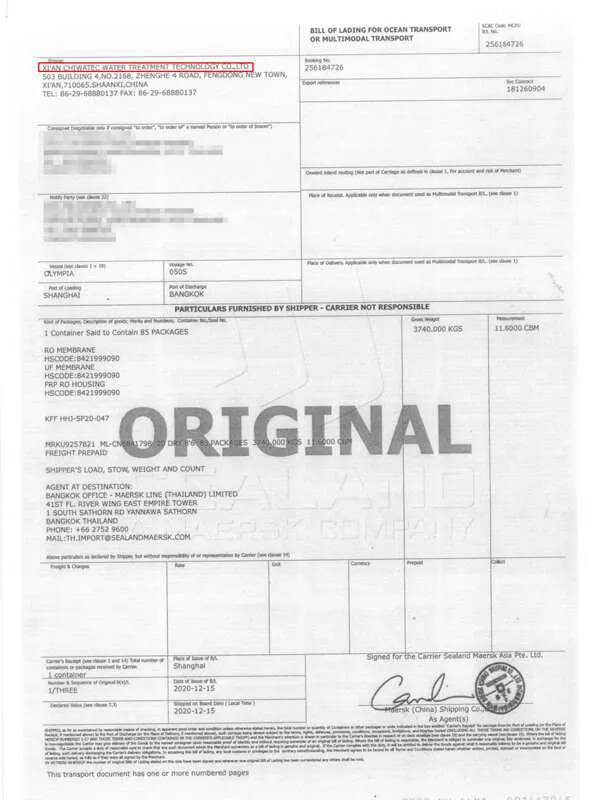
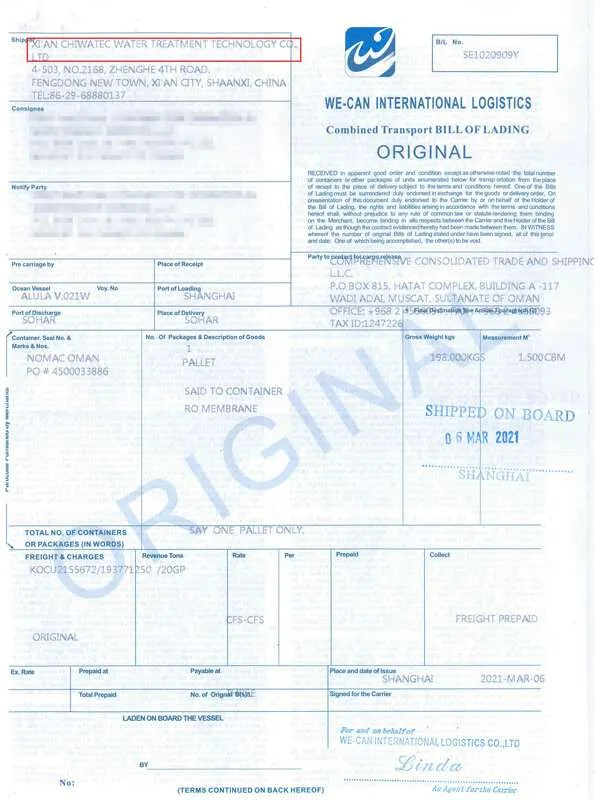
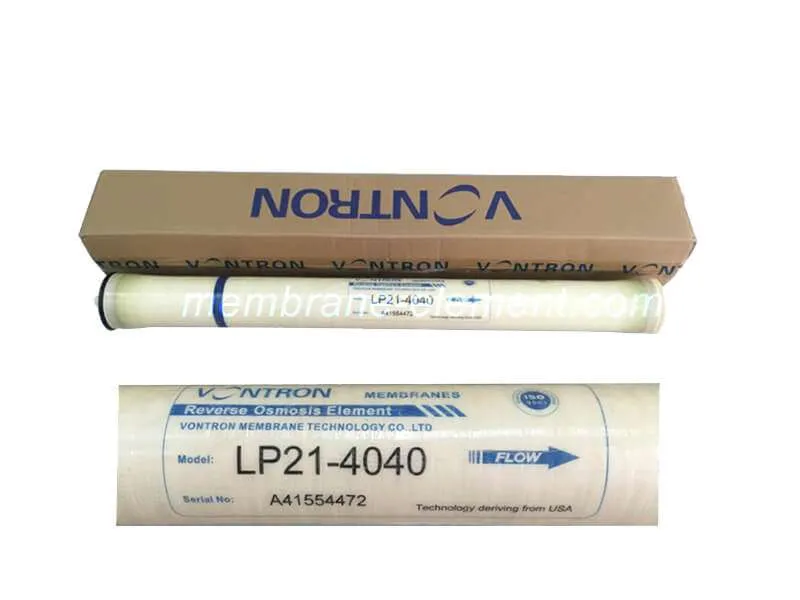
Xi’an CHIWATEC Water Treatment Technology provide the RO membrane to clients both inland and oversea with more than 10years experience. We manufacture our own brand Daltonen RO membrane and we are also the official distributor of Dupont, Toray, CSM, Nitto, LG and Vontron RO membrane. Whatever product you need, we cold meet your requirement.
Contact me for more info and best price.