Ultrafiltration Membrane Cleaning keeps membrane flux high, extends element service life and lowers operating costs in water treatment systems. When suspended solids, colloids, organic matter or microbial growth foul the membrane, a combined physical and chemical ultrafiltration membrane cleaning program restores performance. This guide covers hydraulic backflushing, isobaric cleaning, gas-liquid pulse techniques and chemical cleaning protocols based on established industry practice.
The global UF membrane market reached USD 5.6 billion in 2024 and is projected to grow to USD 10.2 billion by 2034 at a CAGR of 6.1%. With UF elements operating at 0.01-0.1 µm pore size in drinking water, industrial and RO-pretreatment duty, cleaning discipline decides uptime. Physical methods handle routine fouling without chemicals; chemical cleaning removes the stubborn deposits that resist hydraulic removal. For the filtration principles behind these elements, see the ultrafiltration membrane filtration guide.
Last Updated: September 2026 | Industry-Verified Technical Data
Why Regular Ultrafiltration Membrane Cleaning Matters
UF membranes foul from iron and aluminum colloids, organic matter, suspended solids and microbial biofilms. Without regular ultrafiltration membrane cleaning, membrane flux can decline by 30-50% within weeks, energy consumption climbs and system productivity falls.
Pre-filters with 5-10 µm pores upstream remove the larger suspended solids, yet sub-micron colloids and dissolved organics pass straight through that guard, so periodic ultrafiltration membrane cleaning remains unavoidable. Physical methods handle routine maintenance; chemical cleaning is reserved for the stubborn deposits that resist hydraulic removal.
Physical Cleaning Methods for UF Membranes
Physical methods use hydraulic force, pressure manipulation and mechanical action to dislodge foulants, so every routine ultrafiltration membrane cleaning program can run them frequently without chemicals and without membrane damage. The table below compares the main techniques with their typical flux recovery.
| Method | Mechanism | Best For | Flux Recovery |
| High-speed water flushing | Reduced operating pressure with increased feed circulation velocity | Loose surface deposits, reversible fouling | 40-60% |
| Backflushing (internal pressure) | Reverse permeate flow through membrane pores | Internal pore blockage, wall deposits | 50-80% |
| Backflushing (external pressure) | Cross-flow with permeate outlet closed | External surface fouling, cake layer | 50-70% |
| Isobaric cleaning | Equalizing pressure across the membrane (zero transmembrane pressure) | Hollow fiber membranes, surface foulants | 60-75% |
| Negative pressure cleaning | Suction creating a vacuum on the permeate side | Gentle cleaning for delicate membranes | 40-60% |
| Gas-liquid pulse | High-pressure gas (0.2-0.5 MPa) expanding membrane pores | Stubborn organic and colloidal fouling | >90% |
| Electric field / pulse cleaning | Electro-osmotic backwashing or pulsed electrolysis | Charged colloids, biofilms | 60-85% |
The best method depends on membrane configuration (hollow fiber versus flat sheet, internal versus external pressure), the foulant nature and system design constraints. For configuration-specific procedures, see the hollow fiber UF membrane cleaning guide.
Hydraulic Cleaning and Backflushing Techniques
Hydraulic techniques are the workhorse of physical ultrafiltration membrane cleaning. They manipulate flow and pressure to dislodge foulants:
- High-speed water flushing — reduce operating pressure and raise the circulation velocity of the retained liquid. The high cross-flow velocity creates shear forces that sweep away loosely attached deposits, and combining flow pulses with reverse flushing improves efficiency further.
- Internal pressure backflushing, method one — reverse the washing liquid through the membrane to remove dirt on the inner fiber wall. The washing liquid must be free of suspended matter so it cannot block the spongy bottom layer of the hollow fiber. Run two ultrafilters in parallel and use one unit’s effluent to backwash the other. Backwashing typically needs 20-30 minutes at reduced operating pressure to prevent membrane rupture.
- Internal pressure backflushing, method two — close the permeate outlet and use the feed liquid for circulation cleaning. With high flow velocity inside the fiber cavity, the inlet section keeps higher internal pressure and produces filtrate, while the outlet section sees higher external pressure and flows filtrate back into the fiber. This internal circulation dislodges deposits.
- Alternating backflush strategy — run two sets of internal pressure hollow fiber membranes in rotation: 10 minutes of operation followed by 1 minute of backflushing. This continuous backflush-while-working approach prevents pore blockage before it becomes severe and maintains high flux without cleaning agents or disassembly. The control system must switch reliably to avoid premature membrane aging.
- External pressure (isobaric) washing — depressurize the system, close the ultrafiltrate outlet and raise the feed flow. The fiber cavity pressure then matches the external pressure at zero transmembrane pressure, so retained solute molecules suspend in the solution and discharge with the concentrated water.
- Negative pressure cleaning — place the membrane functional surface under suction. Because the external shell side stays at atmospheric pressure, the maximum transmembrane pressure difference is one atmosphere, which keeps the method gentle while still removing surface deposits.
Perform these hydraulic routines daily or weekly depending on feed water quality and operating conditions; they form the foundation of every routine ultrafiltration membrane cleaning program.
Gas-Liquid Pulse and Advanced Physical Cleaning
When stubborn fouling resists standard hydraulic cleaning, advanced physical ultrafiltration membrane cleaning techniques add extra cleaning force:
- Gas-liquid pulse cleaning — inject high-pressure air or nitrogen (0.2-0.5 MPa) into the membrane filter gap to create gas-liquid pulses. The gas expands membrane pores temporarily so the liquid flow flushes contaminants away. Flux recovery can exceed 90% of the original value, making this one of the most effective physical techniques available. Control the gas pressure carefully to avoid membrane damage.
- Electric field filtration — an applied electric field across the membrane creates electro-osmotic forces that drive charged foulants away from the surface, which suits colloidal fouling where particles carry a surface charge.
- Pulse electric / pulse electrolytic cleaning — short electrical pulses generate localized heating and electrochemical reactions at the membrane surface, disrupting biofilms and loosening organic foulants.
- Electro-osmosis backwashing — an electric potential drives water through the membrane in the reverse direction, adding an electrokinetic effect to hydraulic backflushing.
- Sponge ball mechanical scrubbing — circulate soft sponge balls through the membrane lumen to scrub the surface physically. Use this method only for tubular membrane configurations; it does not suit hollow fiber or spiral wound modules.
Employ advanced physical methods when routine hydraulic cleaning becomes insufficient, or when chemical cleaning is undesirable for environmental or operational reasons.
Chemical Cleaning Methods for UF Membranes
Severe fouling that resists physical methods needs chemical cleaning to complete the ultrafiltration membrane cleaning cycle: chemical cleaning is essentially a multiphase reaction between the foulant deposit and the cleaning agent. Chemical cleaning kinetics theory describes the process as six sequential steps, summarized below.
| Step | Process | Mechanism |
| 1 | Mechanical pre-cleaning | Physical removal of loose deposits before any chemical is applied |
| 2 | Cleaning agent diffusion to the deposit surface | Mass transfer of chemical species to the foulant interface |
| 3 | Penetration into the fouling layer | Diffusion and capillary action inside the deposit structure |
| 4 | Cleaning reaction | Physical: melting, swelling, shrinkage, wetting, emulsification. Chemical: hydrolysis, peptization, saponification, dissolution, chelation |
| 5 | Reaction product transfer to the bulk solution | Waste products release from the membrane surface into the cleaning solution |
| 6 | Product removal from the system | Final flushing and disposal of cleaning solution and mobilized foulants |
Select the cleaning agent by foulant type:
- Alkaline cleaners (NaOH-based, often with NaOCl) for organic fouling and humic acids
- Acidic cleaners (citric acid or HCl) for scaling and metal hydroxides
- Chelating agents (such as EDTA) for hardness deposits
- Enzymes for protein-based fouling
- Surfactants for oil and grease contamination
Chemical steps follow the same kinetics whether the element is hollow fiber or flat sheet, so the procedure in the hollow fiber UF membrane cleaning guide applies with foulant-matched chemistry.
Choosing the Right Ultrafiltration Membrane Cleaning Method
Select the right ultrafiltration membrane cleaning method by foulant type, membrane configuration and the degree of flux decline. The matrix below maps each foulant family to its recommended method, frequency and expected recovery.
| Foulant Type | Recommended Cleaning Method | Frequency | Expected Recovery |
| Suspended solids / silt | High-speed flushing + backflushing | Daily to weekly | 60-80% |
| Colloidal iron / aluminum | Acid chemical cleaning (citric or HCl) | Monthly to quarterly | 70-90% |
| Organic matter / humic acids | Alkaline cleaning (NaOH + NaOCl) | Weekly to monthly | 70-85% |
| Biofilm / microbial growth | Alkaline + biocide cleaning + gas-liquid pulse | Monthly | 75-95% |
| Scaling (CaCO3, CaSO4) | Acid cleaning (HCl or EDTA) | Quarterly | 80-95% |
| Oil and grease | Surfactant cleaning + high-speed flushing | As needed | 60-80% |
A well-designed program combines physical methods for routine maintenance with targeted chemical cleaning for specific foulants, maximizing membrane life while minimizing chemical consumption and downtime. Track flux recovery after every full clean and escalate to stronger chemistry when the expected recovery range is not reached.
Cleaning Frequency and Performance Monitoring
Cleaning frequency follows feed water quality, not a fixed calendar. Data-driven ultrafiltration membrane cleaning builds the schedule from the recovery ranges in the tables above and monitors the trend between cleans:
- Routine hydraulic cleaning — run flushing or backflushing daily to weekly; surface waters with high turbidity need the shorter interval.
- Maintenance chemical cleaning — schedule alkaline or acid cleans monthly to quarterly based on the dominant foulant.
- Recovery verification — measure flux and transmembrane pressure before and after every clean, and confirm the expected recovery range (60-95% by method) was reached.
- Escalation triggers — when backflushing no longer restores flux and chemical frequency rises, re-diagnose the foulant and check element integrity.
Set operating windows that protect the membrane between cleans; the UF membrane operating parameters guide covers flow, pressure and backwash settings, and the hollow UF membrane storage and maintenance guide covers shutdown preservation.
Conclusion
Ultrafiltration Membrane Cleaning is a combined physical-chemical program, not a single event. Backflush and flush hydraulically every operating cycle, escalate to foulant-matched acid or alkaline cleans on a monthly-to-quarterly schedule, and use gas-liquid pulse or advanced physical methods when flux recovery stalls above 90%.
Match every cleaning step to the dominant foulant and the membrane material, and verify the expected flux recovery after every full clean. For UF system design, cleaning protocol development or performance troubleshooting, contact CHIWATEC at [email protected], [email protected] or [email protected].
FAQ: UF Cleaning Frequency and Method Selection
Q1: How often should UF membranes be cleaned?
Run routine hydraulic cleaning (flushing or backflushing) daily to weekly depending on feed water quality. Run maintenance chemical cleaning monthly to quarterly based on the dominant foulant: alkaline cleaning for organics and biofilms, acid cleaning for colloidal iron, aluminum or scaling. When flux stops recovering after backflushing, escalate the ultrafiltration membrane cleaning schedule immediately.
Q2: What is the difference between physical and chemical UF membrane cleaning?
Physical ultrafiltration membrane cleaning uses hydraulic force, pressure manipulation or mechanical action with no chemicals, so it suits frequent routine maintenance. Chemical cleaning dissolves or disperses foulants through a multiphase reaction between the deposit and an acid, alkaline, chelating, enzyme or surfactant agent, and it is reserved for stubborn deposits that resist hydraulic removal.
Q3: Which UF membrane cleaning method recovers the most flux?
Gas-liquid pulse cleaning restores flux above 90% of the original value for stubborn organic and colloidal fouling, the highest recovery among physical methods. For scaling, acid cleaning reaches 80-95% recovery. In practice, combine backflushing with foulant-matched chemical cleaning for the best long-term result.
Q4: Why does flux decline even when a 5-10 µm pre-filter protects the UF?
A 5-10 µm pre-filter only removes larger suspended solids. Iron and aluminum colloids, organic matter and microorganisms are far smaller, so they still reach the membrane and form a fouling layer or biofilm. Flux can drop 30-50% within weeks when routine ultrafiltration membrane cleaning is skipped.
Q5: Can chlorine-based chemicals clean UF membranes?
Yes, for chlorine-tolerant UF polymers. Sodium hypochlorite combined with NaOH is the standard alkaline clean for organic fouling and biofilms, unlike polyamide RO membranes where free chlorine is fatal. Respect the polymer limit: PVDF tolerates roughly 5,000 ppm-hours while PES tolerates only about 500 ppm-hours before oxidative degradation.
Related Resources
Explore the related guides below for deeper coverage of UF membrane operation and care:
- Hollow Fiber UF Membrane Cleaning: Complete Guide to Membrane Element Cleaning Methods 2026
- Hollow Ultrafiltration Membrane Storage and Maintenance: Complete Guide 2026
- Ultrafiltration Membrane Filtration: Complete Guide 2026
- Hollow Fiber Ultrafiltration Membrane: Complete Guide 2026
- Dupont RO Membrane Elements
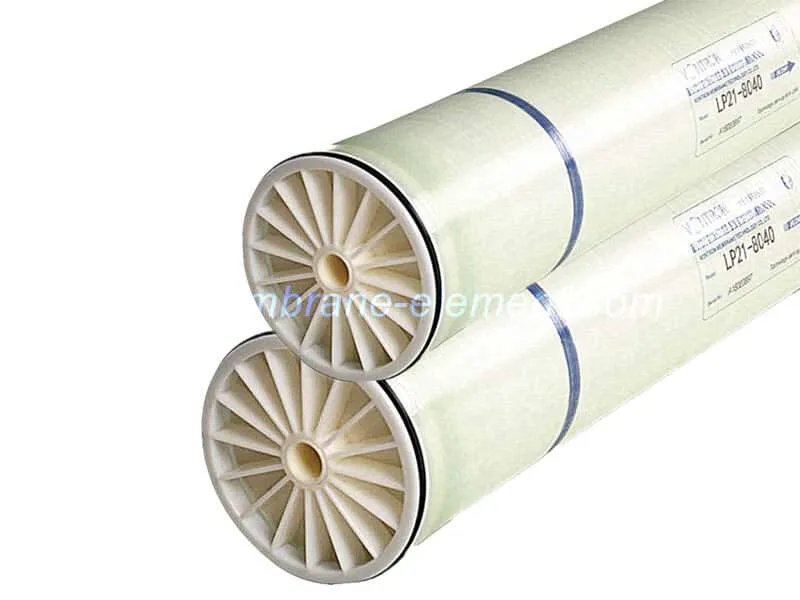
Xi’an CHIWATEC Water Treatment Technology provide the RO membrane to clients both inland and oversea with more than 10years experience. We manufacture our own brand Daltonen RO membrane and we are also the official distributor of Dupont, Toray, CSM, Nitto, LG and Vontron RO membrane. Whatever product you need, we cold meet your requirement.
Contact me for more info and best price.