Membrane desalination technology has transformed seawater and brackish water into drinking water on a scale that seemed impossible when the first membranes were commercialized in the 1970s. Global water reserves total approximately 1.386 billion km³, of which seawater constitutes 96.5%, while only about 0.79% is accessible surface and shallow groundwater — the gap between abundant salt water and scarce fresh water is precisely what desalination closes. Among all desalination methods, reverse osmosis (RO) has become the most widely adopted because of its reliability, low operating cost, and steadily falling energy demand. This guide covers the applications, historical growth, membrane advances, cost trends, and energy recovery gains that define modern membrane desalination technology. For the underlying physics of how these membranes separate salt from water, see our membrane separation principle guide.
1. Applications of Membrane Desalination
Seawater desalination aims to reduce salinity from approximately 35,000 mg/L in typical seawater to below 500 mg/L, the level suitable for human consumption and most industrial uses. Membrane desalination technology is applied in three main settings: municipal drinking water production for coastal cities, industrial process water and boiler feed water, and agricultural irrigation in arid regions. Brackish water desalination — treating groundwater or river water with salinity between 1,000 and 10,000 mg/L — is often the most economical application because the osmotic pressure is far lower than for seawater, allowing higher recovery and lower energy use. Over the past fifty years, desalination systems built around these principles have provided fresh water to more than 100 million people, supporting economic development in arid regions and coastal communities that previously depended on imported water.
2. Main Desalination Methods: MSF, MED, and RO
Three technologies dominate desalination, and they represent two fundamentally different approaches. Multi-stage flash evaporation (MSF) and multi-effect distillation (MED) are thermal methods that boil or evaporate seawater and condense the vapor, while reverse osmosis is a membrane method that pushes water through a semi-permeable barrier under pressure. Thermal processes tolerate very dirty feed water and are still common in the Middle East where waste heat is available, but they consume several times more energy than RO. Membrane desalination technology, by contrast, separates at ambient temperature and converts pressure directly into fresh water, which is why RO has overtaken thermal capacity in new plant construction worldwide. The table below compares the three approaches.
| Method | Separation Principle | Typical Energy Use | Best Application |
| MSF | Flash evaporation in stages | High (thermal) | Large plants with waste heat |
| MED | Multi-effect evaporation | High (thermal) | Plants with low-grade steam |
| RO | Pressure-driven membrane filtration | Low (electric only) | Seawater and brackish water |
RO’s combination of low energy use, modular construction, and rapid deployment has made it the default choice for new capacity — the trend that defines modern membrane desalination technology.
3. Global Growth of Membrane Desalination
Desalination statistics show how quickly the technology scaled. According to the International Desalination Association, as of 1995 there were 11,066 desalination plants worldwide producing 20.3 million m³ of fresh water daily; by 1997 the number had risen to 12,451 installations with a daily output of 22.73 million m³, reflecting an annual growth rate of 10–30%. In the 1997 installed-capacity mix, MSF held 76.04%, RO 14%, and MED 5.47% — but RO already dominated the coastal brackish water segment with a 76.23% share, and the largest RO plant at the time, in Saudi Arabia, produced 128,000 m³ of fresh water daily. These figures mark the transition era: thermal capacity led in volume, while membrane desalination technology was winning every new competitive tender. Today, RO accounts for the large majority of new desalination capacity worldwide, with single plants exceeding 500,000 m³/day in the Gulf region.
4. Advances in RO Membrane and Module Performance
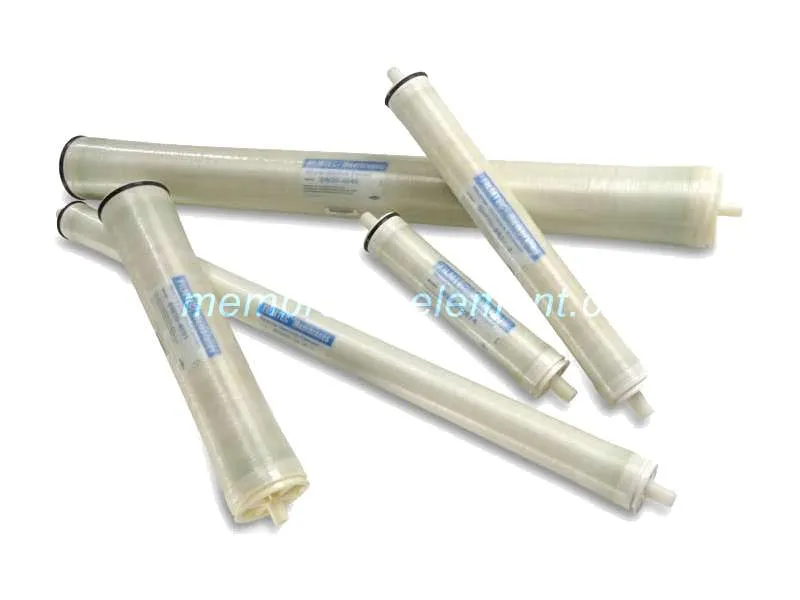
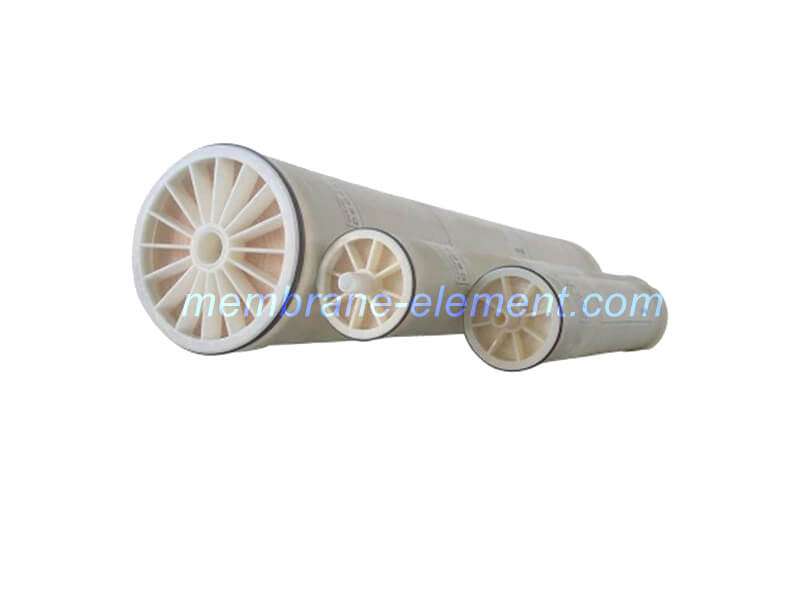
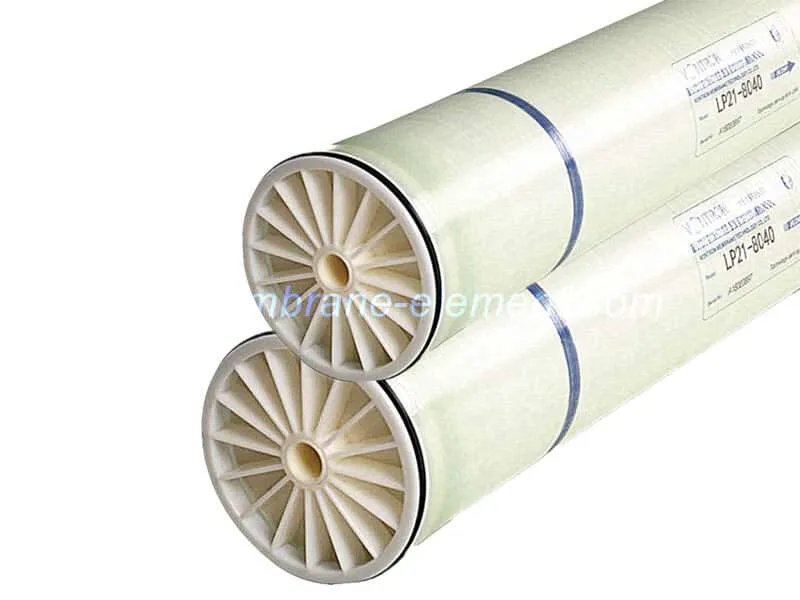
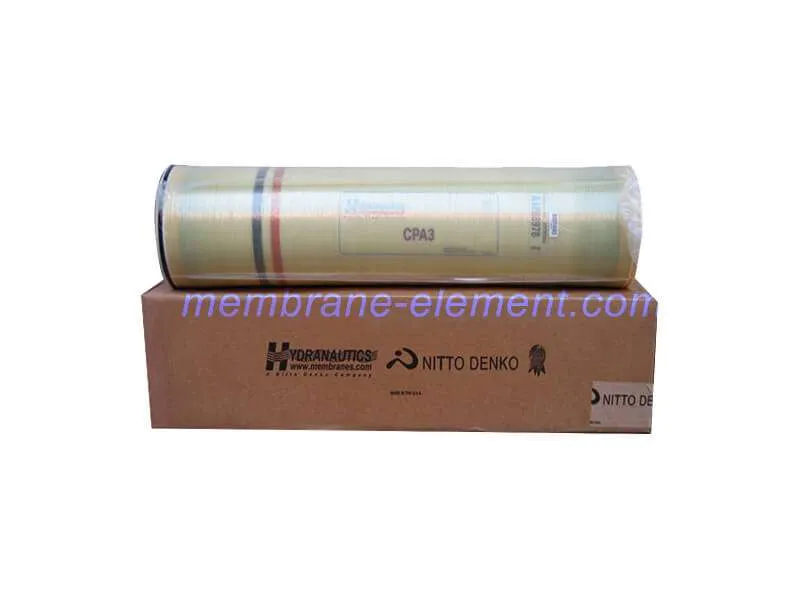
Membrane innovation is the engine of desalination progress. Manufacturers focus on membranes that resist oxidation and bacterial degradation while raising desalination rate and permeate flow, because every percentage point of rejection and every liter of extra flux directly lowers the cost of fresh water. A benchmark from the commercial era: Hydranautics’ SW series seawater membranes achieved a desalination rate of over 99.2% with an average permeate flow of 22.7 m³/d per element. Modern seawater elements from the same lineage now combine rejection above 99.7% with larger active areas and tighter tolerances, and module design advances — more efficient spacers, lower pressure-drop feed channels, and full-fit constructions without brine seals — have reduced both energy losses and the risk of bypass leakage. The practical result is that a modern seawater plant produces more water per element and per kilowatt-hour than the plants that defined the technology in the 1990s.
5. Falling Costs and Project Investment
Cost reduction is the clearest measure of progress in membrane desalination technology. The price of membrane modules fell dramatically: the cost in 1990 was only 40% of what it was in 1973, as manufacturing scale and competition drove down element prices. Project investment for complete plants reflects the same hierarchy, with RO the lowest-cost option: MSF plants typically require $1,800–$2,000 per m³/d of capacity, MED plants $1,100–$1,600 per m³/d, and RO plants just $700–$900 per m³/d. RO also wins on schedule: a 10,000 m³/d RO facility can be constructed and commissioned within seven months, compared with years for equivalent thermal plants. Lower capital cost, faster construction, and falling operating costs are the three reasons utilities and private developers choose RO — and why membrane desalination technology now dominates new capacity.
6. Energy Recovery and Efficiency Gains
Energy consumption was once the main objection to desalination, and it is the area where membrane desalination technology has improved most. The brine stream leaving an RO vessel still carries most of the energy used to pressurize the feed, and energy recovery devices capture it instead of wasting it. Energy recovery turbines and work exchangers now achieve efficiency rates of 89–96%, and total system energy consumption for seawater RO has been reported as low as 2.83 kWh/m³ — a small fraction of the energy needed by thermal desalination and close to the theoretical minimum for seawater separation. Each additional kilowatt-hour saved matters at plant scale: a 100,000 m³/d plant saving 1 kWh/m³ reduces annual electricity cost by tens of millions of dollars. Energy recovery, together with higher-flux membranes, has moved seawater desalination from an energy-intensive last resort to a mainstream water supply option.
7. Membrane Desalination in Wastewater Recycling
The same membrane desalination technology that produces fresh water from seawater is used to concentrate and recycle industrial wastewater, often at lower cost than the seawater case because feed salinity is lower. RO concentrates valuable materials and reduces discharge volume simultaneously. In electroplating wastewater treatment, RO has demonstrated high separation efficiencies for nickel, chromium, copper, and other metal plating processes; in one documented case, nickel was concentrated from 650 mg/L to 13,000 mg/L with a 92% separation rate, allowing the concentrated metal to be recovered and the permeate to be reused in the plating line. The same logic applies to zero-liquid-discharge systems, where RO is the workhorse that minimizes the brine volume sent to final evaporation. These applications extend membrane desalination technology beyond drinking water into resource recovery — a growing share of the market.
8. Future Outlook for Membrane Desalination
As global demand for fresh water continues to rise, membrane desalination technology is positioned to expand further. Three trends will shape the next decade. First, lower energy: membrane development and advanced energy recovery are pushing seawater desalination toward 2 kWh/m³, making it competitive with long-distance water transfer in many regions. Second, sustainability: plants increasingly pair desalination with renewable power, and brine management — using the concentrated discharge for salt recovery or mixing it to protect marine environments — is becoming a design requirement rather than an afterthought. Third, integration: desalination is merging with water reuse, with RO at the center of both processes, and with pretreatment such as ultrafiltration protecting the membranes. The fundamentals that made RO the dominant desalination method — reliability, cost, and modular speed — will keep membrane desalination technology at the core of global water supply. For the historical development of reverse osmosis itself, see our history of reverse osmosis technology guide.
Conclusion
Membrane desalination technology has moved from a 1970s experiment to the backbone of global water supply: RO plants now deliver hundreds of millions of cubic meters of fresh water daily, at lower energy and capital cost than any thermal alternative. The milestones in this guide — 99.2% seawater rejection, module prices at 40% of their 1973 level, $700–$900 per m³/d plant costs, and 2.83 kWh/m³ energy use — trace a technology that has consistently beaten its own records. For operators and developers, the practical lesson is that membrane selection and system design decide the economics: the right elements, pretreated feed, and efficient energy recovery are what turn the technology’s potential into affordable water. For guidance on selecting RO elements or designing a desalination system, contact us at [email protected] or [email protected].
FAQ:
How much energy does membrane desalination use?
Modern seawater reverse osmosis plants consume as little as 2.83 kWh per cubic meter of fresh water when fitted with high-efficiency energy recovery devices (89–96% efficiency). This is far below thermal desalination methods such as MSF and MED, and it is the main reason RO dominates new desalination capacity. Brackish water desalination uses even less energy because the feed salinity — and therefore osmotic pressure — is much lower.
What is the difference between RO and thermal desalination?
Thermal desalination (MSF, MED) evaporates seawater and condenses the vapor, consuming large amounts of heat energy. Reverse osmosis is a pressure-driven membrane process that separates salt and water at ambient temperature, using only electricity. RO plants cost less to build ($700–$900 per m³/d vs $1,100–$2,000 for thermal), consume far less energy, and can be commissioned in months rather than years.
What is the desalination rate of seawater RO membranes?
Commercial seawater RO membranes reject over 99.2% of salt, and modern elements exceed 99.7% rejection while producing 22.7 m³/d or more of permeate per element. This reduces seawater salinity from about 35,000 mg/L to below 500 mg/L in a single pass, meeting WHO drinking water standards.
Can membrane desalination treat wastewater?
Yes. RO concentrates and recycles industrial wastewater, recovering valuable metals and reducing discharge volume. In electroplating applications, RO has concentrated nickel from 650 mg/L to 13,000 mg/L with a 92% separation rate. The same technology is the core of zero-liquid-discharge systems and municipal water reuse plants.
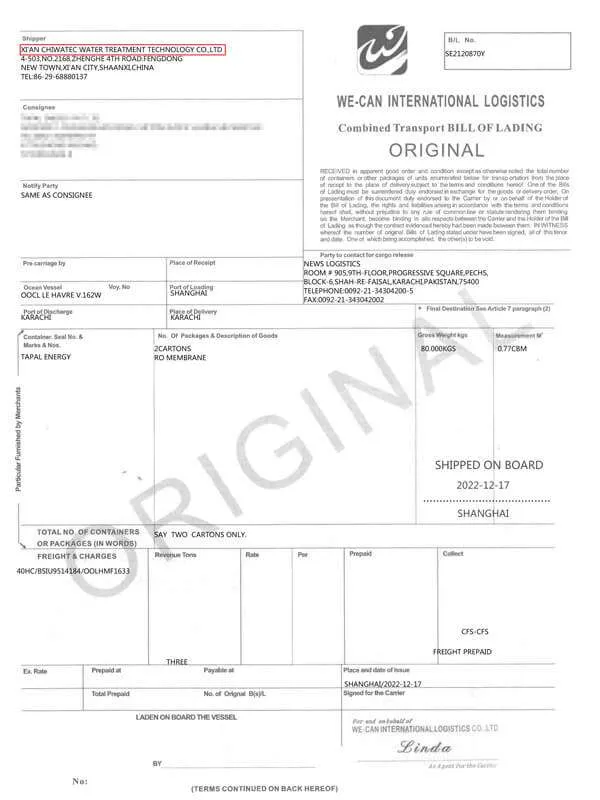
Xi’an CHIWATEC Water Treatment Technology provide the RO membrane to clients both inland and oversea with more than 10years experience. We manufacture our own brand Daltonen RO membrane and we are also the official distributor of Dupont, Toray, CSM, Nitto, LG and Vontron RO membrane. Whatever product you need, we cold meet your requirement.
Contact me for more info and best price.