Reverse osmosis membrane pollutant types determine how quickly a system loses productivity and which cleaning strategy will restore it. In practice, nearly every RO plant that operates on surface water, groundwater or municipal effluent experiences some degree of membrane fouling within its first year of service — and the pollutant type, not the cleaning intensity, decides whether the membrane can be recovered or is permanently damaged.
This guide explains how to identify each major pollutant type — from calcium carbonate and sulfate scales to metal oxides, polymeric silica, colloids, natural organic matter and microbial deposits — with the components that make up each pollutant, the operating conditions that trigger it, and the prevention measures that stop it forming in the first place. Where removal chemistry is required, the steps are covered in our dedicated RO membrane pollutant removal guide.
Reverse Osmosis Membrane Pollutant Types: The Complete Identification Guide
All RO membrane pollutants can be grouped into two families: mineral scale that crystallizes directly onto the membrane surface, and deposited material — colloids, organic matter and microbes — that accumulates as a fouling layer. Each pollutant type has a distinct composition, a distinct set of trigger conditions, and a distinct visual signature on a membrane autopsy:
| Pollutant Type | Main Components | Typical Trigger | Identification Clue |
| Calcium carbonate scale | CaCO3 crystals | Antiscalant failure, high pH feed | White-grey hard crust; LSI above 0 |
| Sulfate scale | CaSO4, BaSO4, SrSO4 | Low-solubility salts exceeding limits | Sharp-edged crystals; insoluble in acid |
| Calcium phosphate scale | Ca3(PO4)2 | High phosphorus feed, wastewater reuse | White deposit in wastewater RO plants |
| Metal oxide deposit | Fe, Mn, Zn, Cu, Al oxides/hydroxides | Corrosion, coagulant carryover | Red-brown, black or yellow stain |
| Polymeric silica scale | SiO2 polymer network | Silica saturation, high recovery | Gel-like film; resists normal cleaning |
| Colloidal fouling | Clay, silt, Fe/Al silicates | Pretreatment breakthrough | Brown slime; high SDI of feedwater |
| Organic (NOM) fouling | Humic and fulvic acids | Surface water without coagulation | Yellow-brown gel layer |
| Microbial deposition | Bacteria, fungi, mold slime | Warm water, poor sanitation | Slippery biofilm; musty smell |
Because the correct cleaner is specific to the pollutant — acid dissolves carbonate and metal oxides, while alkaline cleaners remove organics and biofilms — misidentifying the reverse osmosis membrane pollutant types present is the most common reason a cleaning cycle fails. The sections below detail each type, its components and the identification method.
Calcium Carbonate Scale: Components and Early Detection
Calcium carbonate scale is the most frequently encountered mineral scale in RO systems, and it forms when the scale inhibitor or dispersant system fails, or when feedwater pH rises because acid dosing is inadequate. The deposit is a hard crystalline crust of CaCO3 that restricts brine flow channels and can mechanically damage the membrane surface if left unchecked.
Early detection is straightforward: installing a transparent sight tube on the concentrate pipeline lets operators see scale forming before it reaches the membrane. The Langelier Saturation Index (LSI) is the standard prediction tool — feedwater with an LSI above zero is scaling-prone, and most RO designs hold LSI at or below 0.1 on the concentrate side.
- Early-stage scale: reduce feedwater pH to 3–5 for 1–2 hours to dissolve the deposit in place
- Long-term buildup: clean with a low-pH citric acid solution formulated for polyamide membranes
- Prevention: maintain antiscalant dosing, control pH and recovery, and monitor LSI weekly
For the full removal procedure and cleaning solution preparation, see our essential guide to reverse osmosis membrane pollutant cleaning.
Sulfate Scale: Calcium, Barium and Strontium Sulfate
Sulfate scales — calcium sulfate, barium sulfate and strontium sulfate — are significantly harder to remove than carbonate scale and can permanently damage membrane surfaces. They form when the scale inhibitor system fails or when sulfuric acid dosing does not sufficiently suppress pH-driven precipitation.
The key difference from carbonate scale is solubility: barium and strontium sulfates have extremely low solubility products, so once crystals nucleate they barely dissolve even in aggressive cleaning solutions. Barium sulfate solubility is roughly 2.3 mg/L at 25 °C, and strontium sulfate only about 130 mg/L — which is why prompt preventive action matters more than any cleaning chemistry.
- Detection: sharp-edged crystals on autopsy; concentrate analysis shows sulfate near saturation
- Cleaning: sulfate-specific cleaners with extended soak cycles; scale is not reliably pH-sensitive
- Prevention: keep antiscalant within design dosage, avoid over-dosing sulfuric acid, and limit recovery ratio
Because sulfate scale recovery is uncertain, operators should treat it as a prevention problem rather than a cleaning problem — the cleaning agent selection guide lists which commercial formulations target sulfate scale.
Calcium Phosphate Scale: A Wastewater-Specific Pollutant
Calcium phosphate scale is commonly found in municipal wastewater treatment RO plants, especially where influent phosphorus is elevated. The deposit forms when phosphate and calcium concentrations exceed the solubility limit in the concentrate stream, and it responds to acidic cleaning solutions in most cases.
Two operating notes are essential. First, most RO design software does not model phosphate-related scaling, so standard design calculations can underestimate the risk — if feedwater phosphate reaches or exceeds 5 ppm, antiscalant selection and recovery ratio must be reviewed specifically for phosphate. Second, calcium phosphate often co-deposits with organic matter and biofilms in wastewater service, so a single acid clean is rarely sufficient; an alkaline step is usually required first.
- Monitor feedwater phosphate; treat 5 ppm as the action threshold
- Confirm the RO design accounts for phosphate saturation on the concentrate side
- Clean with acid, preceded by an alkaline step when organic co-fouling is present
Metal Oxides and Hydroxides: Iron, Manganese and Aluminum Deposits
Metal oxide and hydroxide deposits — iron, zinc, manganese, copper and aluminum — accumulate from corrosion of equipment and pipelines, from oxidized metal ions in the feed, from pretreatment filtration systems and from metal coagulants carried over into the RO feed. Iron oxide in particular is a leading cause of irreversible membrane fouling in plants with inadequate pretreatment.
Identification is largely visual: iron deposits appear as red-brown stains, manganese as black deposits, and aluminum hydroxide as a white-grey film. In the feedwater, the practical iron limit for RO membranes is below 0.05 mg/L with oxygen present; above this level, iron precipitation inside the membrane element is essentially guaranteed.
- Keep feed iron below 0.05 mg/L; use oxidation-filtration or greensand pretreatment when exceeded
- Verify coagulant doses and ensure floc carryover is removed before the cartridge filters
- Clean with low-pH citric acid or a specialized metal-oxide cleaner before the deposit ages
Polymeric Silica Scale and Colloidal Contamination
Polymeric silica scale differs fundamentally from silica-based colloidal pollution. Polymeric silica forms through saturation and polymerization reactions, building a gel-like network that is frequently associated with metal hydroxides and organic matter; colloidal silica, by contrast, consists of suspended inorganic particles that do not settle by gravity and typically contain iron, aluminum, silicon, sulfur or organic material.
Both are difficult to treat, but for different reasons. Traditional cleaning methods are largely ineffective against polymeric silica — while ammonium bifluoride has shown success in some projects, it is highly toxic and can damage equipment, so it should only be used by trained personnel with manufacturer approval. Colloidal fouling is more manageable: it responds to improved pretreatment and to detergent-based cleaners once the feedwater SDI is brought under control.
- Control silica saturation by limiting recovery and, where needed, using silica-specific antiscalants
- Monitor feedwater SDI; colloidal fouling almost always traces to pretreatment breakthrough
- Use an alkaline cleaner with surfactants for colloidal layers; escalate silica cases to the membrane manufacturer
Because silica and colloids overlap with metal oxide fouling, the scaling types and fouling guide shows how to distinguish them on autopsy.
Natural Organic Matter and Microbial Deposition
Dissolved natural organic matter (NOM) results from the decomposition of organic materials in surface and groundwater, and its complexity comes from compounds such as humic and fulvic acids. Adsorption of insoluble NOM onto the membrane surface initiates gel or block contamination, which accelerates every other fouling mechanism in the system.
Microbial deposits — bacterial slime, fungi and molds — are among the most challenging pollutants because biofilms protect the bacteria from cleaning chemicals and can completely obstruct the feed water supply channels. Biofouling typically develops when water temperature is warm, when nutrients are present, and when the system is shut down without proper preservation.
- Remove NOM upstream with coagulation-flocculation, ultrafiltration or activated carbon pretreatment
- Sanitize regularly; an alkaline clean with a biocide step breaks down the biofilm matrix
- Preserve idle systems with a biocide solution to prevent microbial growth during shutdown
For detailed fouling prevention strategies covering both organic and microbial mechanisms, see our guide to preventing fouling in reverse osmosis membranes.
Preventing and Monitoring RO Membrane Pollutant Types
Every pollutant group shares one rule: prevention is cheaper and more reliable than cleaning. A structured monitoring program that checks feedwater quality, normalized performance and concentrate chemistry catches pollutants weeks before they require chemical cleaning.
- Weekly: feedwater SDI, turbidity, pH, iron and phosphate; log LSI and sulfate saturation indexes
- Daily: normalized permeate flow, salt passage and differential pressure against baseline values
- Action thresholds: clean when production drops 10–15%, pressure rises 10–15%, or salt passage increases — the triggers are detailed in our RO membrane cleaning triggers guide
- Annual: membrane autopsy or end-element analysis to confirm which pollutant types are actually present
Monitoring pays for itself: the longer a pollutant is left in place, the higher the chance of irreversible membrane damage. Identifying reverse osmosis membrane pollutant types early — using the table in this guide — converts a membrane replacement cost into a routine cleaning cost.
Conclusion
Understanding reverse osmosis membrane pollutant types and their components is the foundation of every successful RO maintenance program. Carbonate scale responds to pH control, sulfate scale must be prevented rather than removed, phosphate scale is a wastewater-specific risk, metal oxides trace back to pretreatment, and silica, organic and microbial fouling each need their own detection and prevention strategy.
Match the reverse osmosis membrane pollutant types to the right detection method and the right cleaner — acid for carbonate and metal oxides, alkaline for organics and biofilms, sulfate-specific chemistry for sulfate scale — and the membrane stays within its design life. For professional cleaning solutions, RO membranes and technical support, contact us:
FAQ: Reverse Osmosis Membrane Pollutant Types
Q1: What are the most common reverse osmosis membrane pollutant types?
Calcium carbonate scale is the most common, followed by metal oxide deposits, colloidal fouling and organic fouling. Sulfate scale, calcium phosphate scale, polymeric silica and microbial deposits are less frequent but far more damaging when they occur.
Q2: How can I tell which pollutant is fouling my RO membrane?
Combine three signals: feedwater analysis (SDI, iron, phosphate, silica), normalized performance data (flow, pressure, salt passage), and visual inspection — white crust indicates carbonate, red-brown staining indicates iron, yellow-brown gel indicates organics, and slippery biofilm indicates microbes. A membrane autopsy is definitive when the signs are mixed.
Q3: Which RO membrane pollutant is hardest to remove?
Sulfate scale (barium and strontium sulfate) and polymeric silica are the hardest to remove because of their extremely low solubility. Both are best prevented with antiscalant dosing and recovery control; once formed, they may require specialized cleaners or membrane replacement.
Q4: How often should I check for RO membrane pollutants?
Check feedwater SDI, turbidity and key ions weekly, and review normalized performance daily. Clean when production drops 10–15%, feed pressure rises 10–15% or salt passage increases, and schedule an annual autopsy to confirm the pollutant profile.
Q5: Can antiscalants prevent all reverse osmosis membrane pollutant types?
No. Antiscalants control mineral scale — carbonate, sulfate and phosphate — but do not stop colloidal, organic or microbial fouling. Those require pretreatment (coagulation, filtration, disinfection) and routine cleaning rather than chemical scale inhibition.
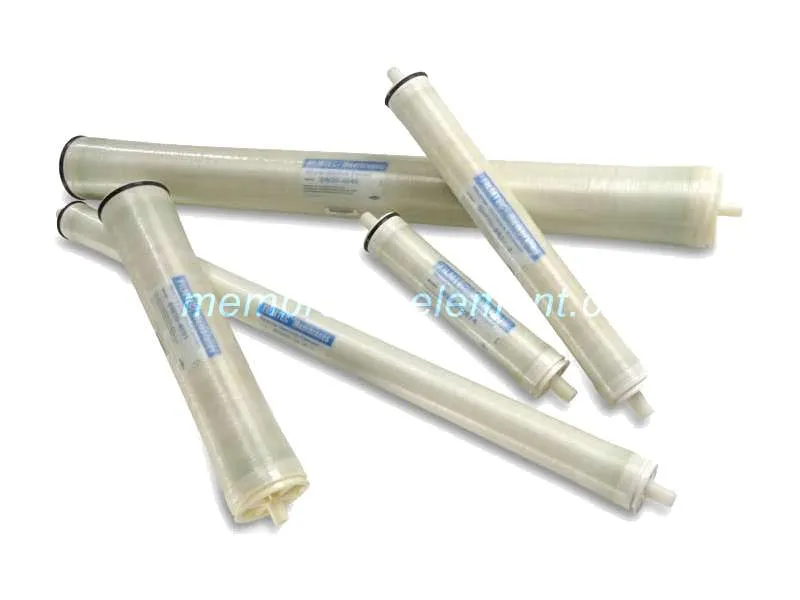
Xi’an CHIWATEC Water Treatment Technology provide the RO membrane to clients both inland and oversea with more than 10years experience. We manufacture our own brand Daltonen RO membrane and we are also the official distributor of Dupont, Toray, CSM, Nitto, LG and Vontron RO membrane. Whatever product you need, we cold meet your requirement.
Contact me for more info and best price.