Reverse osmosis membrane fouling causes fall into two families — mineral scale that crystallizes onto the surface, and deposited material such as colloids, natural organic matter and biofilms that accumulates as a fouling layer. Every cause has a distinct trigger, a distinct risk profile, and a distinct cleaning response, which is why identifying the cause is the first step of any maintenance program.
This guide explains the major reverse osmosis membrane fouling causes — calcium carbonate, sulfate and phosphate scale, metal oxides, polymeric silica, colloids, NOM and biofouling — with the risks each one poses to membrane life and the cleaning solutions that apply. For identification of pollutant components and the removal procedure, see our reverse osmosis membrane pollutant types guide and pollutant removal guide.
Reverse Osmosis Membrane Fouling Causes: The Eight Contaminant Pathways
Each of the reverse osmosis membrane fouling causes follows one of eight pathways, summarized below with its primary trigger, the risk it carries, and the cleaning approach that restores performance:
| Fouling Cause | Primary Trigger | Main Risk | Cleaning Approach |
| Calcium carbonate scale | Inhibitor failure, high feed pH | Pore blocking, flux loss | Low pH 3–5 or citric acid |
| Sulfate scale (Ca/Ba/Sr) | Inhibitor failure, sulfuric acid dosing | Hard, acid-insoluble crystals | Sulfate-specific cleaner, soak |
| Calcium phosphate scale | High phosphorus wastewater feed | Wastewater RO scaling | Acidic cleaning solution |
| Metal oxide deposit | Corrosion, coagulant carryover | Irreversible membrane damage | Acidic or chelating solution |
| Polymeric silica scale | Silica polymerization | Resists standard cleaning | Specialized agents (professional) |
| Colloidal fouling | Pretreatment breakthrough | Pore clogging, lower recovery | MF/UF pretreatment, detergents |
| Organic (NOM) fouling | Surface water nutrients | Gel layer, block contamination | Alkaline cleaner, carbon pretreatment |
| Microbial biofouling | Warm water, poor sanitation | Channel blockage, pressure drop | Disinfection, biocide, sanitation |
The sections below detail each reverse osmosis membrane fouling cause — how it forms, what it risks, and how it is cleaned — so operators can match the response to the contaminant.
Calcium Carbonate Scale: Causes, Risks and Cleaning
Cause: Calcium carbonate scale occurs when scale inhibitor or dispersant systems fail, or when the acid dosing system fails, resulting in increased feedwater pH. The deposit is a hard crystalline crust of CaCO3 that forms on the membrane surface and in the feed spacer.
Risks: Mineral scale crystals deposit on the membrane surface, blocking pores and reducing water flux. Left untreated, carbonate scale can mechanically damage the membrane surface during high-pressure operation.
Detection: Installing a transparent tube on the concentrate pipeline helps detect scaling early, before it reaches the membrane elements.
- Light scaling: lower feedwater pH to 3–5 and run for 1–2 hours
- Heavy or long-term scaling: clean with a low-pH citric acid solution
- Prevention: maintain inhibitor and acid dosing, monitor LSI of concentrate
Sulfate Scale: Calcium, Barium and Strontium Sulfate
Cause: Sulfate scale forms from failure of the scale inhibitor or dispersant system, or from overuse of sulfuric acid for pH adjustment. Calcium, barium and strontium sulfates all precipitate when their solubility products are exceeded in the concentrate stream.
Risks: Sulfate scales are harder than calcium carbonate and difficult to remove. Once crystals nucleate they grow rapidly, and cleaning is unreliable because the deposits are not consistently pH-sensitive.
Special cases: Barium sulfate and strontium sulfate are extremely insoluble in most cleaning solutions — barium sulfate solubility is only about 2.3 mg/L at 25 °C — so they require special attention and prompt preventive action.
- Prevention: monitor feedwater sulfate levels and apply advanced inhibitors
- Cleaning: sulfate-specific cleaners with extended soak cycles
- Design: keep recovery ratio within the antiscalant’s certified range
Which commercial cleaner targets sulfate scale is covered in our RO membrane cleaning agent selection guide.
Calcium Phosphate Scale in Wastewater Service
Occurrence: Calcium phosphate scale is common in municipal wastewater treatment RO plants because of the high phosphorus content of the feed. Phosphate and calcium concentrate on the brine side until the solubility limit is exceeded and Ca3(PO4)2 precipitates.
Cleaning: An acidic cleaning solution is usually effective at dissolving phosphate scale, though co-deposited organic matter may require an alkaline step first in wastewater service.
Design note: Most RO design software does not calculate phosphate scaling, so standard designs can underestimate the risk. If feedwater phosphate exceeds 5 ppm, consult the membrane supplier for antiscalant and recovery guidance.
- Monitor feedwater phosphate; treat 5 ppm as the action threshold
- Confirm the RO design accounts for phosphate saturation on the concentrate side
- Use acid cleaning, preceded by alkaline when organic co-fouling is present
Metal Oxide and Hydroxide Pollution
Typical metals: Iron, zinc, manganese, copper and aluminum.
Cause: Metal oxide and hydroxide deposits accumulate through three pathways:
- Corrosion of equipment, pipes or tanks releasing metal ions into the feed
- Oxidation of metal ions in the presence of air, chlorine, ozone or potassium permanganate
- Use of iron or aluminum coagulants in pretreatment with incomplete floc removal
Risks: Metal deposits can irreversibly damage membranes. Iron oxide in particular catalyzes further fouling and can permanently block the feed spacer. The practical feedwater iron limit for RO membranes is below 0.05 mg/L with oxygen present.
Cleaning: Specialized acidic or chelating solutions may be required, applied promptly while the deposit is still fresh.
Polymeric Silica Scale and Colloidal Contamination
Cause: Polymeric silica scale forms by silica polymerization or saturation beyond solubility limits, building a gel-like network that is often combined with metal hydroxides or organics.
Difference: Polymeric silica is distinct from silica-based colloid fouling. Colloidal contamination consists of inorganic or mixed organic-inorganic particles that do not settle naturally and typically contain iron, aluminum, silicon, sulfur or organic matter.
Challenge: Polymeric silica is extremely difficult to remove with standard RO cleaning methods. In severe cases ammonium bifluoride has been used successfully, but it is toxic and harmful to equipment — professional guidance is recommended before any use.
Impact of colloids: Colloidal particles cause clogging of membrane pores and reduce water recovery efficiency.
Control: Effective pretreatment with microfiltration or ultrafiltration is critical for colloidal feedwater; limit recovery and use silica-specific antiscalants for silica saturation.
Natural Organic Matter and Microbial Biofouling
Organic fouling (NOM): Dissolved natural organic matter results from the decomposition of nutrients in surface water or deep well water. Its main components are humic acids and fulvic acids. Insoluble NOM adsorbs onto the RO membrane surface, triggering gel layer formation and block contamination that accelerates every other fouling mechanism.
- Prevention: pretreatment with activated carbon, coagulation or advanced oxidation
- Cleaning: alkaline cleaner removes the organic gel layer
Microbial biofouling: Sources include bacterial slime, fungi, molds and other microorganisms. The risks are rapid biofilm growth leading to blockage of feedwater channels, reduced cleaning effectiveness and increased pressure drop.
- Regular disinfection and biocide dosing
- Cleaning of pretreatment systems, pipelines and end caps
- Maintaining proper sanitation and preventive maintenance, especially during shutdowns
For the full prevention framework covering organic and microbial mechanisms, see our guide to preventing fouling in reverse osmosis membranes.
Preventing the Main Reverse Osmosis Membrane Fouling Causes
Each of the reverse osmosis membrane fouling causes has a corresponding prevention measure, and a complete program covers all of them rather than one:
- Mineral scale: proper chemical dosing, pH control and LSI/saturation monitoring
- Colloidal and organic fouling: robust pretreatment — MF/UF, coagulation, activated carbon
- Biofouling: strict disinfection, biocide dosing and pipeline sanitation
- Silica scaling: recovery control and professional intervention when saturation is high
Timing the response matters as much as the measure itself: clean when pressure drop rises 10–15% or salt rejection declines, per the thresholds in our RO membrane cleaning triggers guide, and prepare the correct solution with the cleaning solution preparation guide.
By implementing proper pretreatment, monitoring and timely cleaning, plants can extend RO membrane lifespan, reduce operational costs and improve water quality output — addressing every reverse osmosis membrane fouling cause before it becomes irreversible damage.
Conclusion
Understanding the reverse osmosis membrane fouling causes is the first step to preventing damage and maintaining system efficiency. Mineral scales like calcium carbonate, sulfate and phosphate can be managed with proper chemical dosing and pH control; colloidal and organic fouling require robust pretreatment; biofouling demands strict disinfection and monitoring; and silica scaling remains the most challenging, requiring professional intervention.
For professional cleaning solutions, RO membranes and technical support, contact us:
FAQ: RO Membrane Fouling and Scaling
Q1: What is the most difficult RO membrane scale to remove?
Silica scale and barium/strontium sulfate scale are the most difficult of all reverse osmosis membrane fouling causes because of their low solubility in cleaning solutions. Barium sulfate dissolves at only about 2.3 mg/L at 25 °C, so once formed it is effectively permanent — prevention is the only reliable strategy.
Q2: How often should RO membranes be cleaned?
Clean when the pressure drop increases by 10–15%, when normalized production drops 10–15%, or when salt rejection decreases significantly. In practice this falls within a 3–12 month cycle for most well-run plants.
Q3: Can biofouling be completely prevented?
Complete prevention is difficult, but regular disinfection, proper pretreatment and controlled biocide dosing can significantly reduce biofouling. Sanitizing pretreatment systems, pipelines and end caps removes the seeding sources.
Q4: What is the role of scale inhibitors in RO systems?
Scale inhibitors prevent the crystallization and deposition of minerals like calcium carbonate and calcium sulfate on membrane surfaces. They do not stop colloidal, organic or microbial fouling — those require pretreatment and cleaning.
Q5: Why is early detection of scaling important?
Early detection allows simple corrective actions, such as pH adjustment, before hard-to-remove scales permanently damage the membrane. A transparent sight tube on the concentrate line and weekly LSI checks catch carbonate scale in its reversible stage.
Related Resources
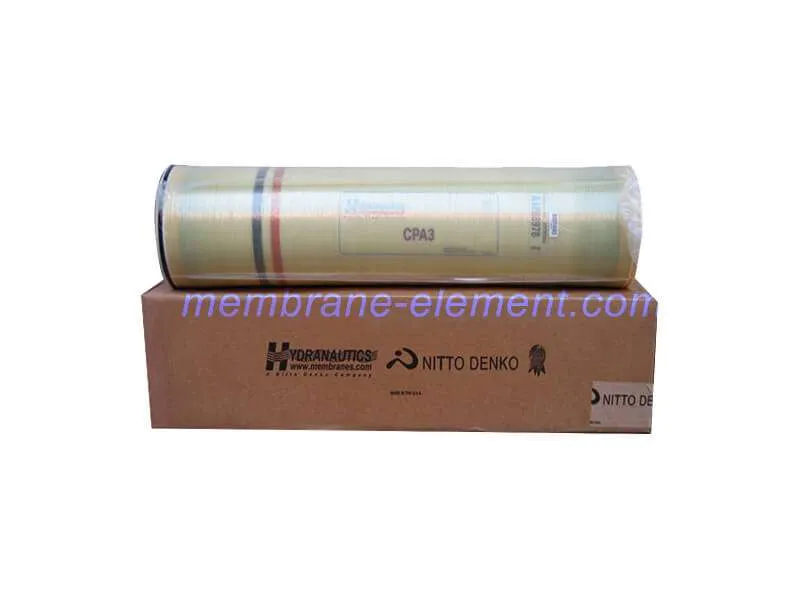
Xi’an CHIWATEC Water Treatment Technology provide the RO membrane to clients both inland and oversea with more than 10years experience. We manufacture our own brand Daltonen RO membrane and we are also the official distributor of Dupont, Toray, CSM, Nitto, LG and Vontron RO membrane. Whatever product you need, we cold meet your requirement.
Contact me for more info and best price.