
Reverse osmosis membrane physical cleaning strips scale, biofilm, and particulate deposits from membrane surfaces using mechanical energy rather than chemicals. Chemical cleaning pushes acids, alkalis, and biocides through the elements and leaves a spent-solution waste stream behind. Physical cleaning relies instead on cavitation collapse, pulsed shock waves, and hydraulic force. Two advanced technologies define the field: hydraulic cavitation cleaning and electric pulse cleaning. First, this guide explains how each method generates its cleaning energy. Next, it compares physical and chemical cleaning on cost, cycle time, and membrane safety. Then, it maps each technology onto real RO plant configurations. Finally, it offers a selection framework that matches the method to the actual deposit.
What Are Reverse Osmosis Membrane Physical Cleaning Methods?
Membrane fouling erodes every performance metric a plant tracks. Permeate flow falls, differential pressure climbs, and salt rejection slips. Operators normally trigger cleaning once normalized flow drops 10-15%, salt passage rises 10-15%, or the feed-to-concentrate pressure drop grows 15-20% above the commissioning baseline.
Chemical cleaning remains the default response, yet it carries real costs. Spent acid, alkali, and biocide solutions need neutralization and disposal. An aggressive or mismatched agent can attack the polyamide skin layer irreversibly. Each cycle also forces the train offline for 4 to 24 hours.
Reverse osmosis membrane physical cleaning methods sidestep those problems by attacking deposits with mechanical energy alone. Cavitation collapse, pulsed shock waves, and hydraulic shear lift foulant off membrane surfaces and pipe walls. Dense deposits still yield, only more slowly. Plants apply physical cleaning as standalone preventive maintenance or as a polishing step after a chemical cycle.
Two technologies carry this approach:
- Hydraulic cavitation cleaning — a pig traveling through the line forms cavitation bubbles that collapse and blast deposits away.
- Electric pulse cleaning — a high-voltage discharge vaporizes liquid into a plasma bubble whose shock wave fractures hard scale.
Hydraulic Cavitation Cleaning Technology
Hydraulic cavitation cleaning is the workhorse among reverse osmosis membrane physical cleaning methods. It rests on the cavitation principle of fluid mechanics. A cleaning pig is inserted into the pipeline and driven forward by the liquid stream. Once pressure, differential pressure, flow rate, and flow velocity through the pig cross a set threshold, cavitation bubbles nucleate on the pig blade surface. The bubbles collapse within microseconds, generating micro-jets with impact velocities in the 100-200 m/s range and localized shock waves that erode scale, biofilm, and particulate deposits from pipe walls and membrane surfaces.
Key characteristics define the technology:
- Operating principle: controlled cavitation bubble formation and collapse delivers mechanical cleaning action without abrasive contact.
- Cleaning mechanism: micro-jet impact force removes deposits layer by layer.
- Applicable systems: RO feed lines, concentrate lines, heat exchangers, and industrial pipe networks.
- Material compatibility: safe for stainless steel, FRP, PVC, and other common membrane system materials.
Typical applications include:
- Ash transport pipelines in thermal power plants.
- Mining material transport pipelines.
- Municipal and industrial water supply lines.
- Oilfield water injection and transport pipelines.
- RO system feed and concentrate piping networks.
- New pipeline commissioning and debris removal.
The method offers five practical advantages:
- No corrosion risk — no chemicals reach the membranes or the piping.
- No blockage — continuous flow during cleaning prevents debris accumulation.
- Fast cleaning cycle — a full pass typically finishes in hours rather than days.
- Cost-effective — no chemical procurement, handling, or disposal charges.
- Excellent reach — cavitation acts in crevices and dead zones that chemical cleaning never reaches.
Electric Pulse Cleaning Technology
Electric pulse cleaning reaches the deposits that cavitation cannot fracture. This second reverse osmosis membrane physical cleaning method drives a pulsed high voltage and heavy current through electrodes submerged in the liquid medium, producing a hydroelectric discharge. The discharge vaporizes a small volume of liquid and forms an expanding plasma bubble. As the bubble expands and implodes, it emits a powerful shock wave. That wave travels through the liquid, strikes the scale layer on pipe walls and membrane surfaces, and fractures it away from the substrate.
Energy parameters set the working envelope:
- Pulse voltage: typically 10-50 kV.
- Pulse energy: 1-20 kJ per discharge.
- Cleaning mechanism: shock wave energy fractures hard scale such as calcium carbonate, calcium sulfate, and silica, and it disrupts biofilm.
- Applicable systems: industrial pipe networks, boilers, headers, condensers, heat exchangers, and membrane system piping.
Common applications include:
- Industrial pipe network descaling.
- Water supply and drainage pipe cleaning.
- Boiler tube scale removal.
- Condenser and heat exchanger cleaning.
- Deposit removal in RO membrane piping and housings.
- Hard scale removal where chemical cleaning proves ineffective.
Four advantages stand out:
- Cable-reach flexibility — the cleaning cable routes into confined spaces and complex pipe geometries.
- No membrane damage — the physical action does not alter membrane chemistry or structure.
- Superior descaling — hard mineral scale that resists chemicals yields to repeated shock waves.
- Localized treatment — operators target specific fouled sections without treating the whole system.
Physical vs. Chemical RO Membrane Cleaning Compared
The two physical methods reach different deposits at different cost, and both differ sharply from a conventional chemical cleaning cycle. The matrix below sets the four approaches side by side.
| Parameter | Hydraulic Cavitation | Electric Pulse | Chemical Cleaning |
| Cleaning mechanism | Cavitation bubble collapse | Shock wave from pulse discharge | Chemical dissolution and dispersion |
| Chemical requirement | None | None | Acids, alkalis, biocides, chelants |
| Chemical waste generated | None | None | Requires neutralization and disposal |
| Best for soft deposits | Excellent | Good | Good |
| Best for hard scale | Moderate | Excellent | Good (slow) |
| Best for biofilm removal | Good | Moderate | Excellent (with biocides) |
| Cleaning time | Hours | Hours | 4-24 hours per cycle |
| Equipment cost | Moderate | High | Low (chemicals plus tank and pump) |
| Operating cost per cycle | Low | Low | Moderate to high |
| Membrane compatibility | Safe | Safe for piping and housings | Risk of damage from incorrect agent selection |
| Environmental impact | Minimal | Minimal | Chemical waste requires treatment |
Neither physical method produces a waste stream, so disposal cost drops to zero. The trade-off sits in capital equipment and in the reach of each tool: cavitation pigs cover straight runs, pulse cables cover bends, and chemicals cover chemistry that neither mechanical force can dissolve.
Applications of Reverse Osmosis Membrane Physical Cleaning
Reverse osmosis membrane physical cleaning pays off most clearly in six operating scenarios. Each one trades a scheduling or handling cost for a mechanical cleaning pass, and each pairs well with routine cleaning parameter control.
- Preventive maintenance — regular physical cleaning intervals cut the frequency of chemical cleaning and extend membrane service life by 1-3 years.
- Post-chemical polishing — a physical pass after pollutant cleaning clears loosened deposits left in piping dead zones.
- Hard scale removal — electric pulse cleaning lifts calcium sulfate, barium sulfate, and silica scale that chemicals struggle to dissolve.
- Biofilm control — hydraulic cavitation disrupts biofilm structure on pipe walls and lowers biological fouling potential.
- New system commissioning — physical cleaning removes construction debris, welding slag, and installation residue from new membrane system piping.
- Remote or sensitive sites — the method eliminates chemical transport, storage, and waste disposal at locations with limited infrastructure.
Selecting the Right Physical Cleaning Method
Five factors decide whether hydraulic cavitation or electric pulse cleaning fits a given system. Set them against the cleaning trigger thresholds before committing to hardware.
- Deposit type — organic fouling and soft deposits respond best to hydraulic cavitation, while hard mineral scale calls for electric pulse cleaning.
- System geometry — complex piping with multiple bends favors electric pulse and its cable-based access, while straight pipe runs suit cavitation pigs.
- Budget — cavitation equipment carries lower capital cost, while pulse systems need a higher initial investment but deliver stronger hard-scale removal.
- Cleaning frequency — plants that clean often gain most from the low per-cycle cost of physical methods.
- Combination approach — many facilities alternate physical cleaning monthly with chemical cleaning quarterly or semi-annually.
Match the method to the dominant foulant first, then to the pipe layout. A plant fighting calcium carbonate wastes budget on cavitation alone, and a plant running straight feed headers can clean with pigs at a fraction of the pulse-system cost. Plants that also run automatic cleaning machines can fold either physical method into an existing cleaning program.
Conclusion
Reverse osmosis membrane physical cleaning gives plant operators a chemical-free route to restoring membrane performance. Hydraulic cavitation handles soft deposits, biofilm, and organic layers with collapsing bubbles and micro-jets. Electric pulse cleaning fractures hard mineral scale with high-voltage shock waves of 10-50 kV and 1-20 kJ per discharge. Used together with periodic chemical cycles, the two methods extend membrane life by 1-3 years and cut chemical consumption and disposal cost.
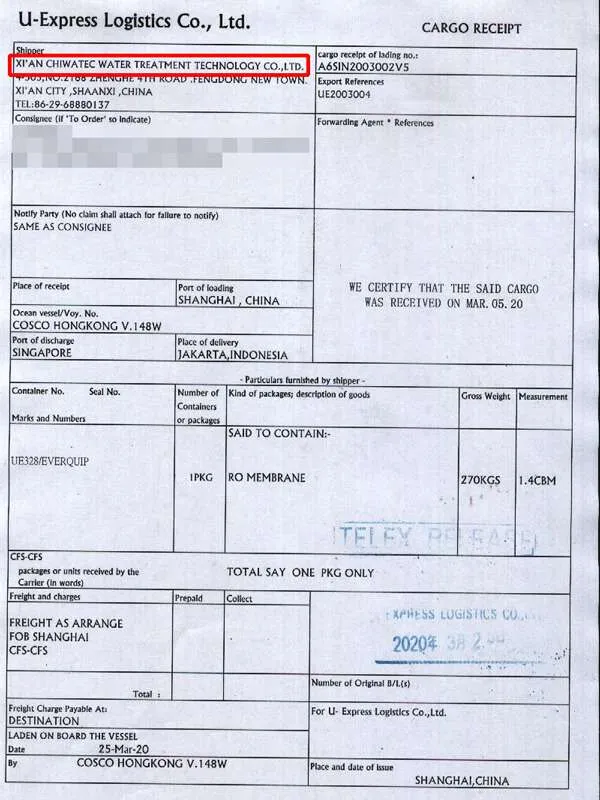
Xi’an CHIWATEC Water Treatment Technology supplies RO membrane elements to clients inland and overseas with more than 10 years of experience. We manufacture our own Daltonen RO membrane and distribute Dupont, Toray, CSM, Nitto, LG, and Vontron elements. Contact us for cleaning-method selection support and element pricing.
FAQ: Physical Cleaning Method Selection
Q1: What is the difference between hydraulic cavitation and electric pulse cleaning?
Hydraulic cavitation drives a pig through the line and lets collapsing bubbles blast deposits off the walls. Electric pulse cleaning discharges 10-50 kV through the liquid and uses the resulting shock wave to fracture scale. Cavitation suits soft deposits, biofilm, and straight pipe runs, while pulse cleaning handles hard mineral scale and complex piping reached by cable.
Q2: Are physical cleaning methods safe for RO membrane elements?
Yes, within limits. Hydraulic cavitation acts on the feed and concentrate piping and on the cleaning loop, while electric pulse cleaning is aimed at piping and housings rather than the membrane leaf itself. Neither method introduces acids or biocides, so the polyamide skin layer faces no chemical attack. Fit physical cleaning alongside chemical cycles rather than replacing every chemical step.
Q3: How often should I use physical cleaning instead of chemical cleaning?
A practical split is physical cleaning monthly and chemical cleaning quarterly or semi-annually. Trigger either method on the standard signals: 10-15% loss of normalized flow, 10-15% rise in salt passage, or a 15-20% increase in pressure drop. Physical passes between chemical cycles hold the fouling rate low enough that chemical demand drops.
Q4: Which method removes calcium sulfate and silica scale best?
Electric pulse cleaning. Calcium sulfate, barium sulfate, and silica form hard, low-solubility deposits that resist acid and alkaline dissolution. The shock wave from a pulse discharge fractures the scale mechanically and lifts it off the wall, so it works where chemical cleaning stalls.
Q5: Can physical cleaning damage membrane elements?
Reverse osmosis membrane physical cleaning does not alter membrane chemistry or structure. The risk lies in application: keep electrode discharge confined to piping and housings, and size the cavitation pig to the pipe so it does not abrade element end caps. When in doubt, run physical cleaning on the feed and concentrate headers first and leave the element cleaning loop to chemical cycles.
Related Resources
Recommended Membrane Technology Guides
- Reverse Osmosis Membrane Cleaning Machine Technology: Complete Guide 2026
- RO Membrane Cleaning Parameters: Flow Rate, Pressure and Frequency Guide 2026
- RO Membrane Chemical Cleaning Rules: Complete Guide 2026
- RO Membrane CIP Cleaning: Complete Guide to Fouling Analysis and CIP Technology 2026
- Dupont RO Membrane — Global Supply from Membrane-Element
Xi’an CHIWATEC Water Treatment Technology provide the RO membrane to clients both inland and oversea with more than 10years experience. We manufacture our own brand Daltonen RO membrane and we are also the official distributor of Dupont, Toray, CSM, Nitto, LG and Vontron RO membrane. Whatever product you need, we cold meet your requirement.
Contact me for more info and best price.