Ultrafiltration membrane application in water treatment spans two roles: a pretreatment barrier that protects downstream processes, and an advanced treatment stage that purifies, concentrates, and separates industrial streams. Ultrafiltration (UF) membranes remove suspended solids, colloids, and microorganisms down to a few nanometers, yet their high water flux makes them sensitive to fouling — particles accumulate on the surface, fine particles block pores, and biological material forms sticky layers. Successful UF operation therefore depends on controlling feed water quality through pretreatment, disinfection, and turbidity management. This guide explains the main ultrafiltration membrane application areas — pretreatment, microorganism removal, and turbidity reduction — with the operating data operators need. For the technology behind these applications, see our ultrafiltration membrane technology guide.
1. Pretreatment: Protecting the Membrane and Downstream Processes
Ultrafiltration membranes serve a dual purpose in water treatment, functioning both as a pretreatment and as an advanced treatment solution in various industrial purification, concentration, and separation processes. They are primarily employed for deep purification in widely used water treatment processes. However, to optimize performance, proper pretreatment of the water supply is essential, because suspended solids, colloids, microorganisms, and other impurities can adhere to the membrane surface, leading to contamination. The relatively high water flux of UF membranes can cause a rapid buildup of trapped impurities, resulting in concentration polarization. Fine particles can enter membrane pores and block water channels, and viscous substances from microorganisms and their metabolites may adhere to the membrane, diminishing water permeability and altering separation performance. Factors such as temperature, pH, and concentration of the feed water impose further limits. Adequate pretreatment and water quality adjustment are therefore necessary to extend the service life of the membranes and reduce overall treatment costs.
2. Microorganism Removal: Bacteria and Algae Control
Microorganisms in water cause serious problems when they adhere to the surfaces of pretreatment systems or ultrafiltration membranes, potentially blocking the membrane micropores and cavities completely — which makes the removal of bacteria and algae crucial to every ultrafiltration membrane application. Water treatment systems typically employ oxidants such as sodium hypochlorite (NaClO) and ozone (O₃) at concentrations ranging from 1 to 5 mg/L for effective microbial control. UV sterilization can also be implemented, and laboratory sterilization of hollow fiber membranes can be achieved using hydrogen peroxide (H₂O₂) or potassium permanganate solutions for 30 to 60 minutes. One point must be understood clearly: antimicrobial treatments kill microorganisms, but they do not remove them from the water — they only inhibit growth. Physical removal by the membrane is what actually takes the dead cells and intact organisms out of the stream, which is why UF and disinfection are always combined rather than substituted.
| Method | Typical Dose / Setting | Role |
| Sodium hypochlorite (NaClO) | 1–5 mg/L | Continuous microbial control |
| Ozone (O₃) | 1–5 mg/L | Oxidation and disinfection |
| UV sterilization | System-specific | Inactivation without chemicals |
| H₂O₂ / KMnO₄ soak | 30–60 min | Laboratory membrane sterilization |
The table summarizes the disinfection options used alongside the UF barrier in a typical water treatment train.
3. Reducing Influent Turbidity
Suspended matter, colloids, and other impurities contribute to turbidity in water, which obstructs light transmission. The turbidity measurement correlates with the amount, size, and shape of impurities present, expressed in degrees, with 1 mg/L of SiO₂ causing 1 degree of turbidity. Different applications have different turbidity requirements; for example, domestic water should have a turbidity of no greater than 5 degrees. Turbidity is quantified by the amount of light reflected by particles in the water, influenced by their size and shape. In membrane processes, microstructures effectively trap particles at the molecular level, making turbidity an imperfect measure of water quality — the permeate can be far cleaner than the turbidity reading suggests, and the membrane’s physical barrier is the more meaningful guarantee.
4. SDI: The True Feed Quality Indicator
To assess raw water pollution, the Silt Density Index (SDI) value is used in place of turbidity. The SDI indicates the concentration of colloids and suspended solids in water, calculated using a 0.45 μm microporous filter membrane under constant hydraulic pressure. The formula is:
SDI = (1 − t0/t15) × 100/15
Where t0 is the initial time to filter 500 mL of water and t15 is the time taken after 15 minutes of continuous filtration. An SDI value of less than 3 indicates good-quality well water, while surface water typically has values above 5, with a limit of 6.66 beyond which pretreatment is required. Ultrafiltration is highly effective in achieving an SDI value of 0 in the permeate — a level that makes UF an ideal protection stage ahead of reverse osmosis. However, when the feed SDI is excessively high, larger particles can severely pollute the hollow fiber membranes themselves, so pretreatment using quartz sand, activated carbon, or other filter media is essential to protect the UF stage.
5. UF as Pretreatment for Reverse Osmosis
One of the most important ultrafiltration membrane application roles is protecting reverse osmosis membranes. RO elements require feed water with an SDI below 3, ideally below 1, because colloidal particles plug the narrow feed channels of spiral-wound elements and foul their surfaces irreversibly. UF delivers exactly this: a permeate SDI of 0 and turbidity below 0.1 NTU regardless of feed variability. Placing UF ahead of RO replaces the conventional train of coagulation, sedimentation, and media filtration with a single membrane barrier that produces consistently clean water. The benefits are shorter process trains, smaller footprints, and RO membranes that clean less often and last longer — the defining economic argument for this ultrafiltration membrane application. The same protection logic applies ahead of nanofiltration and other downstream membrane processes, making UF the standard safeguard in modern membrane plants, and every major RO plant design now includes this ultrafiltration membrane application as its final pretreatment stage. For the feed quality limits RO membranes need, see our RO membrane feed water requirements guide.
6. UF in Drinking Water Production
In drinking water plants, ultrafiltration membrane application has become the standard barrier for biological safety. UF removes bacteria, protozoa such as Giardia and Cryptosporidium, and most viruses by physical sieving, achieving the pathogen log-removal credits required by regulations without the disinfection byproducts of heavy chemical dosing. The membrane also polishes turbidity to below 0.1 NTU, meeting the most stringent finished-water standards even when the source water fluctuates with seasons or storms. Operating data confirm the economics: UF plants from 10,000 to 300,000 m³/d now operate worldwide at costs comparable to conventional treatment. The dual-barrier design — UF for physical removal plus a residual disinfectant for distribution protection — is now the accepted standard for municipal supply.
7. UF in Industrial Water and Wastewater Treatment
Industrial plants use ultrafiltration membrane application for process water, boiler feed pretreatment, and wastewater recycling. In cooling water systems, UF removes suspended solids and biological matter that would otherwise foul heat exchangers. In boiler feed treatment, UF protects the downstream RO and ion exchange stages from particulate fouling. In wastewater recycling, UF treats secondary effluent for reuse, producing water stable enough for cooling, washing, and irrigation, and it concentrates industrial streams — dyes, pigments, emulsions, and metal-bearing waste — for recovery or disposal. The common thread is that UF delivers a consistent particle-free stream from variable feeds, which is precisely what industrial processes require for stable operation and predictable maintenance.
8. Design and Maintenance Considerations for UF Applications
Designing any ultrafiltration membrane application starts with feed water characterization: SDI, turbidity, particle size distribution, and biological activity determine the pretreatment needed, the flux that can be sustained, and the cleaning frequency. Operation follows the same performance-based logic used across membrane technologies — track normalized flux and transmembrane pressure, backwash on a schedule or when pressure rises 10–15%, and clean chemically when backwashing no longer restores flux. Pretreatment is non-negotiable when feed SDI exceeds 5: quartz sand, activated carbon, or media filtration protects the UF fibers from the larger particles that cause permanent damage. Treatment processes are not fixed and must be tailored to the specific water source — the same membrane operates differently on well water, surface water, and wastewater, and the operating parameters must follow the water, not the brochure. This site-specific design discipline is the difference between a successful ultrafiltration membrane application and a recurring maintenance problem. For the cleaning routines that keep UF and other membranes healthy, see our microfiltration membrane cleaning guide — the same foulant-matching logic applies.
Conclusion
Ultrafiltration membrane application in water treatment rests on three proven roles: pretreatment that protects downstream processes, a physical barrier that removes microorganisms, and a turbidity-polishing stage that delivers water quality independent of source variability. The operating data in this guide — 1–5 mg/L oxidant dosing, 30–60 minute sterilization soaks, domestic turbidity limits of 5 degrees, SDI targets below 3 for RO feed, and UF permeate SDI of 0 — translate directly into plant design and operation. The key principle is that UF is a barrier, not a standalone process: it must be protected by pretreatment when the feed is dirty, and it must be paired with disinfection for biological safety. Applied correctly, ultrafiltration membrane application delivers the consistent, low-SDI, low-turbidity water that modern treatment trains depend on. For help selecting UF or RO membranes for your plant, contact us at [email protected] or [email protected].
FAQ:
Why is UF used as pretreatment for reverse osmosis?
RO elements require feed water with an SDI below 3, ideally below 1, because colloids plug their narrow feed channels and foul the membrane surface. UF produces permeate with an SDI of 0 and turbidity below 0.1 NTU regardless of feed quality, so it replaces the conventional coagulation-sedimentation-media filtration train with one reliable barrier. This protects the RO membranes, reduces cleaning frequency, and extends their life.
What is the difference between SDI and turbidity?
Turbidity measures light scattering by particles and is reported in degrees (1 mg/L SiO₂ = 1 degree); it is a rough indicator that misses particles below its detection range. SDI (Silt Density Index) measures the plugging tendency of water by filtering 500 mL through a 0.45 μm membrane and comparing filtration times — it directly predicts how fouling-prone the water is. SDI below 3 is good well water; above 5 is typical surface water; above 6.66 requires pretreatment.
Does disinfection remove microorganisms from water?
No. Disinfectants such as chlorine, ozone, and UV kill or inactivate microorganisms, but the dead cells and intact organisms remain in the water. Physical removal is the membrane’s job: ultrafiltration sieves the organisms out of the stream. That is why modern plants use a dual barrier — UF for removal plus residual disinfection for protection in the distribution network.
What feed quality does a UF membrane need?
UF tolerates higher turbidity than RO, but excessive feed SDI (above about 5) means larger particles can permanently foul the hollow fibers. When the feed is dirty, pretreat with quartz sand, activated carbon, or media filtration to protect the UF stage. Temperature, pH, and concentration also affect UF performance and must stay inside the manufacturer’s operating range.
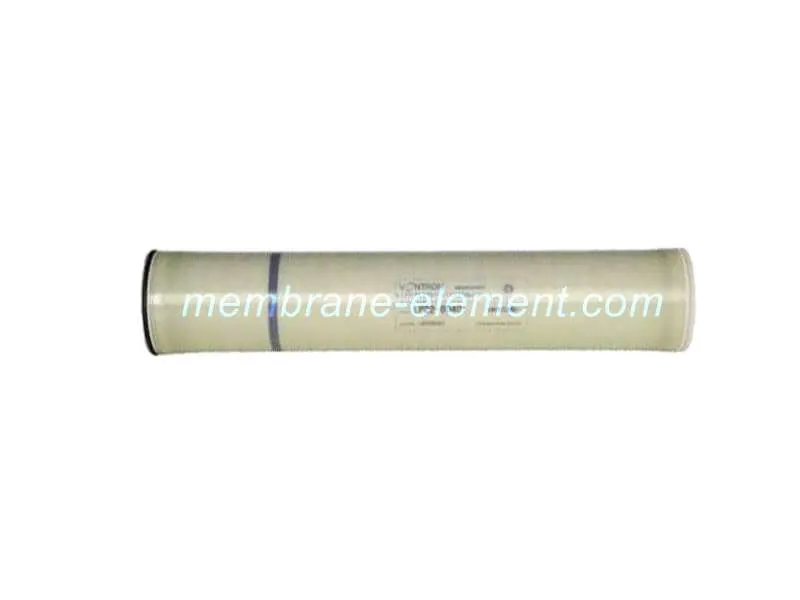
Xi’an CHIWATEC Water Treatment Technology provide the RO membrane to clients both inland and oversea with more than 10years experience. We manufacture our own brand Daltonen RO membrane and we are also the official distributor of Dupont, Toray, CSM, Nitto, LG and Vontron RO membrane. Whatever product you need, we cold meet your requirement.
Contact me for more info and best price.