RO membrane feed water requirements decide how long your membrane elements last — a clean, oxidant-free inlet water can double membrane life, while suspended solids, scaling salts, algae, or oxidants in the feed destroy elements in months. This guide answers the most common questions about reverse osmosis membrane feed water: what the inlet water must not contain, how chlorine and ozone interact with polyamide membranes, what removal rates to expect, and how to plan feed water quality with design software.
RO Membrane Feed Water Requirements: Why Inlet Quality Decides Membrane Life
RO membrane feed water requirements exist to protect the polyamide skin layer and the pressure vessel internals from four damage mechanisms:
- Particle fouling — suspended solids plug the feed channel and increase differential pressure.
- Scaling — calcium sulfate and other sparingly soluble salts precipitate on the concentrate side.
- Biofouling — algae and microorganisms grow into a biofilm that is difficult to remove.
- Oxidation — free chlorine, ozone, and other oxidants attack the polyamide skin irreversibly.
Each mechanism has a clear prevention path, and all four are covered in the fouling prevention framework — feed water control is the first line of defense.
What RO Feed Water Must Not Contain
Ensure RO and ion exchange systems do not contain suspended solids, calcium sulfate, algae, or oxidants. Adhering to strict water quality standards minimizes impurities that affect system performance and lifespan:
| Parameter | Requirement |
| Suspended solids | SDI15 below 5 (ideally below 3); turbidity below 1 NTU |
| Scaling salts (calcium sulfate, carbonate) | Below saturation; antiscalant dosing where needed |
| Algae and microorganisms | Removed by pretreatment to prevent biofouling |
| Oxidants (free chlorine, ozone) | None — RO inlet water must be dechlorinated |
| Oil and grease | Below detection; coagulant residues excluded |
Every one of these requirements is enforced upstream by the pretreatment train — media filtration, cartridge filtration, antiscalant dosing, and dechlorination protect the membrane elements downstream.
Chlorine and Polyamide Membranes: The FT30 Reality
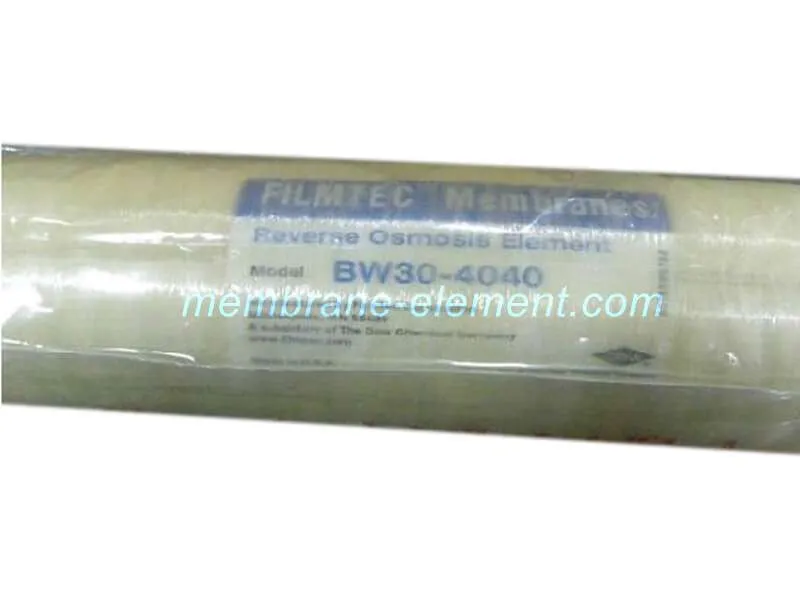
Dow’s FILMTEC FT30 and every other aromatic polyamide composite membrane on the market must not be exposed to free chlorine. Chlorine oxidation attacks the polyamide skin layer, permanently increasing salt passage — a damage that cleaning cannot reverse.
- Dechlorination of RO inlet water is required, not optional — use activated carbon filtration or sodium bisulfite (SBS) dosing to remove residual chlorine.
- Target residual chlorine below 0.1 ppm at the membrane inlet, ideally undetectable.
- Monitor continuously — a chlorine breakthrough event can damage an entire train within hours.
The same chlorine-free rule applies to cleaning solutions — never mix cleaning chemicals with chlorinated water.
Ozone as Pretreatment Oxidant: Risks and Alternatives
While ozone can be used in RO inlet water pretreatment, precautions should be taken to remove residual ozone before membrane contact. Ozone is a stronger oxidant than chlorine — any residual ozone reaching the polyamide membrane causes rapid, irreversible damage.
- Ozone for disinfection — effective in the pretreatment stage for algae and organic removal, before the RO unit.
- Residual removal — install a deozonation step (activated carbon or reducing agent) so the RO inlet carries zero residual ozone.
- Alternatives — consider UV radiation or sodium bisulfite for effective disinfection without oxidizing membrane elements.
If oxidation damage is suspected, the resulting performance loss shows up as rising salt passage and falling desalination rate — the first signal that inlet protection failed.
What RO Membranes Remove: Ion and Organic Rejection Rates
Reverse osmosis membranes effectively remove ions and organics, with a salt removal rate of up to 99% and organic removal rate of at least 99%. RO membranes excel in purifying influent water compared with nanofiltration membranes, which pass more monovalent salts and small organics.
- Dissolved salts — up to 99% removal; specific ion rejection varies by ion charge and size (refer to the product specification table for typical removal rates of specific ions, and the FT30 data sheet for uncommon ions).
- Organics — 99% or better for most organic compounds, protecting downstream ion exchange resin from organic fouling.
- Microorganisms and particles — removed by size exclusion alongside the ion rejection.
For the exact numbers behind rejection and the difference between standard, actual, and system desalination rates, see our complete guide.
Design Software and Components for Feed Water Planning
Planning feed water quality before installation avoids most downstream failures. Membrane design software supports this planning:
- ROSA5 design software — includes design calculations for FILMTEC NF270 and NF200 nanofiltration components, with a professional calculation engine and improved database processing; product manuals are separated for easy access.
- Mixed water sources — for mixed or unconfirmed influent water quality, follow surface water design calculation guidelines in ROSA to ensure accurate system sizing and performance.
- Version differences — discrepancies in SW30-4040 calculation results between ROSA4 and ROSA5 stem from improvements in membrane manufacturing technology; ROSA5 reflects the enhanced membrane performance accurately.
- Pressure housings and adapters — Dow FilmTec does not sell pressure housings but provides component adapters and couplings with membrane elements; spare parts such as couplings and O-rings are available for purchase separately.
Understanding how the RO membrane works helps you interpret the design software output — feed pressure, recovery, and flux all interact with feed water quality.
Conclusion
Meeting RO membrane feed water requirements — no suspended solids, no scaling salts, no algae, and no oxidants — is the cheapest insurance your RO plant can buy. Keep chlorine and ozone away from the polyamide skin, dechlorinate the inlet, and monitor rejection rates; the membrane elements will repay you with years of rated performance.
CHIWATEC supplies Daltonen, Dupont, Toray, CSM, Nitto, LG, and Vontron RO membranes with more than ten years of export experience. Contact us at [email protected], [email protected], or [email protected] for feed water treatment design and membrane selection.
FAQ:
What are the RO membrane feed water requirements?
RO membrane feed water requirements are: no suspended solids (SDI15 below 5, ideally below 3), no calcium sulfate or other scaling salts above saturation, no algae or microorganisms, and no oxidants — free chlorine and ozone must be removed before the inlet. Turbidity should stay below 1 NTU.
Can chlorine be used with RO membranes?
No. Aromatic polyamide composite membranes, including Dow FILMTEC FT30, are irreversibly damaged by free chlorine. RO inlet water must be dechlorinated — with activated carbon or sodium bisulfite — to below 0.1 ppm residual chlorine, ideally undetectable.
Is ozone safe for RO pretreatment?
Ozone can be used for disinfection in the pretreatment stage, but residual ozone must be completely removed before water contacts the membrane. Consider UV radiation or sodium bisulfite as alternatives that do not oxidize membrane elements.
How much salt and organic matter can an RO membrane remove?
RO membranes remove up to 99% of dissolved salts and at least 99% of organic matter. Specific ion rejection varies by charge and size — check the membrane specification table, or the FT30 data sheet for uncommon ions.
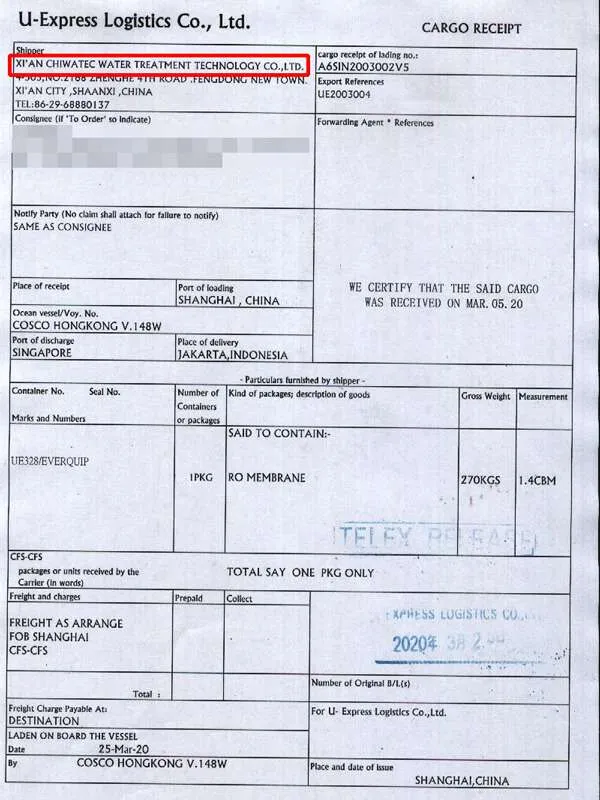
Xi’an CHIWATEC Water Treatment Technology provide the RO membrane to clients both inland and oversea with more than 10years experience. We manufacture our own brand Daltonen RO membrane and we are also the official distributor of Dupont, Toray, CSM, Nitto, LG and Vontron RO membrane. Whatever product you need, we cold meet your requirement.
Contact me for more info and best price.