What makes reverse osmosis membrane separation technology so effective? RO membrane separation technology operates at the molecular level, removing dissolved salts, organic compounds, and microorganisms from water without phase change at room temperature. This comprehensive guide explores the fundamental characteristics of RO membrane separation technology — from the no-phase-change principle to high automation and modular design — explaining why it dominates modern water treatment applications. The membrane separation principle behind these systems is covered in detail in our companion guide.
Membrane separation technology — particularly reverse osmosis — has transformed the global water treatment landscape. The technology’s unique characteristics — operation at room temperature without phase change, energy efficiency compared to thermal processes, modular scalability, and high automation potential — have made it the preferred choice for applications ranging from municipal drinking water treatment to pharmaceutical ultrapure water production. The global membrane separation market was valued at approximately USD 26.8 billion in 2025 and is projected to reach USD 52.4 billion by 2034, growing at a CAGR of 7.8% (Grand View Research, 2025). Understanding the fundamental characteristics of RO membrane separation technology is essential for anyone involved in water treatment system design, specification, or operation.
*Last Updated: August 2026 | Industry-Verified Technical Data
Key Industry Trends in Membrane Separation (2026 Update)
Four technology shifts are reshaping the membrane separation market in 2026:
- Next-generation membrane materials: Graphene oxide, thin-film nanocomposite (TFN), and biomimetic aquaporin membranes are entering commercial demonstration, promising 2-3x higher permeability while maintaining >99.5% salt rejection.
- Energy-independent RO systems: Integrating RO with renewable energy (solar PV, wind) and advanced energy recovery devices is enabling off-grid desalination at costs below USD 0.50 per cubic meter for brackish water applications.
- Membrane bioreactor (MBR) integration: Combining membrane separation with biological treatment in MBR systems is revolutionizing wastewater treatment, achieving effluent quality suitable for direct reuse in a single process step.
- Digital twin for membrane systems: Real-time digital simulation of membrane performance using AI and machine learning allows operators to predict fouling, optimize cleaning schedules, and extend membrane life by 20-30%.
These trends build directly on the fundamental characteristics of RO membrane separation technology described below. For the market history behind this growth, see our history of reverse osmosis technology guide.
No Phase Change at Room Temperature: The Energy Advantage of RO Membrane Separation Technology
One of the most significant characteristics of RO membrane separation technology is that it operates at room temperature without phase change. Unlike thermal desalination processes (multi-stage flash distillation, multi-effect distillation) that require heating water to its boiling point, RO separation occurs in the liquid phase at ambient temperature. This fundamental difference has profound implications for energy consumption: RO membrane systems typically consume 0.5-1.5 kWh/m3 for brackish water and 2.5-4.0 kWh/m3 for seawater, compared to 10-25 kWh/m3 for thermal desalination processes. The absence of phase change also means there is no risk of thermal degradation of heat-sensitive compounds, making RO ideal for food, beverage, and pharmaceutical applications where product quality must be preserved.
Practical Implications of the No-Phase-Change Principle
- Lower operating costs: Energy is the largest operating expense in RO systems, and the no-phase-change principle keeps it 80-95% lower than thermal alternatives.
- Chemical integrity preserved: Room temperature operation preserves the chemical integrity of feedwater components, beneficial for process water recycling in food and pharmaceutical industries.
- Simpler plant design: No cooling water or condenser systems are required, simplifying system design and reducing capital costs.
Molecular-Level Filtration: Separating Solute and Water
RO membrane separation technology achieves separation of solute (dissolved substances) and water at the molecular level. The thin-film composite polyamide membrane has a dense active layer with pore sizes of approximately 0.0001 micron (0.1 nanometer), small enough to reject hydrated ions, organic molecules above 100-200 Daltons molecular weight, and all suspended solids and microorganisms. Water molecules pass through the membrane by dissolving into the polymer matrix and diffusing through it (solution-diffusion mechanism), while dissolved ions and larger molecules are retained on the feed side. Our how does RO membrane work guide walks through this transport mechanism step by step.
Typical RO membrane rejection rates:
| Contaminant Class | Typical Rejection |
| Monovalent ions (Na+, Cl-) | 95-99% |
| Divalent ions (Ca2+, Mg2+, SO42-) | 98-99.8% |
| Bacteria and viruses | 99.99%+ |
| Organic compounds (MW > 200 Da) | 90-99% |
| Particulate matter (0.1 micron and above) | 100% |
This broad-spectrum removal capability in a single process step is unmatched by any other water treatment technology operating at comparable energy consumption. See our guide to RO membrane evaluation indices to learn how these rejection rates are measured and verified.
Ideal for Thermal-Sensitive Substances
Because RO membrane separation technology operates at ambient temperature without heating, it is ideally suited for concentrating or purifying heat-sensitive substances such as enzymes, proteins, vitamins, flavors, and pharmaceutical intermediates. In the food industry, RO is used to concentrate fruit juices (preserving volatile flavor compounds that would be lost in thermal evaporation), recover whey proteins in dairy processing, and polish brewing water while retaining beverage characteristics. In the pharmaceutical industry, RO is the standard first stage for producing Water for Injection (WFI) and purified water, as it avoids the thermal degradation risks associated with distillation.
Application Examples
- Fruit juice concentration: RO achieves 25-35 degree Brix concentration at room temperature, preserving color, flavor, and nutritional value.
- Enzyme recovery: RO can concentrate enzyme solutions 5-10x without denaturation.
- Antibiotic purification: RO removes low-molecular-weight impurities while preserving the active pharmaceutical ingredient.
Low Operating Pressure Requirements for Brackish Water
RO membrane separation technology operates at relatively low pressure compared to other pressure-driven membrane processes for equivalent separation tasks. While nanofiltration requires 70-150 psi and ultrafiltration requires 15-50 psi, RO operating pressure varies by feedwater salinity:
| Application | Feed TDS | Operating Pressure |
| Low-pressure brackish water RO | Below 2,000 ppm | 100-200 psi (7-14 bar) |
| Standard brackish water RO | 2,000-10,000 ppm | 200-400 psi (14-28 bar) |
| High-pressure brackish water RO | 10,000-15,000 ppm | 400-600 psi (28-42 bar) |
| Seawater RO | ~35,000 ppm | 800-1,200 psi (55-83 bar) |
The relatively low operating pressure for brackish water applications translates directly to lower pump capital cost, lower energy consumption, and simpler piping and fitting requirements compared to high-pressure thermal or membrane processes. Detailed pressure limits per element type are listed in our RO membrane operating pressure reference.
Simple Equipment with Compact Design and Easy Maintenance
RO membrane separation equipment is characterized by its simple, compact design compared to alternative treatment technologies. A complete RO system consists of a feedwater pump, pre-filtration, membrane pressure vessels, flow control valves, and instrumentation — all mounted on a skid. This simplicity offers several advantages:
- Modular construction: RO systems are assembled from standardized components (membrane elements, pressure vessels, pumps, valves) that can be easily replaced or upgraded individually.
- Small footprint: A 100 m3/hr industrial RO system occupies approximately 50-80 square meters, compared to 200-400 square meters for an equivalent thermal desalination plant.
- Low maintenance requirements: No moving parts within the membrane modules, minimal rotating equipment (only the feed pump), and no high-temperature or high-pressure vessels (for brackish water systems).
- Quick installation: Factory-assembled skid-mounted RO systems can be installed and commissioned within 1-2 weeks on a prepared foundation.
Easy Automatic Control and High Automation with Low Labor Requirements
RO membrane separation technology is highly amenable to fully automatic control and operation, significantly reducing operator labor requirements compared to conventional treatment plants.
PLC/HMI Automatic Control and Operation
A modern industrial RO system is typically controlled by a Programmable Logic Controller (PLC) with a Human-Machine Interface (HMI) touchscreen that provides:
- Automatic start-up and shutdown sequences: Including low-pressure flushing to remove trapped air, gradual pressure ramp-up to prevent hydraulic shock, and automatic shutdown on alarm conditions.
- Continuous performance monitoring: Real-time display of feed, permeate, and concentrate flow rates, pressures, conductivity, temperature, and calculated normalized parameters.
- Automatic cleaning triggers: The control system can automatically initiate Clean-in-Place (CIP) cycles when normalized performance parameters reach user-defined thresholds — see our RO membrane cleaning frequency guide for trigger values.
- Remote monitoring and control: Modern RO systems support SCADA integration, allowing operators to monitor and control the system from a central control room or mobile device.
- Data logging and trending: Historical performance data is automatically stored for trend analysis, compliance reporting, and predictive maintenance planning.
Low Labor Requirements and Unattended Operation
Modern RO systems with PLC-based controls can operate continuously for weeks between routine operator rounds, with alarms automatically notifying operators of any performance deviations. A 1,000 m3/day industrial RO plant typically requires 0.5-1 full-time equivalent operator, compared to 3-5 FTE for an equivalent conventional treatment plant with chemical coagulation, sedimentation, and media filtration. Automatic chemical dosing (antiscalant, acid, cleaning chemicals) is controlled by flow-proportional signals, and remote diagnostics allow manufacturers to troubleshoot and optimize systems without onsite visits.
Modular Design for Flexible Capacity Expansion
The modular design of RO membrane separation technology offers unparalleled flexibility in system capacity. Because RO systems are built from standardized membrane elements (typically 4-inch or 8-inch diameter, 40-inch length) and pressure vessels, capacity can be adjusted by adding or removing elements and vessels. Key scalability features include:
- Incremental capacity increases: Unlike thermal processes that require complete new trains for capacity expansion, RO systems can be expanded by adding individual pressure vessels or complete arrays.
- Staged investment: A plant can be designed with space and piping provisions for future expansion modules, allowing capacity additions as demand grows without disrupting existing operations.
- Duty/standby configurations: Critical applications can include N+1 redundancy, with a standby array that automatically activates when the primary array requires cleaning or maintenance.
- Containerized options: Small to medium RO systems can be installed in standard shipping containers for rapid deployment, factory testing, and easy relocation.
This modular scalability is one of the key reasons RO has displaced thermal desalination in most new installations worldwide.
Broad Application Range Across Industries
RO membrane separation technology has the broadest application range of any water treatment technology, spanning from ultrapure water production to municipal wastewater treatment:
- Drinking water production: Brackish water desalination, fluoride/nitrate/arsenic removal, taste and odor improvement for surface water supplies.
- Seawater desalination: Municipal and industrial water supply in water-scarce coastal regions, now producing over 100 million m3/day globally.
- Pharmaceutical ultrapure water: RO is the essential first stage in USP purified water and WFI systems, removing 95-99% of feedwater contaminants before polishing steps.
- Food and beverage processing: Process water, juice concentration, dairy (whey and milk concentration), brewing, soft drink production.
- Electronics and semiconductor: Ultrapure water (18.2 Mohm-cm) for wafer fabrication, requiring double-pass RO with EDI polishing.
- Power generation: Boiler feedwater treatment, cooling tower blowdown recovery, FGD wastewater treatment.
- Wastewater reuse: Municipal and industrial effluent treatment for non-potable reuse and indirect potable reuse.
- Oil and gas: Produced water treatment, injection water for enhanced oil recovery, refinery process water.
Energy Efficiency of RO Membrane Separation Technology vs Thermal Processes
The energy efficiency of RO membrane separation technology compared to thermal processes is one of its most compelling advantages. A detailed comparison reveals:
| Process | Specific Energy Consumption |
| Brackish water RO | 0.5-1.5 kWh/m3 — the most energy-efficient desalination technology, approaching the theoretical minimum of 0.2-0.5 kWh/m3 |
| Seawater RO (with ERD) | 2.5-3.5 kWh/m3 — modern SWRO with pressure exchangers approaches the thermodynamic minimum of ~1.0 kWh/m3 |
| Multi-stage flash distillation (MSF) | 10-15 kWh/m3 thermal + 3-5 kWh/m3 electrical (13-20 kWh/m3 total equivalent) |
| Multi-effect distillation (MED) | 5-8 kWh/m3 thermal + 2-3 kWh/m3 electrical (7-11 kWh/m3 total equivalent) |
| Mechanical vapor compression (MVC) | 8-15 kWh/m3 electrical — more efficient than MSF/MED but still 3-5x higher than RO |
This energy advantage translates to significantly lower greenhouse gas emissions: a 100,000 m3/day SWRO plant with ERD produces approximately 70-80% less CO2 than an equivalent-capacity thermal desalination plant. For a deeper look at the technology landscape, see our membrane desalination technology guide.
Conclusion
RO membrane separation technology dominates modern water treatment because it delivers molecular-level purification without phase change, at low operating pressure, with compact skid-mounted equipment, full automation, modular scalability, and energy consumption 80-95% below thermal alternatives. These characteristics make RO membrane separation technology the preferred choice across drinking water, seawater desalination, pharmaceutical, food and beverage, electronics, power, wastewater, and oil and gas applications.
CHIWATEC has been engineering industrial RO membrane separation systems for over a decade, delivering advanced solutions for diverse water treatment challenges worldwide. Every CHIWATEC system is designed with fully automated PLC/HMI control, touchscreen interfaces, and remote monitoring capabilities as standard features.
Contact us for RO membrane separation system design and supply: [email protected] | [email protected] | [email protected]
FAQ: Membrane Separation Applications and Performance
Why is RO membrane separation more energy-efficient than thermal desalination?
Because RO membrane separation technology operates at room temperature without phase change. Brackish water RO consumes 0.5-1.5 kWh/m3 and seawater RO 2.5-4.0 kWh/m3, while thermal processes (MSF, MED) require 7-20 kWh/m3 equivalent — an 80-95% energy saving.
What is the smallest particle size RO membranes can remove?
The dense polyamide active layer of a thin-film composite RO membrane has an effective pore size of about 0.1 nanometer (0.0001 micron), rejecting hydrated ions, organic molecules above 100-200 Daltons, and 99.99%+ of bacteria and viruses, plus essentially 100% of particulate matter above 0.1 micron.
What operating pressure does RO membrane separation need for brackish water?
Low-pressure brackish RO (TDS below 2,000 ppm) runs at 100-200 psi (7-14 bar); standard brackish RO (2,000-10,000 ppm) at 200-400 psi (14-28 bar); high-pressure brackish RO (10,000-15,000 ppm) at 400-600 psi (28-42 bar); and seawater at 800-1,200 psi (55-83 bar).
Can RO membrane separation systems be expanded after installation?
Yes. The modular design of RO membrane separation technology allows adding individual pressure vessels or complete arrays without new trains. Plants can be designed with staged-investment provisions, N+1 duty/standby redundancy, and containerized deployment for rapid capacity growth.
Does RO membrane separation require full-time operators?
No. PLC/HMI control, automatic start-up/shutdown and CIP triggers, SCADA integration, and remote diagnostics allow unattended operation — a 1,000 m3/day plant typically needs only 0.5-1 full-time equivalent operator versus 3-5 FTE for conventional treatment plants.
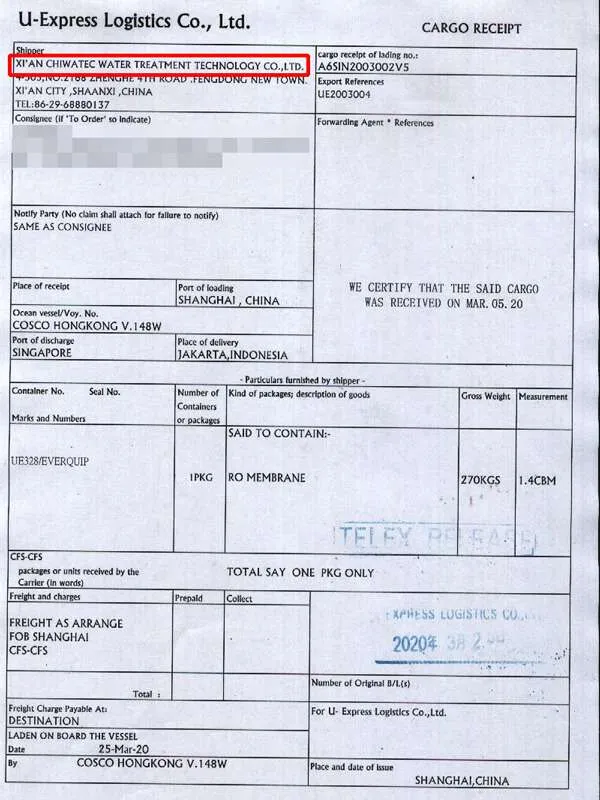
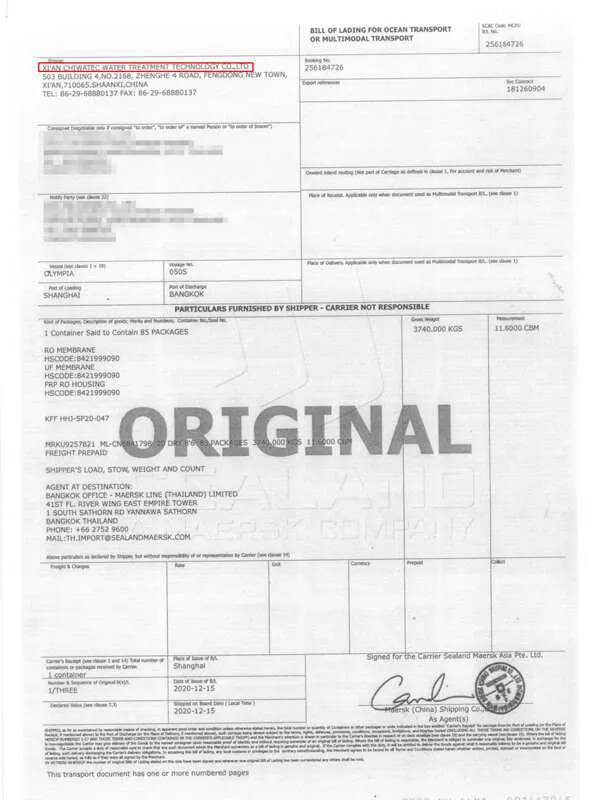
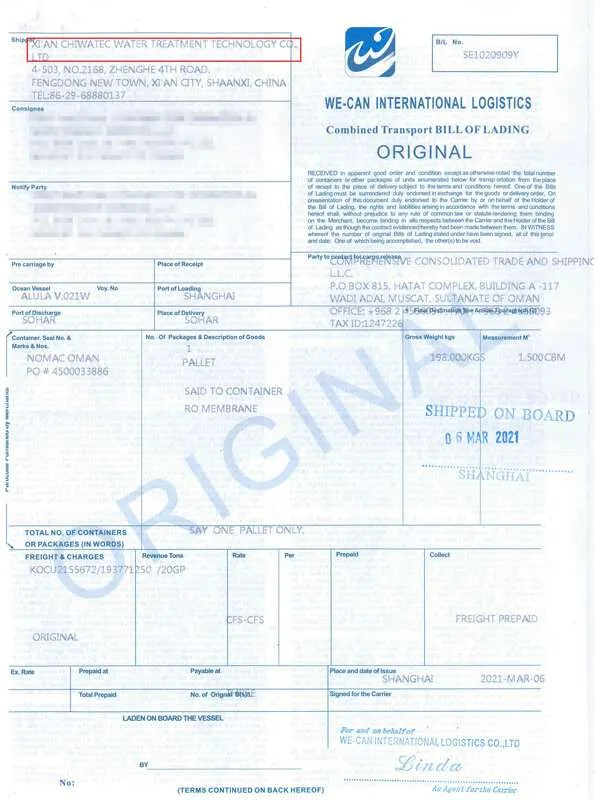
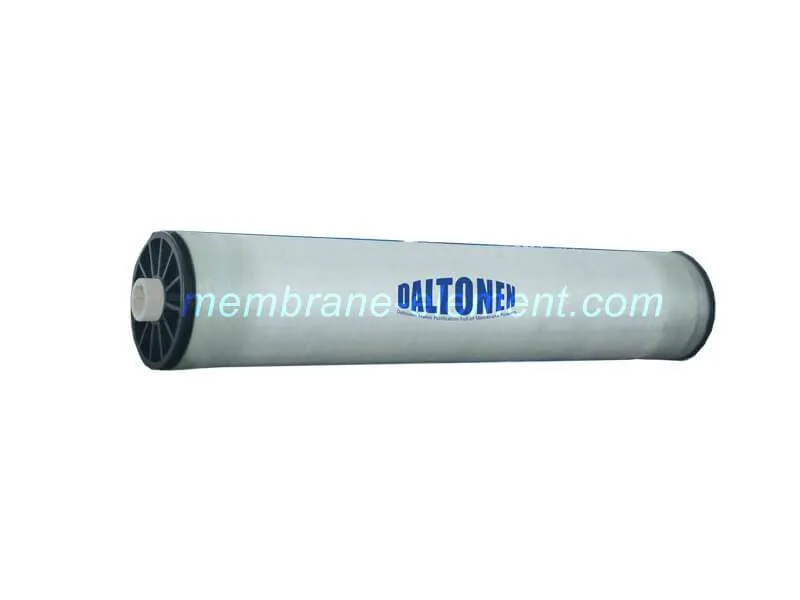
Xi’an CHIWATEC Water Treatment Technology provide the RO membrane to clients both inland and oversea with more than 10years experience. We manufacture our own brand Daltonen RO membrane and we are also the official distributor of Dupont, Toray, CSM, Nitto, LG and Vontron RO membrane. Whatever product you need, we cold meet your requirement.
Contact me for more info and best price.