RO virus and bacteria removal is one of the strongest arguments for reverse osmosis in drinking water and pharmaceutical applications — a well-run RO system removes over 99.9% of viruses and bacteria (a 3-log reduction or better) by size exclusion alone. But the barrier only works if the rest of the system is disciplined: permeate-side re-growth, oxidant control, and feed water quality all decide whether that 3-log claim holds in practice. This guide covers RO virus and bacteria removal, the operating factors that protect the barrier, and the practical questions of SDI, lubrication, and scale inhibitors.
RO Virus and Bacteria Removal: The 99.9% Barrier
Reverse osmosis is highly effective in removing microorganisms, including viruses and bacteria, with a removal rate of over 99.9% (greater than 3-log reduction). The mechanism is primarily physical: the membrane skin layer has pores far smaller than bacteria (0.2–4 µm), viruses (20–300 nm), and protozoan cysts, so they are excluded at the surface.
| Microorganism | Typical Size | RO Removal |
| Bacteria | 0.2–4 µm | >99.9% (3-log+) |
| Viruses | 20–300 nm | >99.9% (3-log+) |
| Protozoa (Giardia, Cryptosporidium) | >4 µm | >99.9% |
RO therefore functions as a physical disinfection barrier — no chemical dosing required for the removal itself — which is why it is a core step in municipal and pharmaceutical water trains.
Preventing Re-Growth on the Permeate Side
Maintaining the RO virus and bacteria removal barrier means preventing re-growth: post-treatment re-growth of microorganisms on the permeate side can occur, depending on system design, operation, and maintenance practices. Proper assembly, monitoring, and management are crucial to ensure sustained microbial control:
- Permeate-side hygiene — dead legs, unvented piping, and stagnant storage tanks allow biofilm to form downstream of the membrane.
- System assembly — leak-free joints and seals prevent untreated water from bypassing the membrane barrier.
- Disinfection of distribution — UV or chemical disinfection after RO protects the product water in the distribution loop.
- Regular monitoring — periodic microbial testing verifies the 3-log claim continues to hold.
Re-growth control is part of the broader fouling prevention discipline — the same hygiene that protects the membrane protects the product water.
Temperature, Compaction, and Production: Operating Factors
Water production in reverse osmosis systems increases with rising temperature and decreases with falling temperature. To maintain consistent water production at higher temperatures, operating pressure should be reduced, and vice versa for lower temperatures — refer to the temperature correction factor (TCF) guidelines to adjust for temperature variations.
- Temperature range — the recommended operating range for FILMTEC dry and wet membrane elements is 0–45 °C.
- Membrane compaction — occurs under high-temperature and high-pressure conditions, leading to a reduction in water production and system output. This compaction is an irreversible decline in membrane performance. Composite membranes are more resistant to compaction than cellulose acetate membranes; however, frequent water hammer can still cause densification, which should be avoided.
Compaction and temperature effects matter most when sizing low energy RO membrane elements — a low-pressure element is more sensitive to pressure excursions than a standard BW element.
Oxidant Control: SMBS, ORP, and Residual Oxidation
Even after adding sodium bisulfite (SMBS) as a reducing agent, water can remain oxidative due to the presence of metal ions like Fe and Cu, which enhance oxidative tendencies. This phenomenon is especially prevalent in seawater desalination systems where the combination of NaCl, NaHCO3, and copper ions can promote oxidation. Monitoring the oxidation-reduction potential (ORP) is essential in severe cases to manage oxidative conditions effectively.
- Metal catalysis — Fe and Cu ions accelerate the oxidation of the polyamide skin even when chlorine has been reduced.
- Seawater systems — NaCl + NaHCO3 + copper ions create a persistently oxidative environment.
- ORP monitoring — track oxidation-reduction potential at the membrane inlet as the practical alarm for residual oxidants.
- Formaldehyde protection — formaldehyde (formalin) is not recommended as a protective fluid: it is suspected to be carcinogenic and can reduce water production, particularly within the first 6 hours of operating a new membrane. If it must be used, monitor its effects closely and follow safety guidelines.
Oxidant control starts with the feed water requirements — no free chlorine or ozone at the inlet, and confirmed dechlorination before the membrane.
Particle and Colloid Fouling: SDI15 and Early Warning
Particle and colloid pollution in RO or nanofiltration systems can severely reduce water production and desalination rates. The early sign of colloidal fouling is an increased system pressure difference. Sources of particles or colloids include bacteria, sludge, colloidal silicon, and corrosion products like iron.
- Early warning — a rising differential pressure across the first stage is the first symptom of colloidal fouling.
- Measurement — the silt density index (SDI15) is commonly used to measure fouling potential; high SDI values indicate a greater likelihood of fouling, necessitating effective pretreatment to protect the membranes.
- Target values — keep SDI15 below 5 (ideally below 3) with turbidity below 1 NTU.
Particle control is the same discipline as RO membrane maintenance monitoring — pressure drop trends tell you pretreatment is working before the membrane suffers.
Lubrication, Connectors, and Scale Inhibitors
Three practical compatibility questions:
- Silicone grease lubricant — silicone grease such as Dow Corning 111 is used as a lubricant for RO membranes because its high viscosity prevents it from penetrating the membrane surface. Unlike other oils or hydrophobic substances, silicone grease does not compromise the membrane’s functionality or integrity.
- Inner joints and adapters — FILMTEC NF90-400, NF270-400, NF200-400, BW30LE-440, and XLE-440 components come with their internal connectors; the necessary component adapters are supplied by the pressure vessel manufacturer. Inform your pressure vessel supplier of the specific component model in advance to obtain the appropriate end plate adapter.
- Scale inhibitor compatibility — a wide variety of commercial scale inhibitors are compatible with FILMTEC elements; scale inhibitor manufacturers and system suppliers have extensively tested these inhibitors for compatibility. The choice should be guided by the water type and specific system conditions — consult your water treatment engineering company to select the most appropriate inhibitor.
Conclusion
RO virus and bacteria removal delivers a 3-log physical barrier that no chemical disinfection alone can match — but the barrier is only as strong as the system around it. Control permeate-side hygiene, temperature and compaction, residual oxidants, and colloidal fouling, and the membrane keeps delivering >99.9% microbial removal for its full design life.
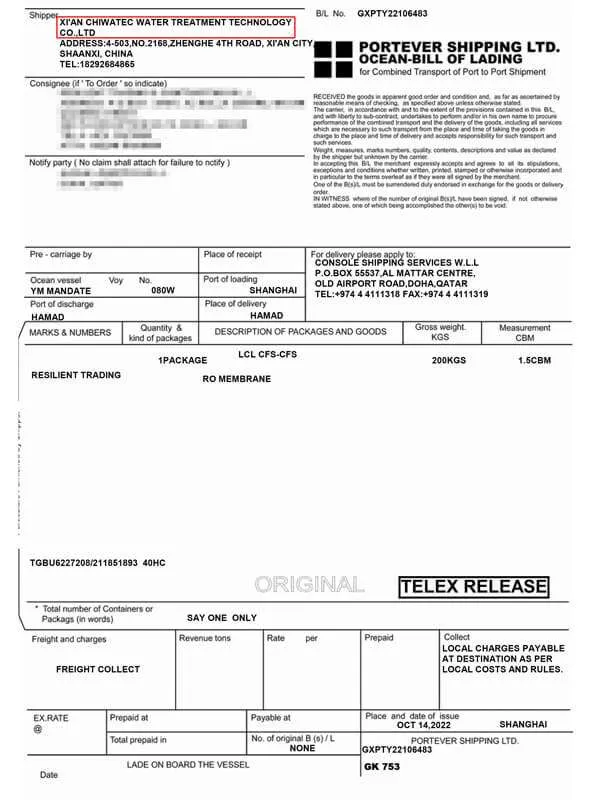
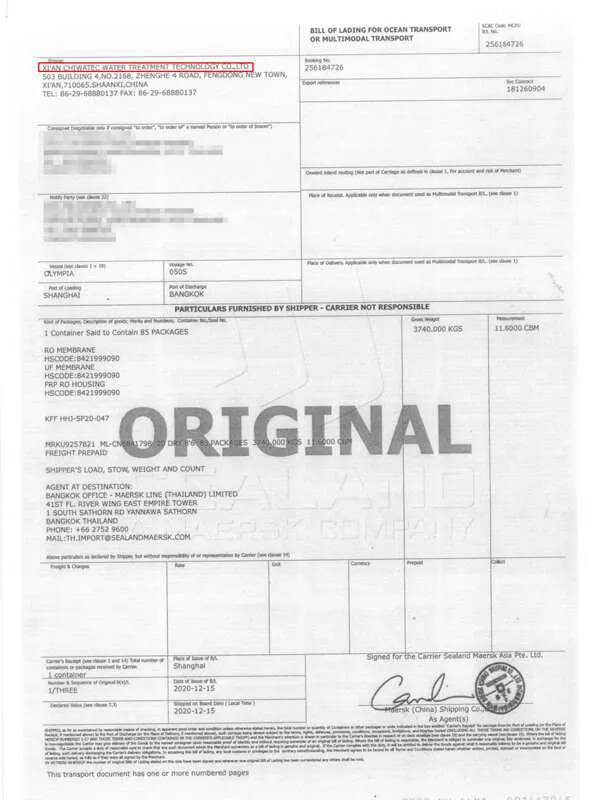
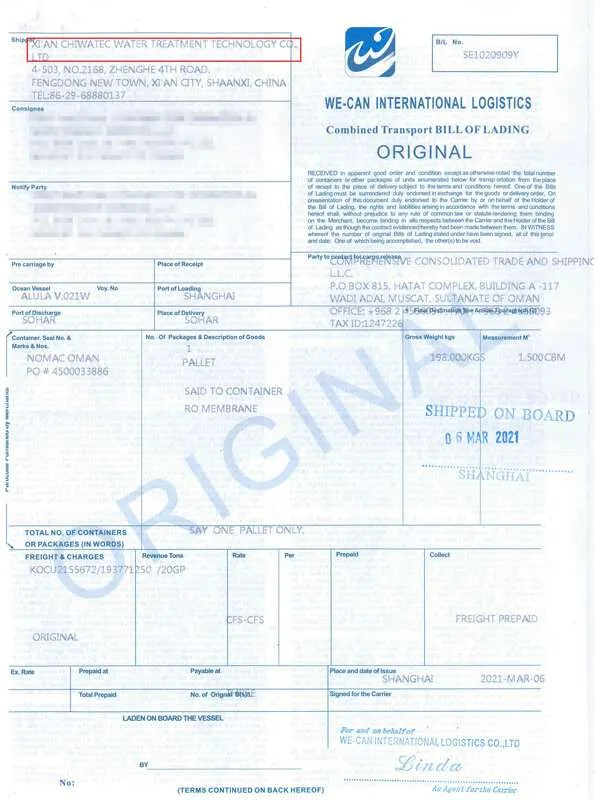
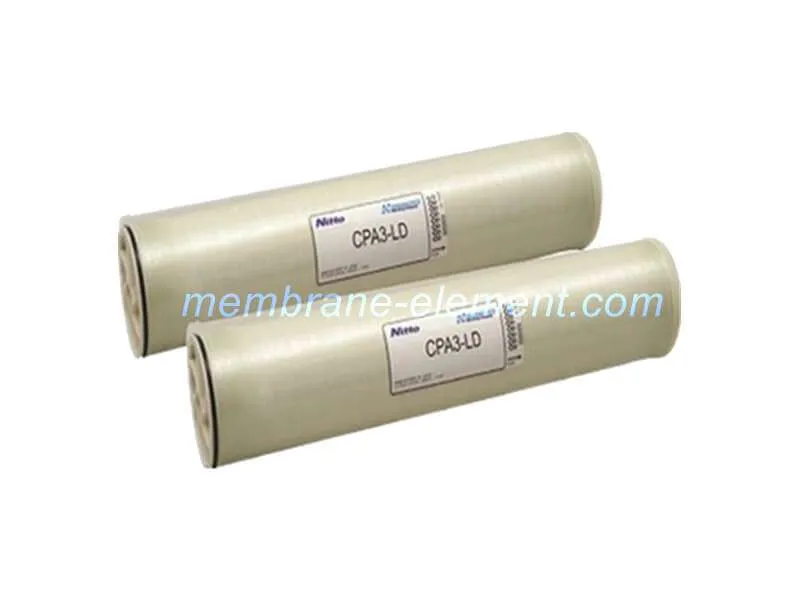
CHIWATEC supplies Daltonen, Dupont, Toray, CSM, Nitto, LG, and Vontron RO membranes with more than ten years of export experience. Contact us at [email protected], [email protected], or [email protected] for membrane selection and microbial-control system design.
FAQ:
Does reverse osmosis remove viruses and bacteria?
Yes. RO virus and bacteria removal exceeds 99.9% (greater than 3-log reduction) through physical size exclusion — membrane pores are far smaller than bacteria, viruses, and protozoan cysts. No chemical dosing is needed for the removal itself, though permeate-side hygiene must be maintained to prevent re-growth.
What causes membrane compaction?
Membrane compaction occurs under high-temperature and high-pressure conditions, causing an irreversible decline in water production. Composite membranes resist compaction better than cellulose acetate membranes, but frequent water hammer can still densify the membrane and should be avoided.
Why is the water still oxidative after adding sodium bisulfite?
Metal ions such as Fe and Cu enhance oxidative tendencies even after SMBS dosing — a phenomenon especially prevalent in seawater systems where NaCl, NaHCO3, and copper ions promote oxidation. Monitor the oxidation-reduction potential (ORP) at the membrane inlet in severe cases.
What is SDI15 and why does it matter?
SDI15 (silt density index) measures the fouling potential of feed water from particles and colloids — sources include bacteria, sludge, colloidal silicon, and iron corrosion products. A rising differential pressure is the early warning sign; keep SDI15 below 5, ideally below 3, with pretreatment.
Xi’an CHIWATEC Water Treatment Technology provide the RO membrane to clients both inland and oversea with more than 10years experience. We manufacture our own brand Daltonen RO membrane and we are also the official distributor of Dupont, Toray, CSM, Nitto, LG and Vontron RO membrane. Whatever product you need, we cold meet your requirement.
Contact me for more info and best price.