
RO ammonia and nitrate removal is a pH puzzle: nitrate is a charged ion that RO rejects at 70–95%, while ammonia switches between a rejected ion (NH4+) and a dissolved gas (NH3) that slips straight through the membrane depending on pH. Understanding this dissociation behavior — the same chemistry behind boron and silica — is essential for drinking water compliance. This guide covers RO ammonia and nitrate removal, the special FILMTEC applications for maple sap and hot-water disinfection, and the storage, dissolved-gas, and software questions from the field.
RO Ammonia and Nitrate Removal: pH-Dependent Contaminants
RO ammonia and nitrate removal follows one rule: charged species are rejected, uncharged species pass. Nitrate (NO3-) is always charged, so it is consistently rejected. Ammonia is the complication — it exists as ammonium (NH4+), which the membrane rejects, or as dissolved ammonia gas (NH3), which passes through.
| Contaminant | Species at Typical pH | RO Removal | Key Factor |
| Ammonium NH4+ | Ionized below pH 9.25 | High (ion rejection) | Keep pH below 9.25 to retain the charge |
| Ammonia NH3 | Dissolved gas above pH 9.25 | Passes through the membrane | pH control is essential |
| Nitrate NO3- | Always ionized | 70–95% | Higher pH improves rejection |
This pH-dependence is the same principle explained in our boron removal guide — boron, silica, ammonia, and nitrate are all governed by dissociation and charge.
Ammonia Removal: The pH 9.25 Dissociation Line
Ammonia behaves like a weak base whose species balance is set by pH:
- Below pH 9.25 — ammonia exists mainly as ammonium (NH4+), a charged ion that the RO membrane rejects effectively.
- Above pH 9.25 — ammonia converts to dissolved gas (NH3), which passes through the membrane with the water — the same gas-transport behavior as CO2.
- Practical implication — for ammonia removal, keep the feed pH below 9.25 so the ammonium ion form dominates; for ammonia rejection in aquaculture or wastewater, pH control is the lever.
The gas-transport mechanism is the same one that explains RO product water pH — dissolved gases pass, ions are rejected.
Nitrate Removal: 70–95% Rejection and pH Effects
The removal rate of nitrate varies with pH but generally falls between 70% and 95%:
- Nitrate is always ionized — as NO3-, it never converts to a dissolved gas, so RO rejection is consistent across normal operating pH.
- Higher pH improves nitrate rejection — operating at the upper end of the membrane’s pH window shifts the rejection upward within the 70–95% range.
- Single-pass limits — where nitrate standards are strict (drinking water limit is typically 50 mg/L as NO3, or 11.3 mg/L as N), a single RO pass may need blending or a second pass.
RO ammonia and nitrate removal works best when the feed water analysis is reliable — the same discipline as feed water requirements planning.
Special Applications: Maple Sap Concentration and HSRO Elements
Two FILMTEC products answer unusual application questions:
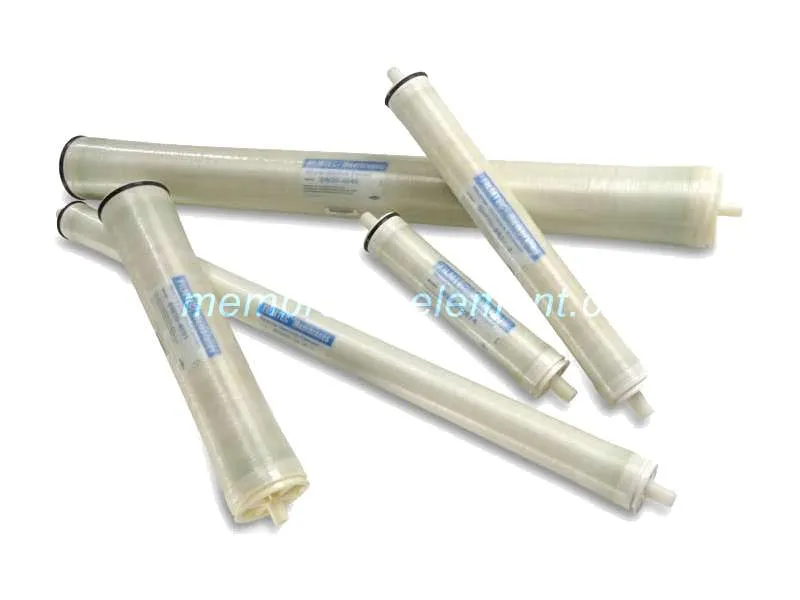
- Maple sap concentration — the NF270 nanofiltration element is specifically designed to concentrate maple sap. It efficiently separates water from the sugar, enhancing the sweetness of the sap while retaining its natural flavor and quality.
- HSRO (thermal disinfection reverse osmosis) — designed for applications requiring hot water disinfection:
- High effective membrane area — the largest in the industry, saving cost through fewer elements or lower operating flux.
- Full-fit structure — eliminates dead water areas, enhancing hygiene for strict sanitary requirements.
- FDA compliance — meets FDA standards for materials in contact with food.
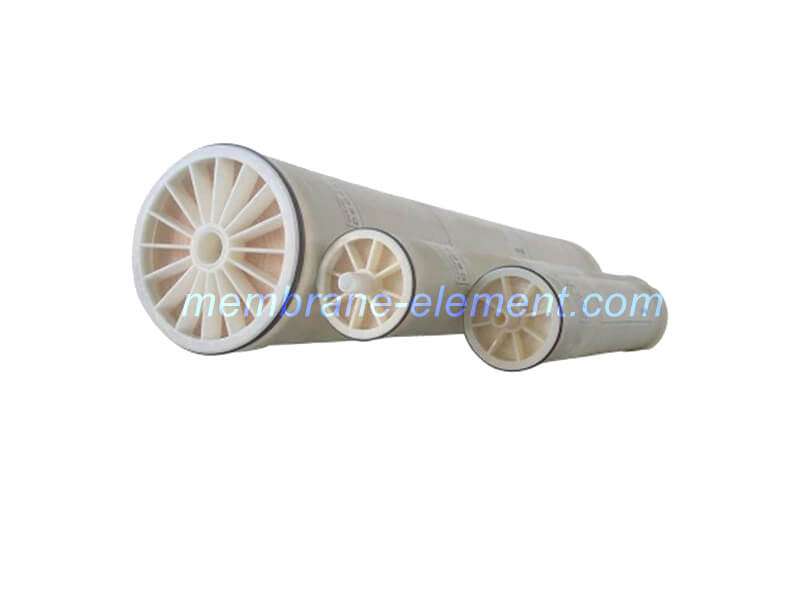
- Elements per pressure vessel — while there is no theoretical limit, the maximum allowable pressure difference in each pressure vessel is 60 psi (4.2 bar); 8-core pressure vessels typically accommodate up to 8 membrane elements. For ultra-low-pressure elements, shorter pressure vessels are recommended to balance water production and maintain consistent performance.
Storage Duration and Dissolved Gas Behavior
Storage and gas questions complete the practical picture:
- Storage duration for new unopened components — dry components can be stored indefinitely, making them highly convenient for long-term storage; wet components have a maximum storage period of 1 year. It is crucial to replace the protective fluid regularly as specified in the product guidelines to maintain the membrane’s integrity.
- Dissolved oxygen — RO membranes do not remove dissolved oxygen. Oxygen molecules pass through the membrane because of their small size and solubility in water; degassing (vacuum or membrane contactor) is required if deoxygenation is the goal.
Storage rules belong to the RO membrane maintenance routine — dry elements store indefinitely, wet elements need their protective fluid refreshed within a year.
ROSA Design File Management and Cleaning Services
Software and service questions from the same systems:
- Transferring ROSA5 designs by email — go to the calculation results interface, click Options then Create Database to generate a file (e.g., xxx.mdb), compress it with WinZip, and email it. The recipient saves the file, opens ROSA, navigates to File → Select Database, chooses the file, clicks Open and confirms Yes, selects the project from Select a Project, and clicks OK to enter the design interface.
- Project vs case — in ROSA, a Project encompasses various Cases, which are different calculation scenarios within the same project. For example, cases simulating different fouling factors (FF 1.00, 0.90, 0.85) predict performance over 1, 2, or 3 years, or cases assessing performance at 10, 15, 20, 25, and 30 °C.
- Saving results in subdirectories — ROSA saves projects by default in c:\ROSA5\Data\wtdata.mdb; calculation results stored as .html files can be moved from the default subdirectory to any other chosen directory.
- Cleaning agents and services — DIRECTOR Service offers system analysis and problem-solving recommendations, but Dow does not sell or approve cleaning chemicals; search for membrane cleaning chemicals and consult your system supplier before cleaning. See the ROSA software troubleshooting guide for the related software fixes.
Conclusion
RO ammonia and nitrate removal comes down to charge and pH: keep ammonia below pH 9.25 so it stays as rejected ammonium, and expect 70–95% nitrate rejection with better results at higher pH. The same dissociation thinking explains boron, silica, and dissolved gases — and pairing it with proper storage, special-purpose elements, and sound design-file management keeps the whole plant compliant and reliable.
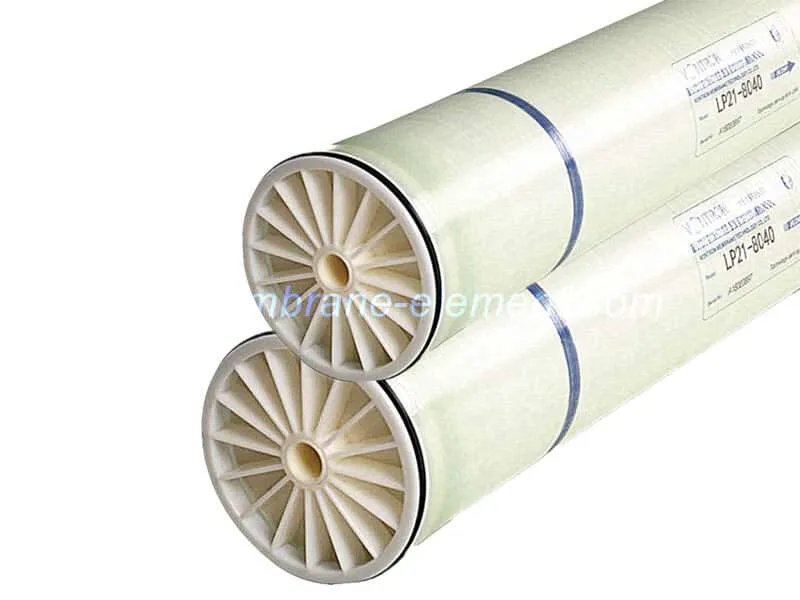
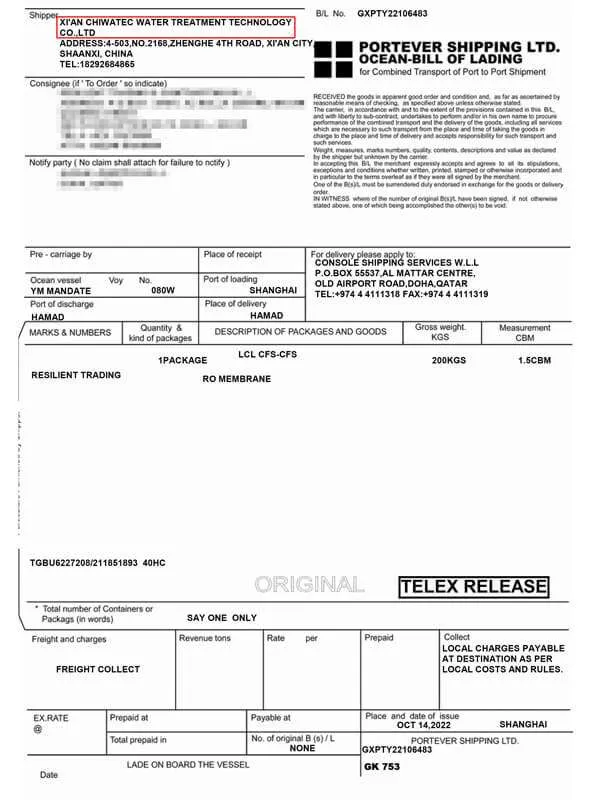
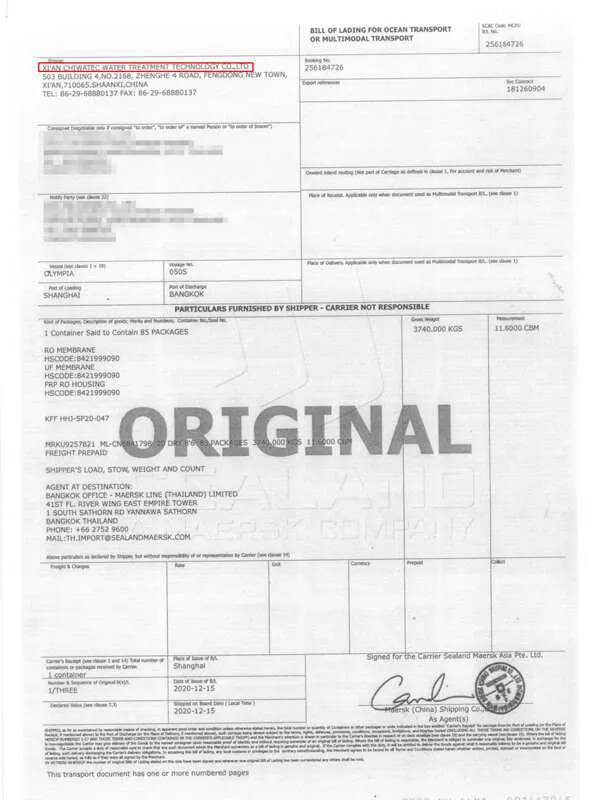
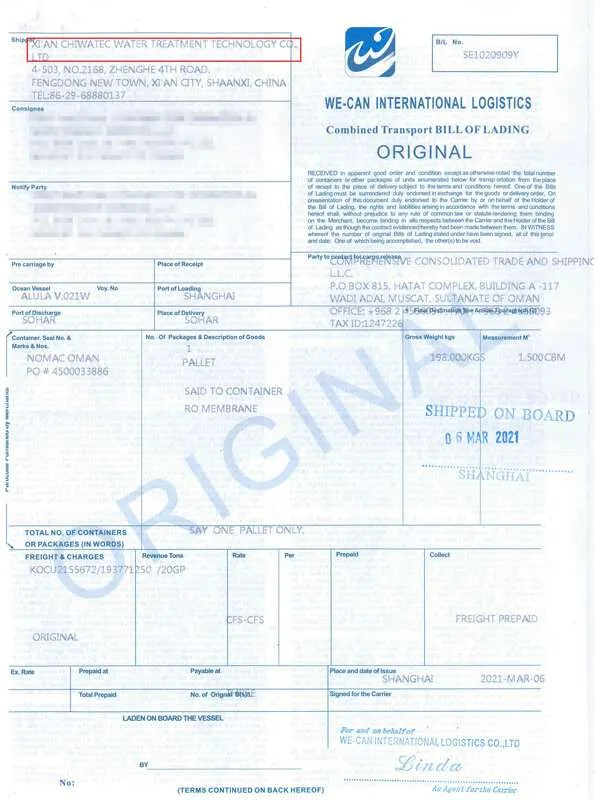
CHIWATEC supplies Daltonen, Dupont, Toray, CSM, Nitto, LG, and Vontron RO membranes with more than ten years of export experience. Contact us at [email protected], [email protected], or [email protected] for membrane selection and contaminant-removal design support.
FAQ:
Can RO remove ammonia from water?
Yes, when the pH is below 9.25 — ammonia exists as charged ammonium (NH4+) which RO rejects effectively. Above pH 9.25 it converts to dissolved ammonia gas (NH3) which passes through the membrane, so pH control is the key to RO ammonia removal.
What is the RO removal rate for nitrate?
Nitrate removal generally falls between 70% and 95%. Nitrate is always ionized as NO3-, so rejection is consistent across normal pH, and higher pH levels typically improve nitrate rejection within that range.
How long can new unopened FILMTEC components be stored?
Dry components can be stored indefinitely. Wet components have a maximum storage period of 1 year — replace the protective fluid regularly as specified in the product guidelines to maintain membrane integrity.
Can RO membranes remove dissolved oxygen?
No. Dissolved oxygen molecules are small and soluble in water, so they pass through the RO membrane. If deoxygenation is required, use vacuum degassing or a membrane contactor instead.
Xi’an CHIWATEC Water Treatment Technology provide the RO membrane to clients both inland and oversea with more than 10years experience. We manufacture our own brand Daltonen RO membrane and we are also the official distributor of Dupont, Toray, CSM, Nitto, LG and Vontron RO membrane. Whatever product you need, we cold meet your requirement.
Contact me for more info and best price.