Back pressure in RO water treatment is one of the most damaging conditions a reverse osmosis system can encounter — yet it is often overlooked until a membrane element fails. Back pressure occurs when the pressure on the product water side surpasses that on the feed water side, reversing the normal pressure differential that drives membrane filtration. This guide explains how back pressure damages spiral-wound membrane elements, what causes it in real plants, how to prevent it, and how the standard, actual, and system desalination rates of RO membrane elements differ.
Back Pressure in RO Water Treatment: What It Is and Why It Matters
Back pressure in RO water treatment refers to any condition in which the product (permeate) side of a membrane element is pressurized above the feed side. In a normal reverse osmosis operation, feed water at 10–70 bar (depending on feed salinity) pushes water through the semipermeable membrane into the low-pressure product water central pipe. When that pressure differential inverts, the membrane structure is stressed in the wrong direction.
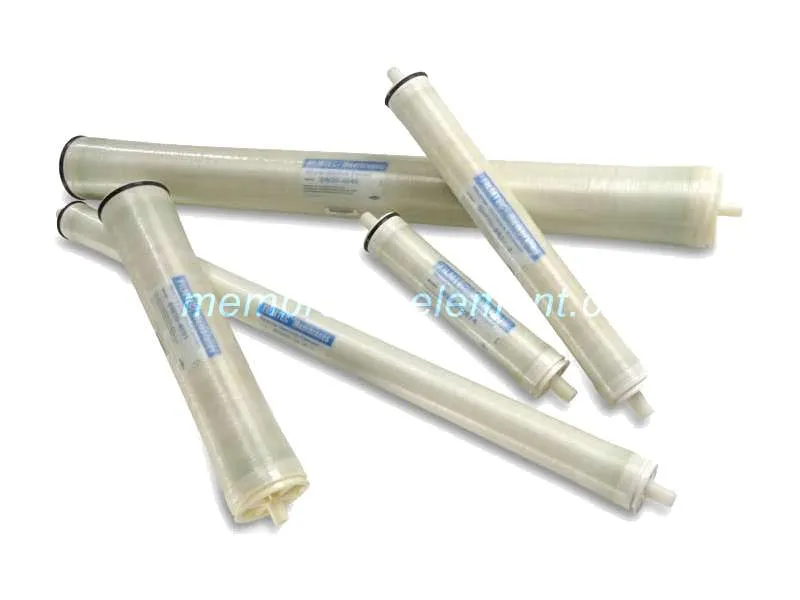
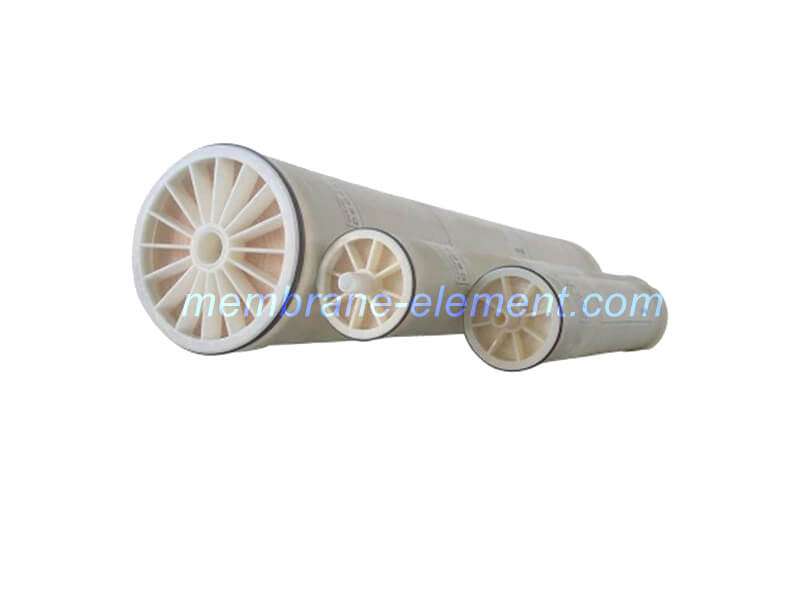
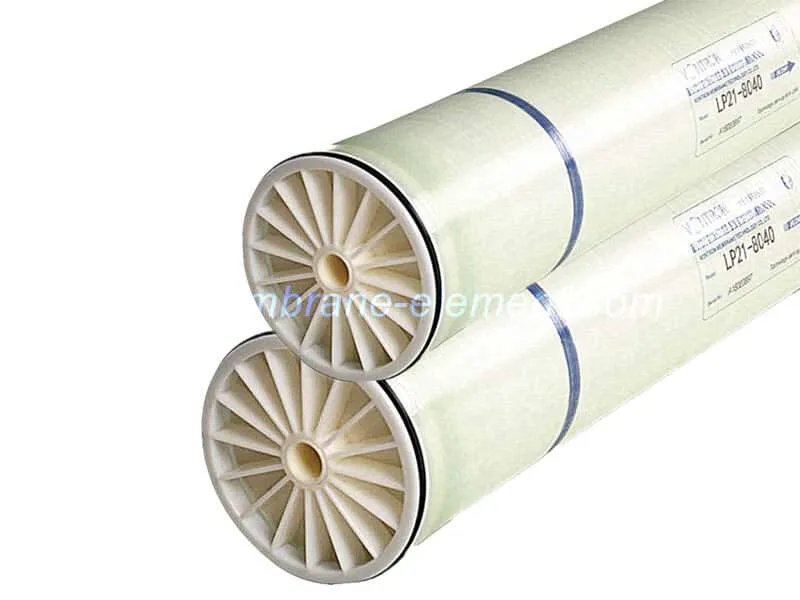
A roll-type (spiral-wound) membrane element resembles a long envelope-shaped membrane pocket. Feed water flows from the outside of the membrane; under feed pressure, fresh water enters the pocket, passes through a fabric support layer, and converges into the product water central pipe. A mesh layer disrupts water flow to ensure even distribution across the pocket surface, and the three sides of the pocket are bonded together with adhesive lines.
These bonding lines are the weak point. Even a modest back pressure can stress them, and repeated or severe back pressure events lead to delamination — the failure that turns a high-rejection element into a leaking one.
How Back Pressure Damages RO Membrane Elements
If the pressure on the product water side exceeds that on the feed water side, the bonding lines that seal the three sides of the membrane envelope may rupture. The result is a loss or significant reduction in the desalination rate of the membrane element, because feed water bypasses the membrane skin and mixes directly with product water.
- Bonding-line rupture — the adhesive seams delaminate, creating a direct leak path between feed and permeate.
- Desalination rate collapse — salt passage jumps; a membrane rated at 99.2% rejection can visibly lose performance in a single event.
- Irreversible damage — unlike fouling, which can often be cleaned, structural damage from back pressure typically requires membrane replacement.
- Element telescoping risk — in severe cases, repeated back-pressure spikes contribute to element telescoping and brine seal damage.
From a safety perspective, it is imperative to avoid back pressure in reverse osmosis systems. While RO filtration is inherently pressure-driven, back pressure events can occur through system malfunctions, improper valve settings, or mishandled operations, and they must be corrected promptly to maintain membrane integrity.
Common Causes of Back Pressure in RO Systems
Back pressure rarely appears by itself — it is almost always the result of operational or design oversights. The most common causes reported in RO plants include:
- Shutdown sequence errors — closing the product water valve while the high-pressure pump is still running traps pressure on the permeate side.
- Failed or missing check valves — without a check valve on the product line, pressure from downstream equipment or elevated product tanks pushes back into the element.
- Multi-stage pressure transfer — in two-stage trains, a restriction in the second stage can pressurize the inter-stage and permeate piping.
- Product booster pumps — permeate repressurization pumps that are oversized or wrongly sequenced can exceed the feed-side pressure at the element outlet.
- Mishandled valve settings — throttling the permeate line for flow control, a common mistake, directly raises product-side pressure.
These conditions share one theme: the product water side ends up at a higher pressure than the feed water side, inverting the design intent of the system.
Preventing Back Pressure: Design and Operating Guidelines
Prevention is far cheaper than membrane replacement. Design engineers and operators can eliminate back pressure in RO water treatment with a few proven measures:
- Install a check valve on the product water line — the single most important protection, preventing reverse flow from downstream piping and tanks.
- Follow the correct shutdown sequence — stop the high-pressure pump first, then close the feed valve, then open the product line to atmosphere.
- Monitor permeate pressure — a pressure gauge or transmitter on the product manifold gives an early warning before pressure approaches the feed-side value.
- Specify back-pressure-tolerant designs — when product water must be boosted, size the pump and controls so the element outlet never sees back pressure during startup or trip.
- Include back-pressure testing in commissioning — membrane manufacturers publish integrity-test procedures; verify the installed elements withstand the specified product-side pressure before handover.
Because back pressure damage is often silent until the next performance audit, plants should also track normalized desalination rate trends — a sudden drop usually points to a mechanical leak rather than fouling.
Standard Desalination Rate: Manufacturer Ratings Explained
The standard desalination rate is measured by the membrane element manufacturer under standardized test conditions, giving every element a comparable rating. For example, Hydranautics’ low-pressure series products showcase a minimum desalination rate of 99.2% for CPA2 and 99.6% for CPA3 under these standard conditions.
Standard ratings are measured at a fixed feed pressure, temperature (usually 25 °C), pH, and recovery with a specified NaCl feed solution. They are useful for comparing membranes from different manufacturers — but they are not a guarantee of field performance.
Desalination rate is one of the core evaluation indices of reverse osmosis membranes, alongside water flux, pressure drop, and salt passage.
Actual Desalination Rate vs System Desalination Rate
Contrary to standardized test conditions, the actual desalination rate is observed during real-world use. This rate can sometimes exceed the standard desalination rate but is more often lower, influenced by water composition, temperature, average water flux, and system recovery rate:
- Feed water quality — higher TDS, hardness, or silica shifts salt passage upward.
- Temperature — salt flux rises roughly 3% per 1 °C; warmer feed water lowers the actual desalination rate.
- Average water flux — higher flux intensifies concentration polarization, raising salt passage.
- System recovery rate — higher recovery concentrates the brine, increasing permeate salinity.
| Parameter | Standard Rate | Actual Rate | System Rate |
| Measured under | Manufacturer test conditions | Real plant operation | Whole RO train |
| Typical example | CPA2 ≥ 99.2%, CPA3 ≥ 99.6% | Varies with feed water and operation | Calculated by design software |
| Used for | Membrane comparison | Performance evaluation | System guarantees and acceptance |
Representing the desalination rate of the entire reverse osmosis device, the system desalination rate is influenced by the individual performance of multiple membrane elements connected in series. Predicting it requires calculations using the membrane element manufacturer’s design software, which accounts for element age, fouling state, and operating history.
When membrane elements are damaged by pollution or scaling, both actual and system desalination rates decline together — another reason to protect elements from back pressure.
Conclusion
Understanding the relationship between back pressure in RO water treatment and the standard, actual, and system desalination rates is crucial when designing reverse osmosis devices, providing performance guarantees, accepting RO systems, or evaluating membrane element performance. System performance guarantees should be based on the actual system desalination rate rather than relying solely on the standard desalination rate of membrane elements — this approach ensures a more accurate assessment of the RO system’s effectiveness in real-world conditions.
If you are designing a new RO train or troubleshooting an existing one, CHIWATEC’s engineers can help you protect your membrane investment. Contact us at [email protected], [email protected], or [email protected] for membrane selection and system design support.
FAQ:
What is back pressure in RO water treatment?
Back pressure in RO water treatment occurs when the pressure on the product water side of a membrane element surpasses the feed water side. It inverts the normal pressure differential that drives reverse osmosis and stresses the bonding lines of the spiral-wound membrane envelope, which can rupture and destroy the element’s desalination rate.
What damage can back pressure cause to a reverse osmosis membrane?
Back pressure can rupture the adhesive bonding lines that seal the three sides of the membrane envelope, creating a direct leak path between feed and permeate. The result is a loss or significant reduction in the desalination rate. Unlike fouling, this structural damage is usually irreversible and requires membrane replacement.
How can I prevent back pressure when shutting down an RO system?
Follow the correct shutdown sequence: stop the high-pressure pump first, then close the feed valve, then open the product line to atmosphere. Install a check valve on the product water line so downstream pressure or product tanks cannot push water back into the elements.
Why is the actual desalination rate lower than the standard desalination rate?
The standard rate is measured by the manufacturer under fixed test conditions, while the actual rate reflects real-world feed water quality, temperature, average water flux, and system recovery rate. Warmer water, higher TDS, higher flux, and higher recovery all increase salt passage, lowering the actual desalination rate.
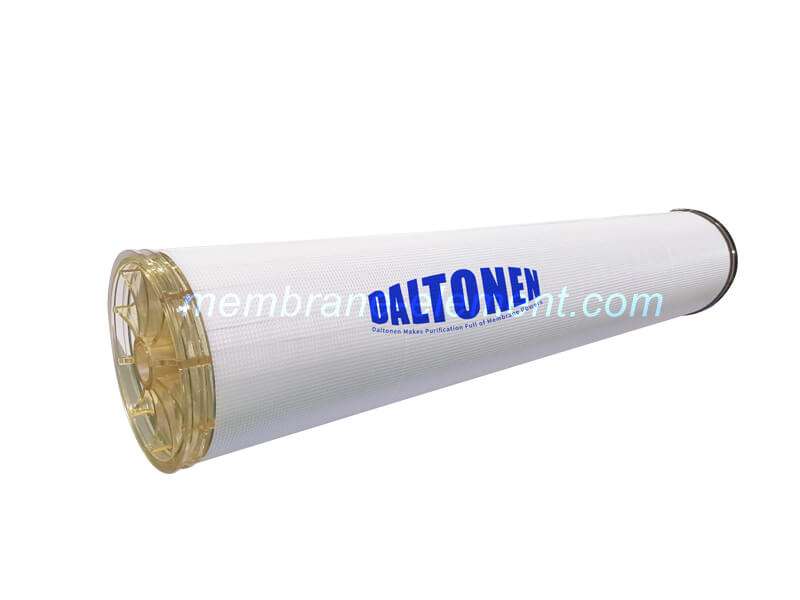
Xi’an CHIWATEC Water Treatment Technology provide the RO membrane to clients both inland and oversea with more than 10years experience. We manufacture our own brand Daltonen RO membrane and we are also the official distributor of Dupont, Toray, CSM, Nitto, LG and Vontron RO membrane. Whatever product you need, we cold meet your requirement.
Contact me for more info and best price.