Boron removal in RO water treatment is one of the hardest separation tasks a reverse osmosis plant faces — boric acid is a small, uncharged molecule that slips through standard membranes, and a single-pass RO system typically removes only 40–80% of it. Yet boron matters: high boron levels affect human health, and the WHO guideline value for drinking water is 2.4 mg/L. This guide explains how boron removal in RO water treatment works, how pH and membrane chemistry improve rejection, and how two-pass systems meet drinking water standards.
Boron Removal in RO Water Treatment: Why Boron Is Hard to Remove
Boron removal in RO water treatment is difficult for one chemical reason: at neutral pH, boron exists as boric acid (H3BO3), a small uncharged molecule with a small hydrated radius. Reverse osmosis membranes reject charged ions efficiently but let uncharged, small molecules pass more easily — so boron rejection in a single pass is far below the 99% salt rejection the same membrane achieves.
| Feed pH | Boron Species | Typical RO Rejection |
| Below 7 | Boric acid H3BO3 (uncharged) | Low, 40–60% |
| 7–9 | Mixed H3BO3 / borate | Moderate, 60–80% |
| Above 9.5 | Borate B(OH)4- (charged) | High, 90% or more |
The same principle governs the removal of weak acids by RO membranes: the rejection rate depends on the pH and dissociation constant of the weak acid, and higher pH levels generally result in higher removal rates because the molecule ionizes into a charged, larger species.
Boron Species and pH Control: The Chemistry Behind Rejection
The dissociation of boric acid explains the pH dependence. Boric acid has a pKa of about 9.2 — below this pH it stays as uncharged H3BO3, above it increasingly converts to the charged borate ion B(OH)4-, which the membrane rejects much more effectively.
- pH below 7 — mostly uncharged boric acid; rejection limited to about 40–60% on a single pass.
- pH 7–9 — partial dissociation; rejection improves gradually.
- pH above 9.5 — borate dominates; rejection reaches 90% or more.
Raising the feed pH of the second RO pass is therefore the standard boron-control strategy: two-pass systems run the second pass at elevated pH to convert residual boric acid into borate and reject it, before the product water is stabilized back to neutral pH for delivery.
Two-Pass RO Design and Seawater Boron Compliance
Designing for boron compliance changes the RO train configuration:
- Two-pass RO — the first pass removes bulk salts; the second pass, operated at higher pH, targets residual boron and brings permeate below the WHO guideline value of 2.4 mg/L.
- Seawater desalination — seawater contains 4–5 mg/L boron; SWRO plants use dedicated high-boron-rejection membranes or two-pass layouts with pH adjustment to meet drinking standards.
- Blending — where feed boron is moderate, blending high-pH second-pass permeate with first-pass permeate can meet targets without full second-pass treatment.
Boron behavior interacts with the rest of the RO membrane feed water requirements — alkalinity and pH control must be planned together, since both determine the species present at the membrane surface.
Membrane Storage and Shutdown Protection
Storage conditions are a frequent RO question, and the answers are simple:
- Freezing temperatures — membrane elements must never be exposed to freezing. Ice crystal formation damages the membrane skin and the feed spacer permanently; store elements above freezing in a dry, shaded location per the manufacturer’s manual.
- Alcohol preservation — storing membrane elements in alcohol solutions is not recommended; use the manufacturer-approved preserving solutions such as sodium bisulfite instead.
- Shutdown procedures — refer to the system manual for the specific shutdown sequence and storage guidelines; flush the system and protect the elements before any prolonged outage.
These storage rules are part of the RO membrane maintenance routine — protecting elements during downtime is cheaper than replacing them.
Specialty Chemicals and Services for Membrane Care
Beyond cleaning, biological control and diagnostics keep membranes healthy:
- DBNPA fungicide — DBNPA can be dosed intermittently or continuously based on the severity of biological pollution; the dosage should be adjusted according to the bacterial content of the feed water.
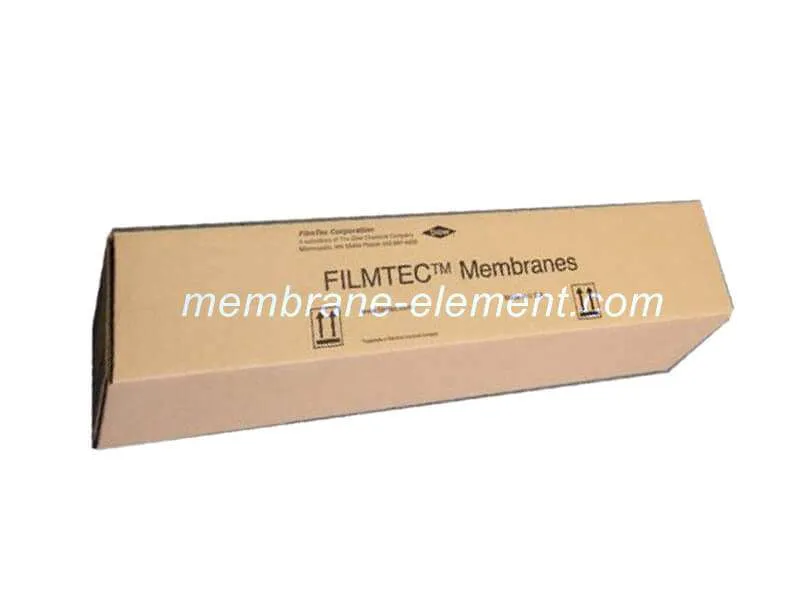
- DIRECTOR service — Dow’s DIRECTOR service offers comprehensive support for FILMTEC membrane and DOWEX resin users, including membrane and resin analysis, technical support, and training.
Biological fouling control is one pillar of the fouling prevention strategy — dosing biocides correctly prevents the biofilm that cleaning alone struggles to remove.
Membrane Selection and Design Software
Choosing the right membrane for each application and using the right tools completes the picture:
- Membrane selection factors — various factors influence membrane selection: feed water quality, target recovery, required salt rejection, operating pH range, and boron or silica limits; refer to the specification manual or consult the supplier for guidance.
- ROSA5.0 design software — ROSA5.0 is for design purposes only; technical information and standardized software are available on the membrane manufacturer’s website.
- Product documentation — product, application, and test pictures can be found on the manufacturer’s website or by contacting a company representative.
With a clear feed water analysis — see the desalination rate guide for how rejection figures are defined — selection becomes a systematic match of water quality to membrane specification.
Conclusion
Boron removal in RO water treatment demands a deliberate design: understand the boric acid-borate equilibrium, raise the second-pass pH to push boron into its charged form, and verify the product against the WHO guideline. The same discipline applies to storage, biological control, and membrane selection — together they keep the RO plant compliant and reliable.
CHIWATEC supplies Daltonen, Dupont, Toray, CSM, Nitto, LG, and Vontron RO membranes with more than ten years of export experience. Contact us at [email protected], [email protected], or [email protected] for boron-removal system design and membrane selection.
FAQ:
Why is boron difficult to remove from water?
Boron removal in RO water treatment is difficult because at neutral pH boron exists as boric acid (H3BO3), a small uncharged molecule with a small hydrated radius that passes through RO membranes. Single-pass rejection is typically only 40–80%, compared with 99% for salts.
How can RO systems achieve high boron removal?
Run a two-pass RO system with the second pass at elevated pH (above 9.5) so residual boric acid dissociates into charged borate B(OH)4-, which the membrane rejects at 90% or more. Seawater plants use high-boron-rejection SWRO membranes or two-pass layouts to meet the WHO guideline of 2.4 mg/L.
Can RO membranes be exposed to freezing temperatures?
No. Freezing damages the membrane skin and feed spacer irreversibly through ice crystal formation. Store elements above freezing in a dry location, and do not use alcohol solutions for preservation — use approved sodium bisulfite or similar preserving solutions.
What is DBNPA and how is it used in RO systems?
DBNPA is a fungicide used to control biological fouling in RO systems. It can be dosed intermittently or continuously depending on the severity of biological pollution, with the dosage adjusted according to the bacterial content of the feed water.
Xi’an CHIWATEC Water Treatment Technology provide the RO membrane to clients both inland and oversea with more than 10years experience. We manufacture our own brand Daltonen RO membrane and we are also the official distributor of Dupont, Toray, CSM, Nitto, LG and Vontron RO membrane. Whatever product you need, we cold meet your requirement.
Contact me for more info and best price.