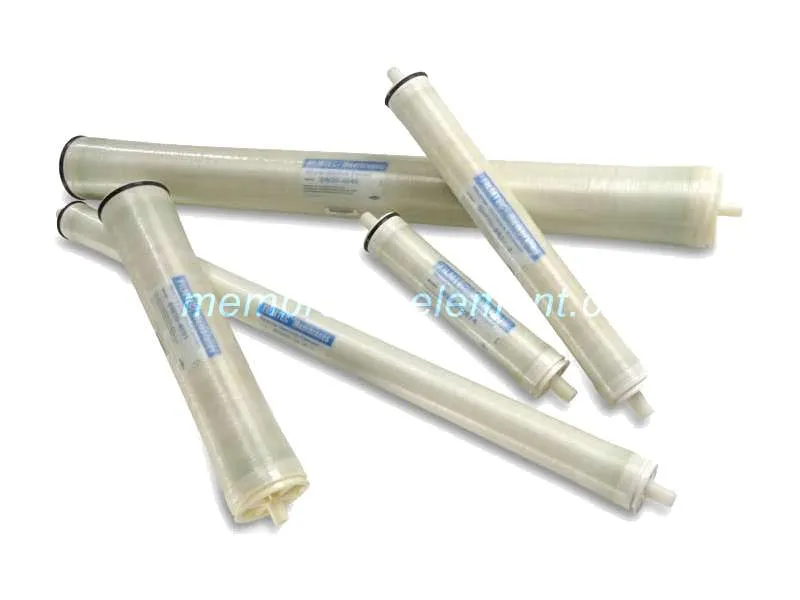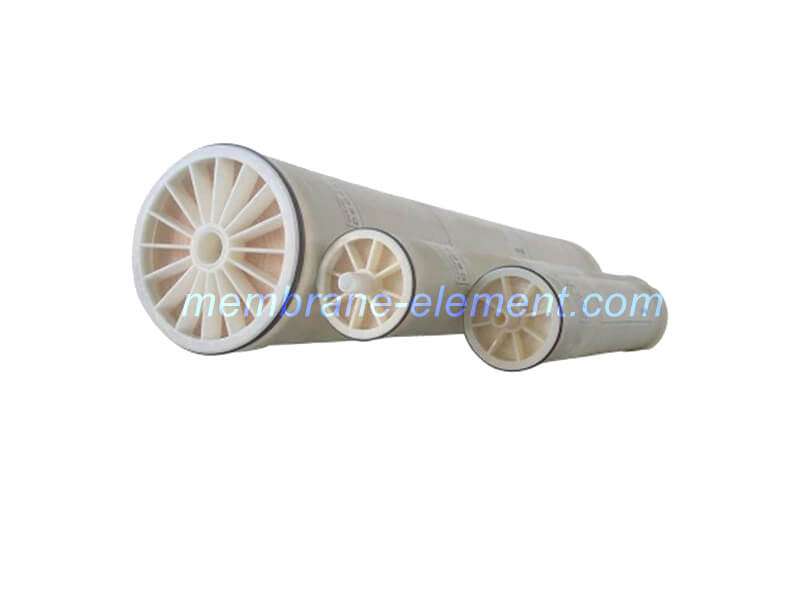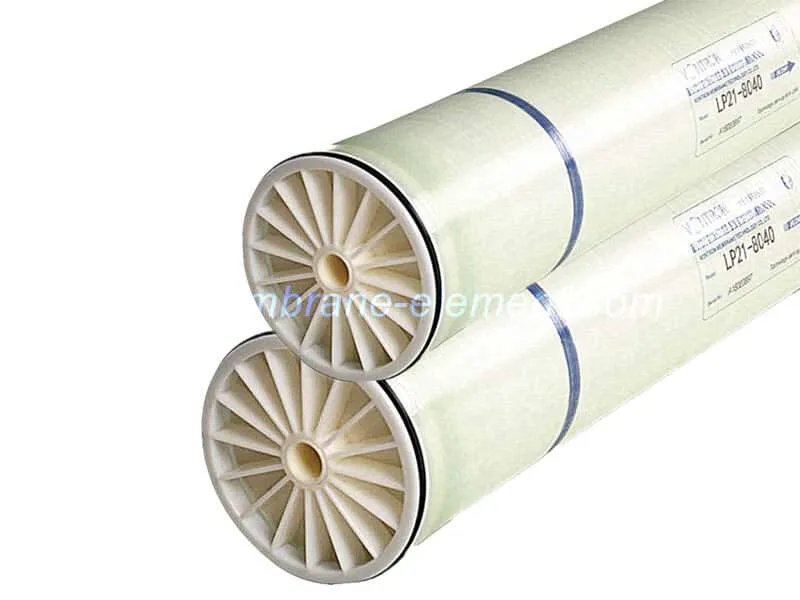
Seawater desalination equipment based on RO membrane desalination technology converts seawater and brackish water into fresh water at scale. Reverse osmosis membranes, high-pressure pumps and energy recovery devices drive modern plants. They produce millions of cubic meters of fresh water daily. The process runs without phase change. As a result, it uses less energy and costs less than thermal desalination. CHIWATEC supplies integrated membrane desalination solutions. They serve municipal water supply, industrial process water and island or coastal fresh water production worldwide.
Grand View Research valued the global reverse osmosis membrane market at USD 26.8 billion in 2025. It projects USD 52.4 billion by 2032, a 7.8% CAGR. Global desalination capacity passed 22.7 million m³/d by 1997 (IDA). Seawater desalination equipment orders today are dominated by SWRO technology. Gulf plants now exceed 500,000 m³/d each.
What Is RO Membrane Desalination Technology?
RO membrane desalination technology is a pressure-driven membrane separation process. It removes dissolved salts and minerals from seawater or brackish water. The output is fresh water. The technology uses semi-permeable reverse osmosis membranes. Their pore sizes are approximately 0.0001 microns. This is small enough to reject dissolved ions while letting water molecules pass.
Operators apply pressure above the feed water’s osmotic pressure, typically 55-85 bar for seawater. This forces water through the membrane against its natural osmotic flow direction. Several characteristics make RO the leading desalination technology. It runs without phase change and needs relatively low investment. Desalinated water costs stay competitive, and construction periods are short. Plants also scale modularly. Modern RO seawater plants achieve over 99% salt rejection. Energy consumption drops as low as 2.5-4.0 kWh/m³.
For the broader membrane desalination landscape, see our guide to membrane desalination technology. The membrane separation principle explains how pore size and pressure work together.
Core Components of Seawater Desalination Equipment
Seawater desalination equipment using RO membrane desalination technology consists of five main subsystems:
| Component | Function |
| RO membrane modules | Spiral-wound thin-film composite membranes arranged in pressure vessels — the core separation element |
| High-pressure pump | Provides the required feed pressure (55-85 bar) to overcome osmotic pressure and drive permeation |
| Energy recovery device | Captures pressure energy from the concentrate stream and transfers it to the feed stream, reducing overall energy consumption by up to 60% |
| Pre-treatment system | Cartridge filters, media filters and antiscalant dosing protect membranes from fouling and scaling |
| Post-treatment system | pH adjustment, remineralization and disinfection stabilize product water for distribution |
Each subsystem plays a defined role in seawater desalination equipment trains. How RO membranes perform their separation is covered in how RO membrane works.
Seawater Desalination Process Flow Using RO Membranes
A complete seawater desalination equipment train follows six process stages:
Intake: Seawater enters through open intake or beach wells. Preliminary screening removes large debris and marine organisms.
Pre-treatment: Coagulation, media filtration (dual media or UF) and cartridge filtration (5 microns) reduce SDI below 5. This removes suspended solids.
Antiscalant dosing: Operators inject scale inhibitor. It prevents calcium carbonate, calcium sulfate and silica scaling on membrane surfaces.
High-pressure RO separation: Feed water at 55-85 bar passes through RO membrane arrays in stages. It produces permeate (fresh water) and concentrate (brine).
Energy recovery: The high-pressure brine stream passes through an energy recovery device. Pressure exchangers or turbines capture the pressure energy.
Post-treatment: Operators remineralize the permeate, adding calcium, magnesium and alkalinity. They adjust pH and disinfect before storage and distribution.
Pressure staging follows the guidelines in our RO membrane operating pressure guide.
Types of Reverse Osmosis Membranes Used in Desalination
The most common configuration for seawater desalination is the spiral-wound thin-film composite (TFC) element. Key types include:
- Seawater RO (SWRO) membranes: High rejection (99.5-99.8%) for seawater TDS of 32,000-45,000 mg/L at 55-85 bar.
- Brackish water RO (BWRO) membranes: Lower pressure (10-25 bar) for TDS up to 10,000 mg/L, with higher flux and lower energy.
- Low-energy RO membranes: Modified SWRO or BWRO elements running at 15-30% lower pressure. The Vontron LP21 4040 is one example.
- High-temperature RO membranes: Specialized elements for feed water above 45°C, used in industrial applications.
All modern RO desalination membranes use polyamide thin-film composite chemistry. It provides excellent salt rejection, chemical stability and resistance to biological degradation. Our types of RO membrane elements guide covers element configurations in more depth.
Energy Efficiency and Environmental Considerations
Seawater desalination equipment achieved remarkable energy improvements over the past two decades:
| Parameter | 2000 | Current (2024-2026) |
| Energy consumption (kWh/m³) | 5-8 | 2.5-4.0 |
| Membrane flux (L/m²·h) | 8-12 | 12-18 |
| Recovery rate (%) | 35-40 | 40-50 |
| Membrane lifespan (years) | 3-5 | 5-7 |
Key environmental innovations include energy recovery devices. Pressure exchangers and Pelton turbines cut system energy consumption by up to 60%. Improved anti-fouling properties reduce chemical cleaning frequency. Advanced pre-treatment, such as UF membrane pre-filtration, extends membrane life. It also reduces chemical usage.
Applications of Membrane Desalination Technology
Seawater desalination equipment serves diverse sectors:
- Municipal water supply — coastal cities and islands with scarce fresh water, such as the Middle East, Mediterranean, Singapore and Australia
- Industrial process water — power plants, chemical facilities and refineries needing high-purity feed water
- Tourism and hospitality — resorts and hotels in coastal and island locations with limited fresh water sources
- Agriculture — irrigation water for coastal agricultural zones facing fresh water shortages
- Emergency and disaster relief — mobile desalination units for temporary fresh water supply during droughts or natural disasters
- Industrial wastewater reuse — membrane treatment that recycles water and recovers heavy metals and chemical products
Seawater Desalination Equipment Selection and Maintenance
Choosing seawater desalination equipment depends on feed TDS, capacity and energy cost. Operators should follow these steps:
- Feed analysis: Test TDS, SDI and temperature to size membranes and pumps correctly.
- Recovery target: Balance recovery rate against brine disposal and scaling risk.
- Energy recovery: Pressure exchangers pay back fastest at high feed pressure.
- Membrane type: Choose SWRO for seawater, BWRO for brackish water and low-energy elements for tight power budgets.
Then monitor normalized flux, pressure drop and salt passage. Clean membranes when performance drops 10-15%. Cleaning schedules are detailed in our RO membrane cleaning frequency guide. For complete system design, see our industrial RO water treatment equipment guide. The RO membrane evaluation indices guide explains how to track desalination rate and flux.
Conclusion
Seawater desalination equipment using RO membranes remains the mainstream solution for fresh water supply. It combines 99%+ salt rejection with 2.5-4.0 kWh/m³ energy use. Recovery reaches 40-50%, and membranes last 5-7 years. CHIWATEC supplies integrated membrane desalination solutions worldwide. Contact our engineers for sizing, configuration and energy recovery recommendations.
Contact us for more information and the best price: [email protected], [email protected], [email protected]
FAQ: Desalination Membrane Systems
Q1: How much energy does seawater desalination consume?
Modern seawater desalination equipment consumes 2.5-4.0 kWh/m³. Older plants from 2000 used 5-8 kWh/m³. Energy recovery devices cut consumption by up to 60%.
Q2: What pressure do SWRO membranes need?
Osmotic pressure of seawater is about 27 bar. Operating pressure runs 55-85 bar to overcome it and drive flux.
Q3: What is the difference between SWRO and BWRO membranes?
SWRO membranes handle 32,000-45,000 mg/L TDS at 55-85 bar. BWRO membranes suit TDS up to 10,000 mg/L at 10-25 bar. They offer higher flux and lower energy use.
Q4: What is the recovery rate of seawater desalination?
Current SWRO plants achieve 40-50% recovery. Thermal plants manage 35-40% at higher energy cost.
Q5: How do energy recovery devices work?
They capture pressure from the concentrate stream. Pressure exchangers transfer it directly to the feed. Pelton turbines convert it mechanically. Both cut total energy by up to 60%.
Related Resources
Recommended Membrane Technology Guides
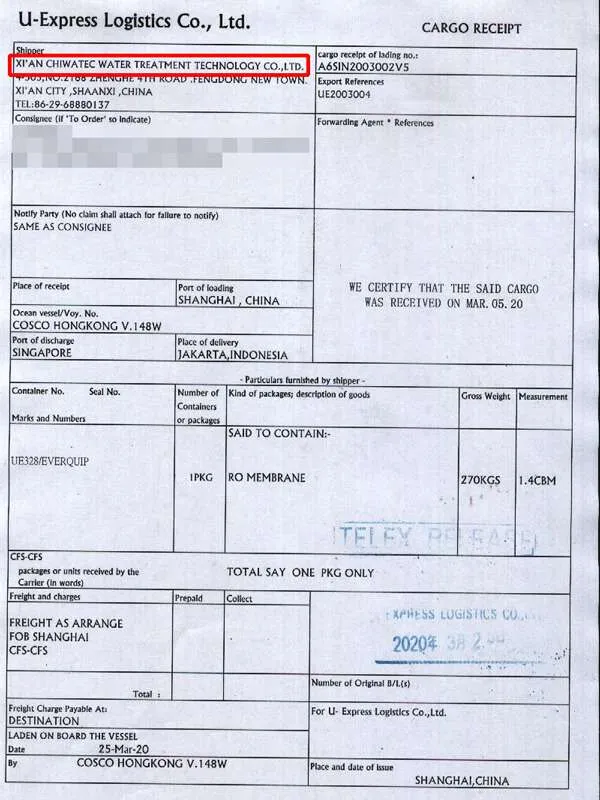
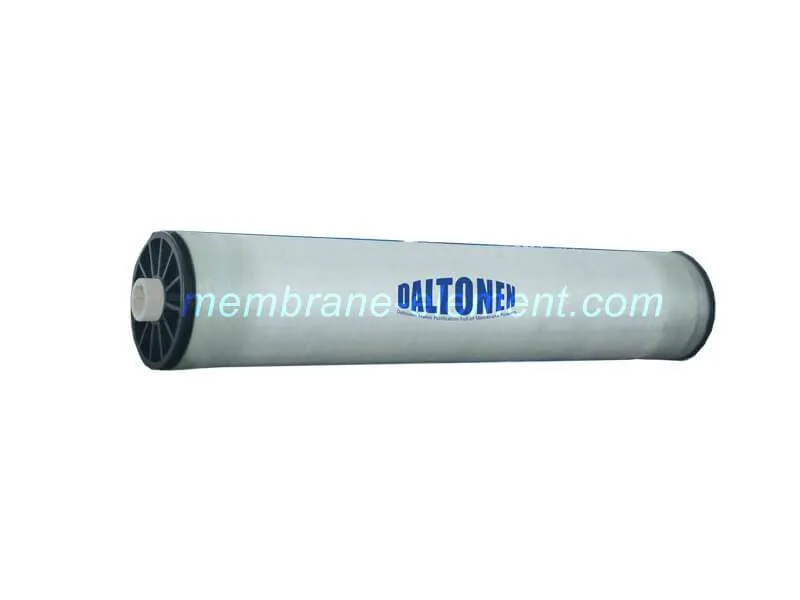
Xi’an CHIWATEC Water Treatment Technology provide the RO membrane to clients both inland and oversea with more than 10years experience. We manufacture our own brand Daltonen RO membrane and we are also the official distributor of Dupont, Toray, CSM, Nitto, LG and Vontron RO membrane. Whatever product you need, we cold meet your requirement.
Contact me for more info and best price.