RO membrane performance parameters — desalination rate, water flux, salt permeability, and recovery rate — are the four metrics that define every reverse osmosis system. Understanding these RO membrane performance parameters is essential for selecting the correct membrane element, designing an efficient system, and diagnosing operational problems. This guide explains each parameter with its formula, typical values, and practical implications. The global RO membrane market was valued at USD 6.8 billion in 2024 and is projected to reach USD 12.4 billion by 2034 (CAGR 6.2%), driven by demand for high-purity water. CHIWATEC supplies Filmtec, Hydranautics, and other leading RO membrane brands with certified performance specifications. Last Updated: September 2026.
RO Membrane Performance Parameters: Desalination Rate and Salt Permeability
The desalination rate is the most fundamental of the four RO membrane performance parameters. It represents the percentage of dissolved solids that the membrane removes from the feed water. Manufacturers determine this rate during production, and it depends on the density of the ultra-thin desalination layer on the membrane surface. A denser desalination layer produces a higher desalination rate at the cost of lower water production.
| Parameter | Formula | Typical Value |
| Desalination rate (R) | R = (1 − Cp / Cf) × 100% | 98–99.5% for new thin-film composite (TFC) membranes |
| Salt permeability (SP) | SP = 100% − R | 0.5–2% for new TFC membranes |
Here Cp is the salt concentration in the permeate, and Cf is the salt concentration in the feed water. The desalination rate varies by contaminant type:
- Multi-valent ions (Ca²⁺, Mg²⁺, SO₄²⁻): rejection above 99%
- Monovalent ions (Na⁺, K⁺, Cl⁻): rejection of 98–99%
- Organic compounds above 100 Da: rejection above 98%
- Organic compounds below 100 Da: lower rejection, varying by polarity and structure
As the membrane ages and undergoes chemical cleaning cycles, the desalination rate gradually declines. A drop of more than 5% from the baseline value typically indicates membrane degradation or fouling that requires investigation. For the monitoring framework behind these thresholds, see our RO membrane evaluation indices guide.
Water Production and Permeate Flow Rate
Water production measures the membrane system’s output capacity. Two related terms apply. Water production is the total permeate volume per unit time, expressed in tons per hour (t/h) or gallons per day (GPD). This is the system-level output that determines whether the RO plant meets its production capacity.
Permeate flow rate (flux) is the permeate volume per unit membrane area per day. It is typically expressed in gallons per square foot per day (GFD) or liters per square meter per hour (LMH). Typical flux values range from 8–15 GFD (14–25 LMH) for brackish water and 5–10 GFD (8–17 LMH) for seawater.
An excessively high permeate flow rate increases the cross-flow velocity perpendicular to the membrane surface. This accelerates concentration polarization and membrane fouling. Therefore, the design flux should not exceed the manufacturer’s recommended maximum for the specific feed water quality and pretreatment level. Flux is driven by feed pressure; our RO membrane operating pressure guide covers the pressure-flux relationship.
Recovery Rate: Design Limits and Scaling Risks
The recovery rate represents the percentage of feed water converted into permeate product water. The recovery rate formula is:
Recovery rate = (Qp / Qf) × 100%, where Qp is the permeate flow rate and Qf is the feed flow rate.
| Application | Typical Recovery | Limiting Factor |
| Single-stage brackish water RO | 75–85% | Scaling potential of sparingly soluble salts |
| Two-stage brackish water RO | 85–90% | Concentration polarization on final stage membranes |
| Seawater RO (single pass) | 40–50% | High osmotic pressure limits maximum recovery |
| Seawater RO (two pass) | 35–45% per pass | Energy consumption and membrane area |
The recovery rate is determined at the design stage based on the feed water quality analysis. Maximizing recovery improves economic efficiency: less feed water is required, and less concentrate goes to disposal. However, the limit is set by the solubility of scale-forming salts in the concentrate stream. When the concentration of calcium, barium, strontium silicates, or silica exceeds their solubility product, precipitation occurs on the membrane surface, causing irreversible scaling damage. Effective pretreatment raises the achievable recovery; the RO membrane pretreatment process guide explains the design train.
Interrelationships Between RO Membrane Performance Parameters
The four RO membrane performance parameters are interconnected. Increasing the recovery rate concentrates salts in the brine stream. This reduces the effective driving pressure and can lower both the desalination rate and the water flux. Similarly, higher flux requires higher feed pressure, which increases energy consumption but may improve the desalination rate through enhanced mass transfer. A well-designed RO system balances all four RO membrane performance parameters to achieve the required permeate quality and quantity at the lowest total cost of ownership.
| Parameter | Definition | Typical Range | Impact of Decline |
| Desalination rate | % of dissolved solids rejected by the membrane | 98–99.5% (new TFC) | Poor permeate quality; higher salt passage |
| Salt permeability | % of dissolved solids passing through the membrane | 0.5–2% (new TFC) | Inverse of desalination rate |
| Water flux (permeate flow rate) | Permeate volume per unit membrane area per day | 8–15 GFD (brackish); 5–10 GFD (seawater) | Higher fouling risk at elevated flux |
| Recovery rate | % of feed water converted to permeate | 75–90% (brackish); 40–50% (seawater) | Increased scaling risk at higher recovery |
Diagnosing RO Membrane Performance Decline
Diagnosing performance decline starts with normalized data. Operators should track normalized permeate flow, salt rejection, and pressure drop against baseline values. A desalination rate drop of more than 5% typically signals membrane degradation or fouling. A flux decline of 10–15% alongside rising feed pressure indicates fouling that needs cleaning. When these RO membrane performance parameters deviate together, the cause is usually scaling, organic fouling, or biofouling. Our RO membrane contamination diagnosis guide covers the full diagnostic workflow, and the types of RO membrane fouling guide maps each foulant to its signal. Cleaning should be scheduled when flux or rejection crosses the 10–15% threshold; see our RO membrane cleaning frequency guide for the cadence.
Selecting RO Membranes by Performance Parameters
The four RO membrane performance parameters form the specification sheet for every procurement decision. Selection starts with the feed water analysis and the target permeate quality. For brackish water with TDS below 10,000 mg/L, standard brackish RO elements with 99.0–99.5% rejection and 8–15 GFD design flux are typical. For seawater, high-rejection SWRO elements operating at 5–10 GFD and 55–85 bar are required. The recovery target then determines the system staging: single-stage for 75–85%, two-stage for 85–90% on brackish water.
Performance parameters also guide element choice within a brand family. Higher rejection usually trades against higher operating pressure and lower flux. Low-energy elements sacrifice some rejection for pressure savings. For the full element catalogue, see our types of RO membrane elements guide and the reverse osmosis membrane advantages overview. For complete system integration, refer to our industrial RO water treatment equipment guide.
Conclusion
RO membrane performance parameters — desalination rate, salt permeability, water flux, and recovery rate — define system design, operation, and troubleshooting. Mastering these four metrics lets operators hit quality targets, minimize energy use, and extend membrane life. Balancing RO membrane performance parameters at the design stage delivers the lowest total cost of ownership. For technical support or certified performance specifications, contact our team: [email protected], [email protected], or [email protected]. CHIWATEC supplies Filmtec, Hydranautics, and other leading RO membrane brands with certified performance data.
FAQ: RO Performance Metrics and Design Targets
Q1: What is the difference between desalination rate and salt permeability?
Desalination rate and salt permeability are inverse measures. Salt permeability equals 100% minus the desalination rate (SP = 100% − R). A new TFC membrane with a 99% desalination rate therefore has 1% salt permeability. Together they describe the same aspect of RO membrane performance parameters: how completely the membrane rejects dissolved solids.
Q2: What are typical flux values for RO membranes?
Typical flux values range from 8–15 GFD (14–25 LMH) for brackish water and 5–10 GFD (8–17 LMH) for seawater. The design flux should not exceed the manufacturer maximum for the specific feed water and pretreatment level.
Q3: What limits the recovery rate in seawater RO?
High osmotic pressure limits seawater recovery to 40–50% in a single pass. Brackish water systems reach 75–90% because their osmotic pressure is far lower. In every case, the solubility of scale-forming salts sets the final ceiling.
Q4: What does a 5% desalination rate drop indicate?
A drop of more than 5% from the baseline typically indicates membrane degradation or fouling. Operators should normalize permeate flow, salt rejection, and pressure drop data, then escalate to cleaning or membrane autopsy.
Q5: How do the four performance parameters interrelate?
Raising recovery concentrates salts in the brine, reducing effective driving pressure and lowering both rejection and flux. Raising flux demands higher feed pressure and more energy. A well-designed system balances all four at the lowest total cost of ownership.
Related Resources
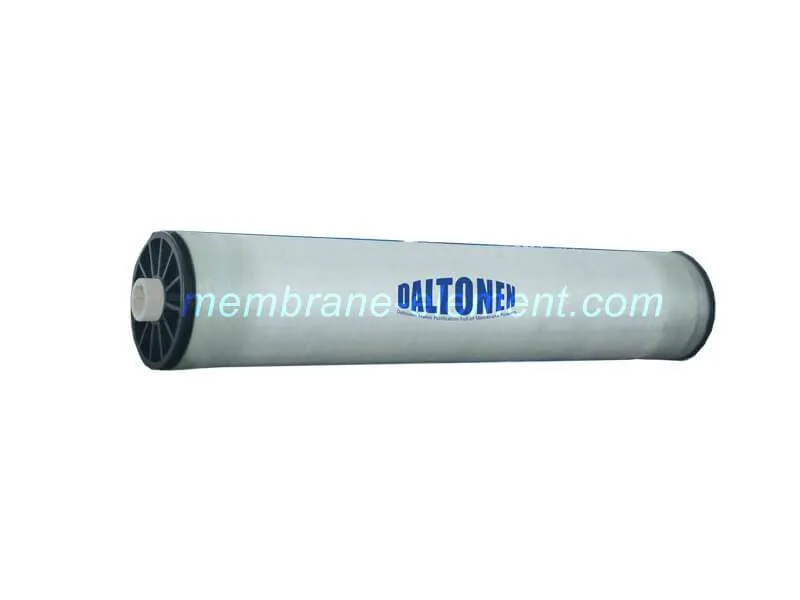
Xi’an CHIWATEC Water Treatment Technology provide the RO membrane to clients both inland and oversea with more than 10years experience. We manufacture our own brand Daltonen RO membrane and we are also the official distributor of Dupont, Toray, CSM, Nitto, LG and Vontron RO membrane. Whatever product you need, we cold meet your requirement.
Contact me for more info and best price.