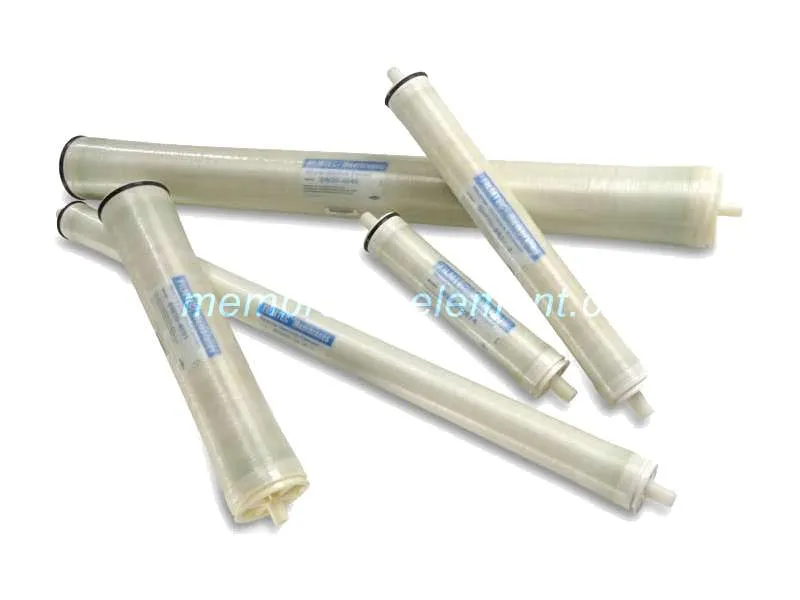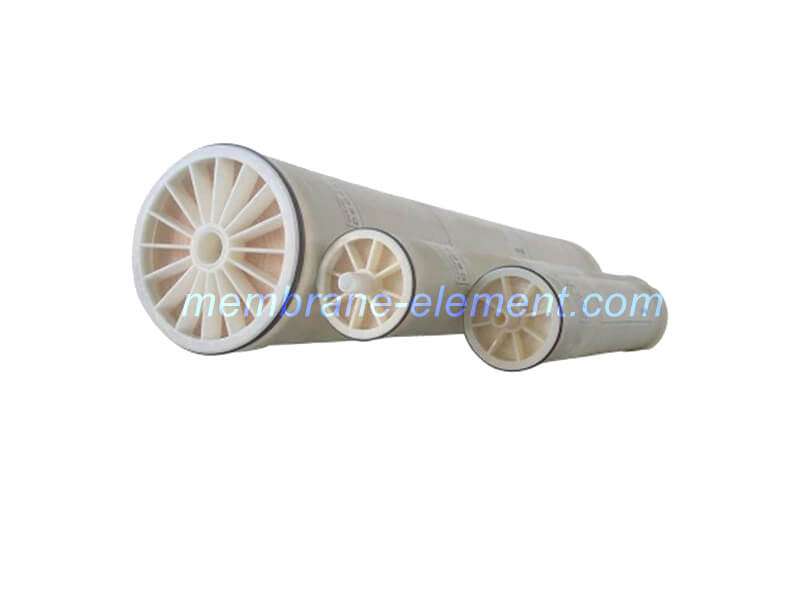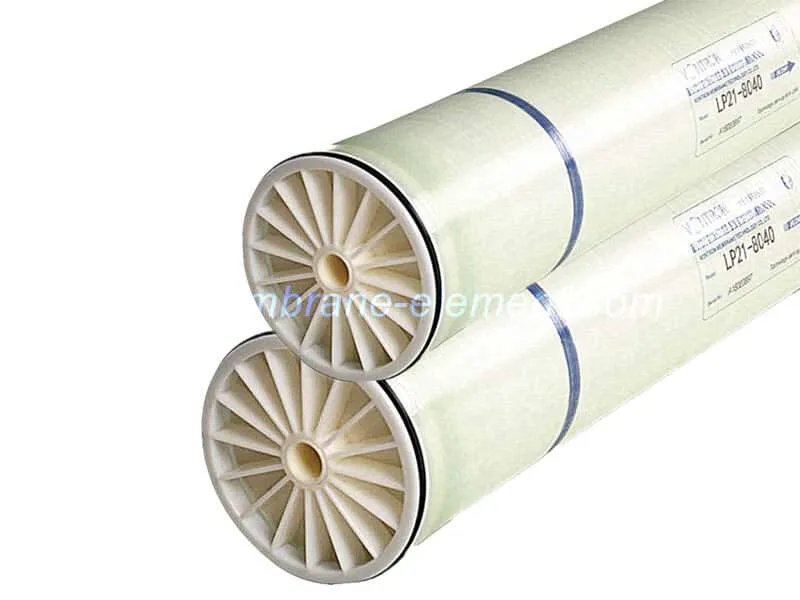
Reverse osmosis membrane characteristics decide how well an element separates salts. They also set its service life and running cost. A reverse osmosis (RO) membrane is an artificial semi-permeable barrier. It lets water molecules pass while rejecting dissolved salts, heavy metals, and organic contaminants. An ideal element balances six essential properties: high desalination rate, mechanical strength, and low-pressure operation. It also needs chemical resistance, pH/temperature tolerance, and cost-effective manufacturability. This guide explains each property in detail for engineers, plant operators, and procurement professionals.
The global RO membrane market reached USD 6.8 billion in 2024. It is projected to reach USD 12.4 billion by 2034, a CAGR of 6.2%, driven by demand for high-purity water. Xi’an CHIWATEC supplies RO membrane elements and complete reverse osmosis systems for industrial and commercial water treatment worldwide.
*Last Updated: September 2026 | Industry-Verified Technical Data
Overview of the 6 Essential Reverse Osmosis Membrane Characteristics
The performance and longevity of a reverse osmosis system depend directly on the reverse osmosis membrane characteristics of its elements. A satisfactory membrane must balance water permeability and salt rejection while withstanding harsh duty. The table below summarizes the six key reverse osmosis membrane characteristics and their practical significance:
| Characteristic | Requirement | Why It Matters |
| Desalination rate | >99% under rated flow | Produces compliant permeate quality for reuse or discharge |
| Mechanical strength | Withstands high-pressure duty (600 psi brackish class, 1,200 psi seawater class) | Prevents rupture and extends service life of 3–7 years |
| Low-pressure operation | Effective at 100–200 psi for brackish water | Reduces energy consumption and pumping cost |
| Chemical/biochemical resistance | Compatible with CIP chemicals (pH 1–13) | Allows effective cleaning without membrane degradation |
| pH and temperature tolerance | Operating pH 2–11, temperature up to 45 °C | Handles feed variability and seasonal temperature change |
| Cost-effective manufacturing | Low raw-material cost, scalable production | Enables wide adoption across municipal and industrial use |
Modern thin-film composite (TFC) polyamide membranes excel across all six reverse osmosis membrane characteristics. That is why they dominate today’s RO systems. Rated values follow the protocol explained in our RO membrane performance parameters guide.
High Desalination Rate and Mechanical Strength: Core Reverse Osmosis Membrane Characteristics
The first two reverse osmosis membrane characteristics — desalination efficiency and mechanical integrity — are the most critical for system performance.
High Desalination Rate
A reverse osmosis membrane must reject over 99% of monovalent ions such as Na+ and Cl− at rated flow. Divalent ions such as Ca2+, Mg2+, and SO42− are rejected even more strongly, typically above 99.5%. Their larger hydrated radius and higher charge strengthen both steric and Donnan exclusion. Rejection is governed by the dense active layer. Its effective pore size sits near 0.1 nm (0.0001 microns), with surface charge effects added. Cellulose acetate (CA) membranes typically achieve 90–95% rejection. TFC polyamide membranes reach 99.5–99.8% under standard test conditions: 2,000 ppm NaCl, 225 psi, 25 °C. The desalination rate formula and test protocol appear in our RO membrane evaluation indices guide.
High Mechanical Strength and Service Life
RO elements run under continuous high pressure. Brackish water duty sits at 100–400 psi, and seawater desalination runs at 800–1,200 psi. The membrane must keep structural integrity without tearing, pinhole formation, or compaction. Its designed service life is 3–7 years. Key mechanical properties include:
- Tensile strength: the sheet must withstand spiral-wound winding tension, typically 50–100 N per 10 cm width
- Compaction resistance: the porous support must resist creep that would cut permeate flux over time
- Fouling-layer tolerance: the surface should carry a 10–50 µm biofilm or scale layer without delamination
The support structure provides the mechanical backbone: a polysulfone layer 40–60 µm thick on non-woven polyester fabric, topped by the selective polyamide skin of 0.1–0.3 µm.
Low-Pressure Operation and Chemical Resistance
The third and fourth reverse osmosis membrane characteristics focus on operational flexibility and durability.
Low-Pressure Operation Capability
Energy accounts for 30–50% of total RO operating cost. A membrane that delivers rated flow at lower pressure cuts that bill directly. Low-energy elements reach 99% rejection at 100–150 psi for brackish water. Vontron LP21-4040 and Dow FilmTec LE series are examples. Standard elements need 200–250 psi. They achieve this by tuning polyamide cross-linking density. A less tightly cross-linked skin allows higher water permeability. Careful monomer selection preserves salt rejection. Element-level options are covered in our low energy RO membrane elements guide.
Chemical and Biochemical Resistance
Cleaning chemistry must match the reverse osmosis membrane characteristics of the element. Periodic CIP uses acids such as citric acid or HCl at pH 1–2. It also uses alkalis such as NaOH at pH 11–12 and chelating agents such as EDTA. Key resistance requirements:
- Chlorine tolerance: TFC polyamide degrades rapidly above 0.1 ppm free chlorine; CA tolerates 0.3–1.0 ppm but is being phased out. Sodium bisulfite dechlorination is standard ahead of TFC elements — feed rules are in our RO membrane feed water requirements guide
- Biofouling resistance: hydrophilic coatings such as PVA or PEG cut bacterial attachment; modified surfaces show 40–60% less biofouling than unmodified TFC
- Oxidant resistance: residual oxidants from pretreatment must stay below 0.1 ppm to prevent polyamide chain scission and rejection loss
Full CIP procedure guidance appears in our RO membrane CIP cleaning guide.
pH Tolerance, Temperature Stability, and Cost-Effective Manufacturing
The final two reverse osmosis membrane characteristics address real-world operating conditions and commercial viability.
pH and Temperature Tolerance
Feed pH and temperature shift with source water and season. An ideal membrane functions across a broad window:
| Parameter | TFC Polyamide | Cellulose Acetate |
| Operating pH range | 2–11 | 4–6.5 |
| Cleaning pH range | 1–13 | 3–8 |
| Max operating temperature | 45 °C | 35 °C |
| Short-term cleaning temperature | 50 °C | 40 °C |
Every 10 °C rise increases permeate flux by about 30%, roughly 3% per °C, because water viscosity falls. Salt passage climbs faster as diffusion accelerates, rising by 50–100% over the same 10 °C. Operators therefore normalize data with temperature correction factors. They also adjust pressure to hold rejection. Those corrections are explained in our RO membrane operation FAQ.
Cost-Effective Manufacturing
Scalable manufacturing makes the other reverse osmosis membrane characteristics affordable at municipal scale. Interfacial polymerization reacts m-phenylenediamine (MPD) in water with trimesoyl chloride (TMC) in hexane. The process lays a uniform polyamide skin on a polysulfone support at 5–10 m/min on roll-to-roll casting lines. Element cost has fallen from $3–5 per GPD in the 1980s to $0.10–$0.30 per GPD today. Municipal desalination, industrial treatment, and residential systems all benefit.
RO Membrane Materials and Structural Types
Understanding reverse osmosis membrane characteristics requires familiarity with the two major material families and their structural configurations.
Membrane Materials
- Cellulose acetate (CA): first-generation material with 90–95% rejection and chlorine tolerance up to 1 ppm. Its narrow pH window of 4–6.5 and biological-attack susceptibility limit it to low-pressure duty where chlorine is present
- Aromatic polyamide (TFC): second-generation material with rejection above 99% and a wide pH range of 2–11. It is chemically stable but chlorine-sensitive above 0.1 ppm, and holds more than 90% of the market
- Aromatic polyhydrazide: a less common family with improved thermal stability and chlorine resistance for specialized industrial service
Element configuration details and brand options appear in our types of RO membrane elements guide.
Membrane Configurations
The spiral-wound element dominates, accounting for over 90% of installed RO capacity. Hollow-fiber (Permasep-type) and tubular configurations serve niche duty with high suspended solids or extreme operating conditions.
How Reverse Osmosis Works: Principles and Applications
Separation outcomes follow directly from the reverse osmosis membrane characteristics described above. The principle is simple. When pressure exceeds the natural osmotic pressure on the concentrated side, water is forced through the membrane in reverse.
Permeate flux follows the equation N = Kh(Δp − Δπ). Here Kh is the hydraulic permeability coefficient, Δp the applied pressure, and Δπ the osmotic pressure difference. Osmotic pressure for a dilute solution is π = iCRT. Here i is the ion count per molecule and C the molar concentration. R is the gas constant; T is the temperature.
- Seawater and brackish water desalination for drinking water
- Industrial process water and boiler feed water treatment
- Wastewater reuse and zero-liquid-discharge (ZLD) systems
- Pharmaceutical and electronics-grade ultrapure water
- Food and beverage concentration (dairy, fruit juice, sugar)
Every application above rewards a different balance of reverse osmosis membrane characteristics. Seawater duty, for example, stresses mechanical strength and energy recovery. For the working mechanism in depth, see our how does RO membrane work guide. For plant-level context, read our seawater desalination review.
Conclusion
Reverse osmosis membrane characteristics determine the element choice for every desalination, process water, or ultrapure application. Start with the desalination rate and mechanical rating. Then weigh low-pressure operation, chemical resistance, pH tolerance, and manufacturing cost against your feed water. TFC polyamide elements satisfy all six properties and hold the market lead for good reason.
Xi’an CHIWATEC supplies RO membrane elements matched to your water analysis. Send us your feed water data and target quality, and our engineers will recommend the right element.
Contact our engineering team: [email protected], [email protected], or [email protected].
FAQ: RO Membrane Properties and Operation
Q1: What are the six essential characteristics of RO membranes?
High desalination rate, mechanical strength, low-pressure operation, chemical and biochemical resistance, pH and temperature tolerance, and cost-effective manufacturing. TFC polyamide elements satisfy all six and hold more than 90% of the market.
Q2: Why does free chlorine damage RO membranes?
Free chlorine above 0.1 ppm attacks the polyamide skin layer and causes chain scission, which raises salt passage permanently. Plants inject sodium bisulfite or use activated carbon to dechlorinate the feed first. CA membranes tolerate 0.3–1.0 ppm but only reach 90–95% rejection.
Q3: What pH range can RO membranes tolerate?
TFC polyamide elements run continuously at pH 2–11 and tolerate cleaning at pH 1–13 for short periods. CA membranes are limited to pH 4–6.5 operating and pH 3–8 cleaning. Sustained operation outside these ranges hydrolyzes the polymer.
Q4: How does temperature change RO membrane performance?
Permeate flux rises about 3% per °C as water viscosity falls, while salt passage climbs faster because diffusion accelerates. Operators normalize data with temperature correction factors and adjust pressure to hold rejection.
Q5: How long does an RO membrane last?
With sound pretreatment and regular cleaning, elements typically serve 3–7 years. Fouling, chlorine damage, and compaction shorten that life. Normalized performance data show when cleaning no longer restores flux and replacement is due.
Related Resources
Recommended Membrane Technology Guides
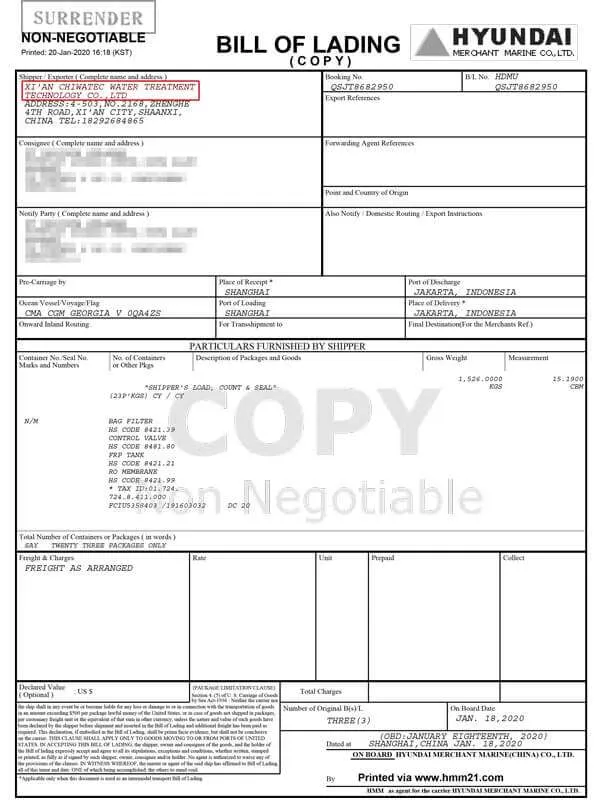
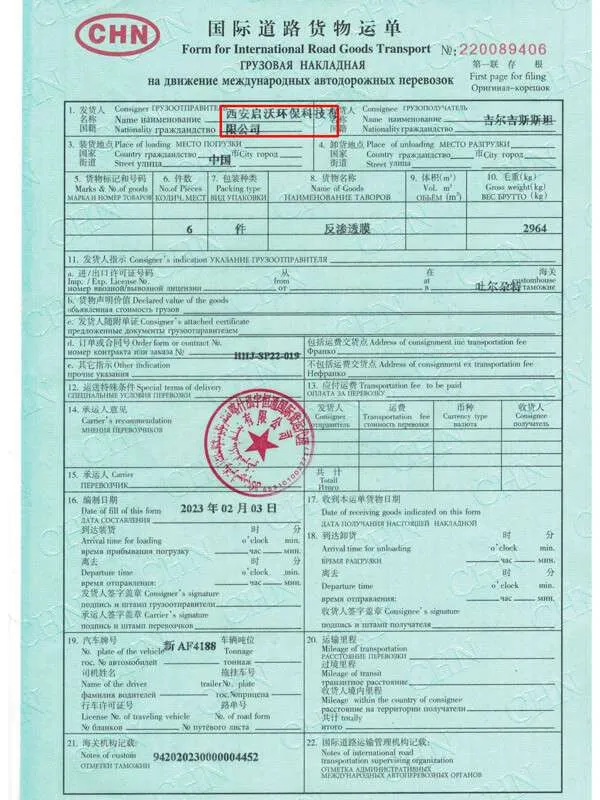
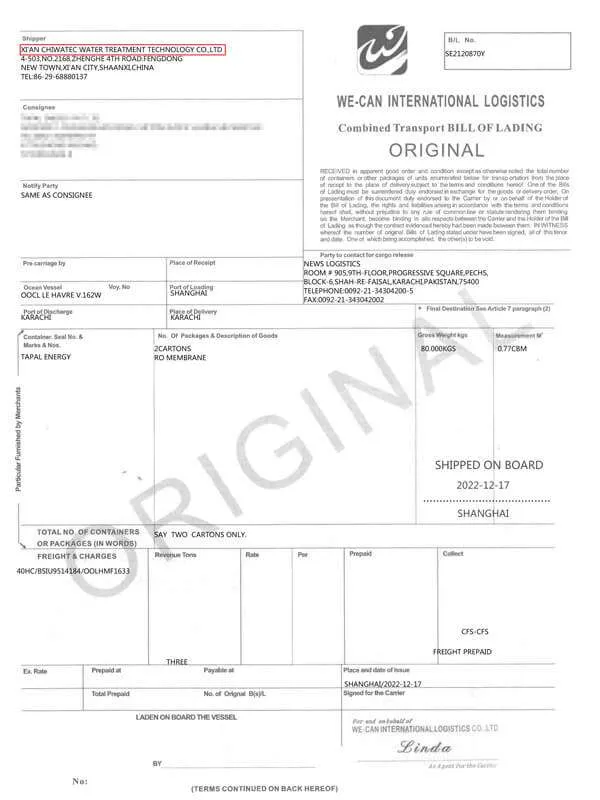
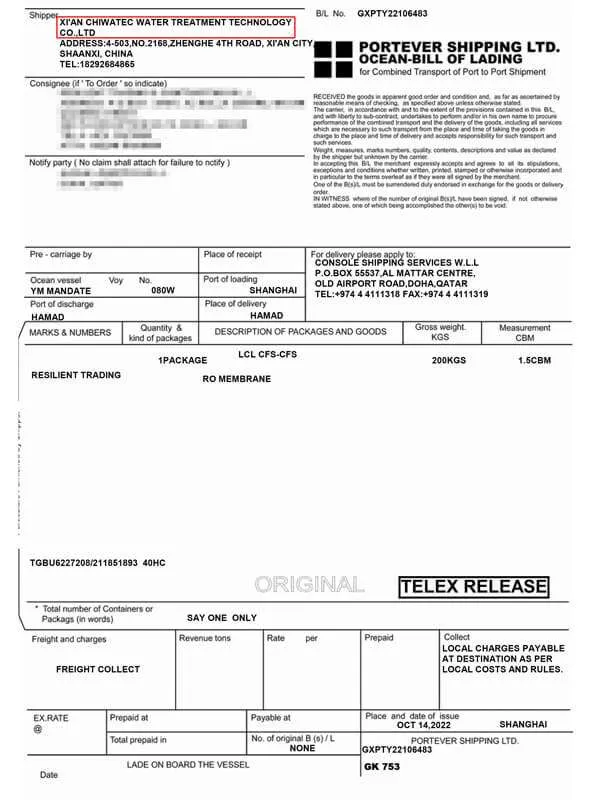
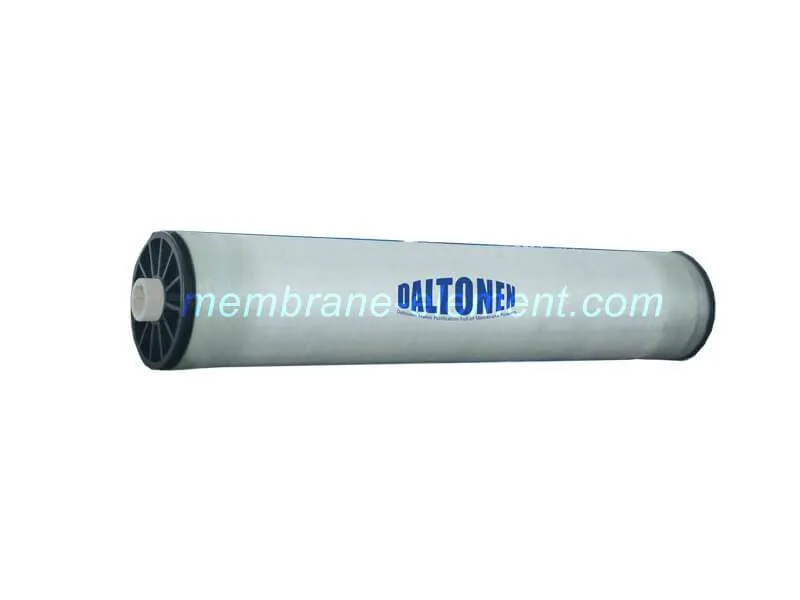
Xi’an CHIWATEC Water Treatment Technology provide the RO membrane to clients both inland and oversea with more than 10years experience. We manufacture our own brand Daltonen RO membrane and we are also the official distributor of Dupont, Toray, CSM, Nitto, LG and Vontron RO membrane. Whatever product you need, we cold meet your requirement.
Contact me for more info and best price.