RO product water pH is lower than the feed water pH in nearly every reverse osmosis plant — often by 1 to 2 pH units — and operators are routinely surprised by it. The cause is the carbonate balance: the membrane rejects bicarbonate and carbonate ions but lets dissolved CO2 gas pass through, so the permeate turns slightly acidic. This guide explains why RO product water pH drops, what it means for downstream piping and water quality, and answers the other common RO membrane questions about cleaning, replacement, and design software.
RO Product Water pH: Why Permeate Is More Acidic Than Feed
RO product water pH drops because of the CO2, HCO3-, and CO3= balance. While RO membranes effectively remove soluble ions, they cannot eliminate soluble gases like CO2. Consequently, the content of HCO3- and CO3= in RO product water decreases significantly, disrupting the pH balance. This often leads to a drop in the pH of the product water by 1 to 2 pH values.
The mechanism in one sentence: the membrane removes the alkalinity (HCO3-, CO3=) but not the dissolved CO2, and carbonic acid formed from that CO2 is what makes the permeate acidic.
CO2, Bicarbonate, and the Carbonate Balance in RO
Understanding the carbonate balance explains the permeate pH behavior in any system:
| Species | In Feed Water | After RO Membrane |
| CO2 (dissolved gas) | Present at equilibrium with HCO3- | Passes through the membrane almost unchanged |
| HCO3- (bicarbonate) | Main alkalinity carrier | Rejected 90–99% |
| CO3= (carbonate) | Minor at typical pH 6–8 | Rejected ~99% |
| Net effect | — | Permeate pH falls 1–2 units |
Because the rejected bicarbonate is removed but the CO2 stays, the permeate equilibrates as dilute carbonic acid. The effect is strongest with high-alkalinity feed water. The same gas-transport physics that explains this is covered in the RO membrane working principle — membranes separate by size and charge, not by gas solubility.
Low pH Effects and How to Correct It
A low permeate pH has practical consequences that plant designers must plan for:
- Corrosion risk — acidic permeate (pH 4–6) accelerates corrosion of carbon steel piping; specify stainless steel, PVC, or lined pipe for permeate lines.
- Water quality targets — for drinking or process water, permeate often needs re-mineralization or pH correction (dosing caustic or blending) to meet product specifications.
- Degassing between stages — degassing devices may be necessary for special water compositions, particularly to reduce CO2 or H2S content; vacuum degassing is recommended for H2S or airborne dust pollution. Removing CO2 between the first and second RO stage also reduces the load on the second stage.
Feed water quality control — covered in our RO membrane feed water requirements guide — determines how much alkalinity and CO2 the system must handle in the first place.
Choosing the Right Cleaning Method and Agents
When cleaning is needed, choosing the right cleaning agents and procedures is vital for optimal cleaning. Typically, acidic cleaning fluids are recommended for inorganic scale contaminants, while alkaline solutions are suitable for microorganisms or organic pollutants. The membrane supplier does not endorse specific cleaning agent suppliers, but offers guidance on common cleaning solutions and compatibility testing on its website or in manuals.
- Iron pollution — sodium bisulfite is the most effective method for cleaning iron pollution from membrane elements.
- Acidic cleaning — for calcium carbonate, sulfate, and metal oxide scale.
- Alkaline cleaning — for organic fouling, biofilms, and microbial slime.
See our cleaning agent selection guide for the full foulant-to-chemical matching logic.
Detecting Membrane Failure and Replacement Timing
Abnormal increases in salt content (conductivity) indicate potential membrane element defects or leaks. Systematic diagnosis through sampling ports and conductivity testing helps pinpoint faulty components for replacement:
- Monitor conductivity per stage — a rising permeate conductivity in one stage points to leaking elements or seals there.
- Use sampling ports — test each pressure vessel individually to isolate the faulty element position.
- Confirm with salt passage — compare the measured desalination rate against the baseline; a sustained drop indicates replacement is due.
Replacing only the confirmed faulty elements, rather than the whole train, keeps operating cost under control.
Design Software and Special Applications
Design and analysis questions complete the picture:
- ROSA 200-iteration error — ensure your computer settings match the decimal point format used by the ROSA software; adjust from Start → Settings → Control Panel → Regional Settings → Number to resolve the issue.
- ROSA upgrades — stay informed about ROSA software upgrades to access the latest features and enhancements; upgraded versions reflect the newest membrane performance data.
- Membrane analysis service — Dow offers the DIRECTOR service for membrane analysis; visit the Dow Liquid Separation website for details.
- New application fields — for novel applications, conduct feasibility tests and collaborate with membrane system suppliers and research institutes to facilitate successful implementation and scale-up design.
Conclusion
RO product water pH tells you a lot about your system — the 1–2 unit drop below feed pH is normal carbonate-balance behavior, not a fault. Understanding it helps you design corrosion-resistant permeate piping, plan pH correction, and recognize when a conductivity rise means membrane replacement. Combined with the right cleaning choices and design software, this knowledge keeps the RO train reliable for years.
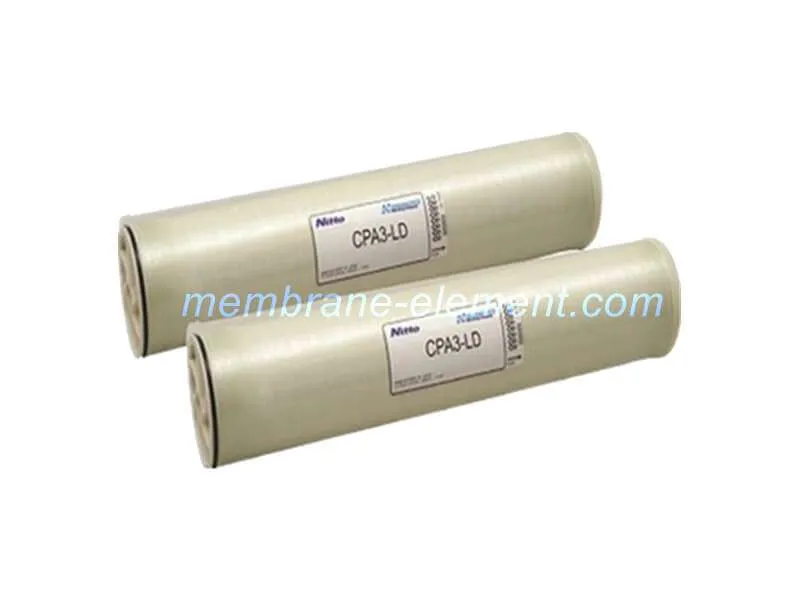
CHIWATEC supplies Daltonen, Dupont, Toray, CSM, Nitto, LG, and Vontron RO membranes with more than ten years of export experience. Contact us at [email protected], [email protected], or [email protected] for membrane selection and system design support.
FAQ:
Why is RO product water pH lower than the feed water pH?
RO product water pH drops by 1–2 units because the membrane rejects bicarbonate (HCO3-) and carbonate (CO3=) ions but cannot remove dissolved CO2 gas. The CO2 that passes through forms carbonic acid in the permeate, making it more acidic than the feed.
Is low-pH RO permeate corrosive?
Yes, acidic permeate at pH 4–6 can accelerate corrosion of carbon steel piping. Use stainless steel, PVC, or lined pipe on permeate lines, and correct the pH with caustic dosing or re-mineralization when the product must meet drinking or process water specifications.
How do I choose between acidic and alkaline RO cleaning?
Use acidic cleaning fluids for inorganic scale contaminants such as calcium carbonate and metal oxides, and alkaline solutions for microorganisms or organic pollutants. For iron pollution specifically, sodium bisulfite is the most effective cleaning agent.
How can I tell if an RO membrane element needs replacement?
An abnormal increase in permeate conductivity or salt content indicates a defective element or leak. Test each pressure vessel through the sampling ports, isolate the faulty position, and confirm with a sustained desalination rate drop before replacing the element.
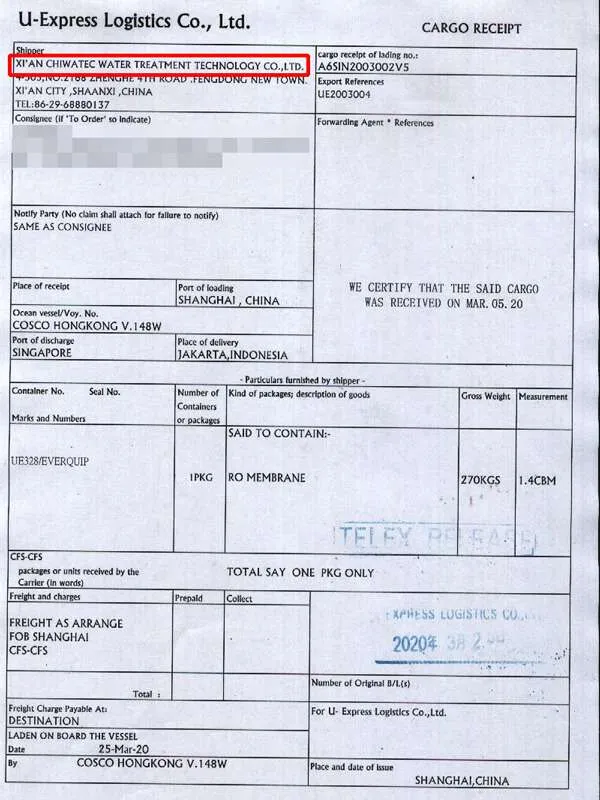
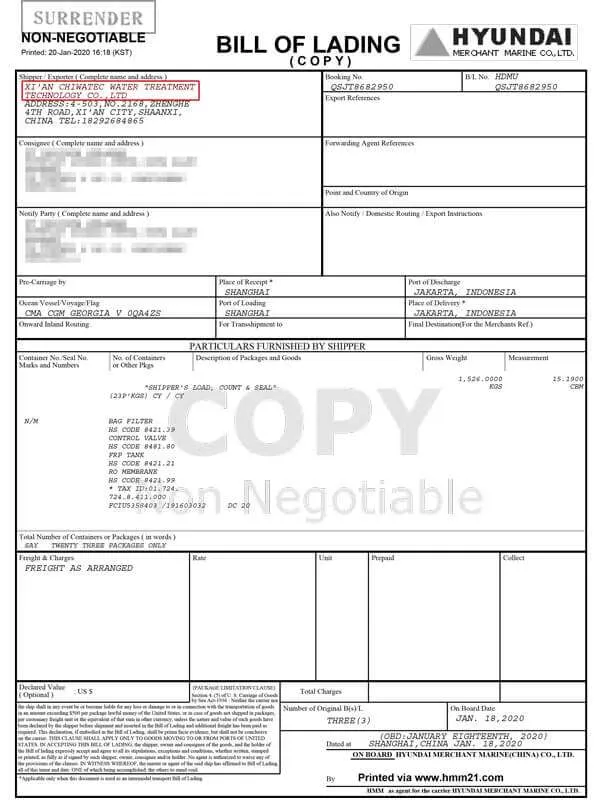
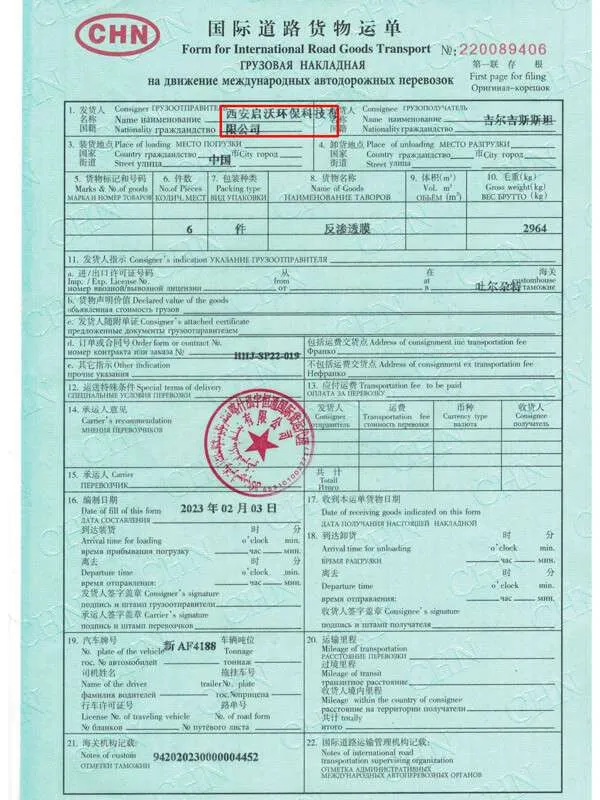
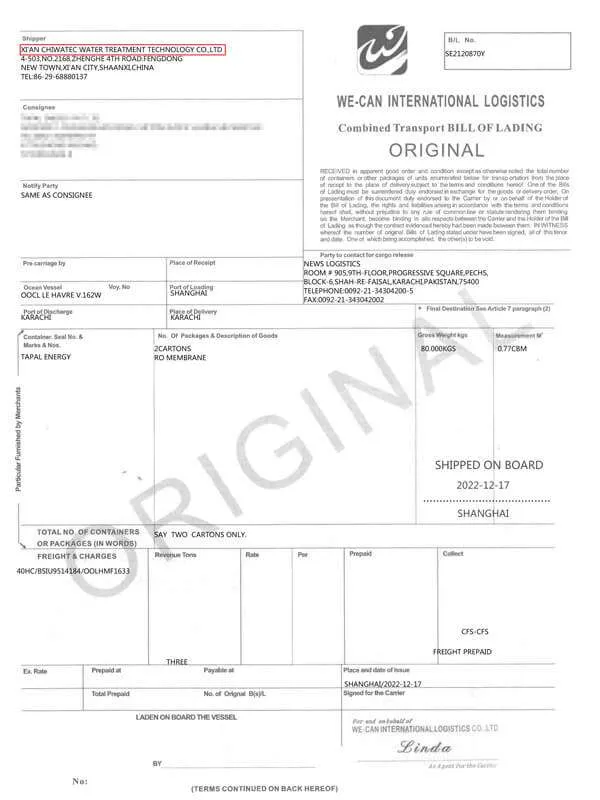
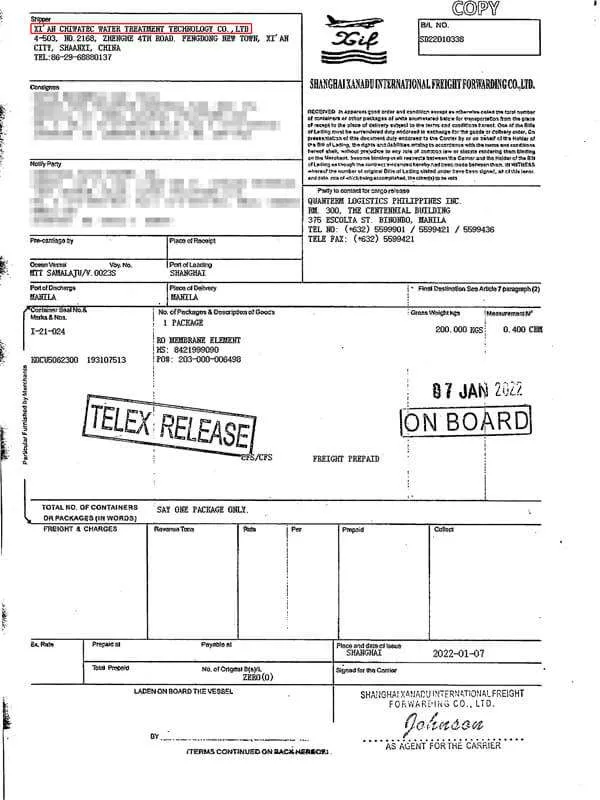
Xi’an CHIWATEC Water Treatment Technology provide the RO membrane to clients both inland and oversea with more than 10years experience. We manufacture our own brand Daltonen RO membrane and we are also the official distributor of Dupont, Toray, CSM, Nitto, LG and Vontron RO membrane. Whatever product you need, we cold meet your requirement.
Contact me for more info and best price.