
The RO membrane pretreatment process decides whether a reverse osmosis plant runs for years or fails in months — five steps protect the polyamide skin from particles, microorganisms, and oxidants before the feed water ever reaches the membrane. This guide covers the pretreatment sequence step by step: coarse filtration, oxidant addition, precision filtration, dechlorination, and security filtration, plus the silica and chromium limits that drive the design, and the pressure-drop and warranty questions that follow in operation.
RO Membrane Pretreatment Process: The Five-Step Sequence
Proper pretreatment is vital for the efficient and long-lasting operation of RO systems. A typical RO membrane pretreatment process includes five steps:
| Step | Unit | Purpose |
| 1. Coarse filtration | ~80 µm filter | Remove large particles |
| 2. Oxidant addition | Sodium hypochlorite | Control microbial growth |
| 3. Precision filtration | Multi-media filter or clarifier | Remove finer particles |
| 4. Dechlorination | Sodium bisulfite | Neutralize residual chlorine |
| 5. Security filtration | 5 µm cartridge before the high-pressure pump | Protect pump and membrane from remaining particles |
For water sources with high particulate or microbial content, additional measures like activated carbon filtration or anti-fouling membrane elements may be necessary. The sequence always ends chlorine-free — the same requirement detailed in our RO membrane feed water requirements guide.
Dechlorination Methods: Protecting the Polyamide Skin
Dechlorination is critical to prevent oxidative damage to RO membranes. Common methods include:
- Sodium bisulfite addition — the preferred method due to its effectiveness in neutralizing chlorine.
- Activated carbon adsorption — effective for chlorine removal but can lead to carbon powdering, which must be managed downstream.
- Ammonium bisulfite — used in some industrial applications for its dechlorination properties.
Dechlorination is the fourth step of the RO membrane pretreatment process and the last chemical barrier before the membrane — verify the residual chlorine is below 0.1 ppm at the inlet before the system goes online.
Silica and Chromium Limits in RO Feed Water
Two feed water contaminants set hard design limits:
- Silica concentration — the maximum allowable silica concentration in the inlet water depends on temperature, pH, and the use of scale inhibitors:
- Without scale inhibitors: the maximum allowable concentration in the concentrate is typically 100 ppm.
- With scale inhibitors: some advanced inhibitors can tolerate concentrations up to 240 ppm in the concentrate.
- Chromium — chromium, especially in its hexavalent form (Cr6+), can catalyze the oxidation of chlorine, leading to significant and irreversible damage to RO membranes. Cr6+ is less stable in water and more likely to induce oxidative damage, while trivalent chromium (Cr3+) is more stable and less harmful. To protect the membranes, reduce chromium concentrations during pretreatment or convert Cr6+ to the less reactive Cr3+ form.
Security Filtration: Pore Size and Placement
The security filter is the last physical guard before the membrane:
- Standard pore size — the security filter typically uses a filter element with a 5-micron pore size.
- Smaller pore for difficult water — for sources with high colloid or silicon content, a smaller pore size may be recommended to prevent fouling.
- Placement — installed before the high-pressure pump to prevent damage from any remaining large particles; a damaged pump or membrane from particle breakthrough is far more expensive than a cartridge change.
Always refer to the detailed specifications in your system manual to choose the appropriate filter size.
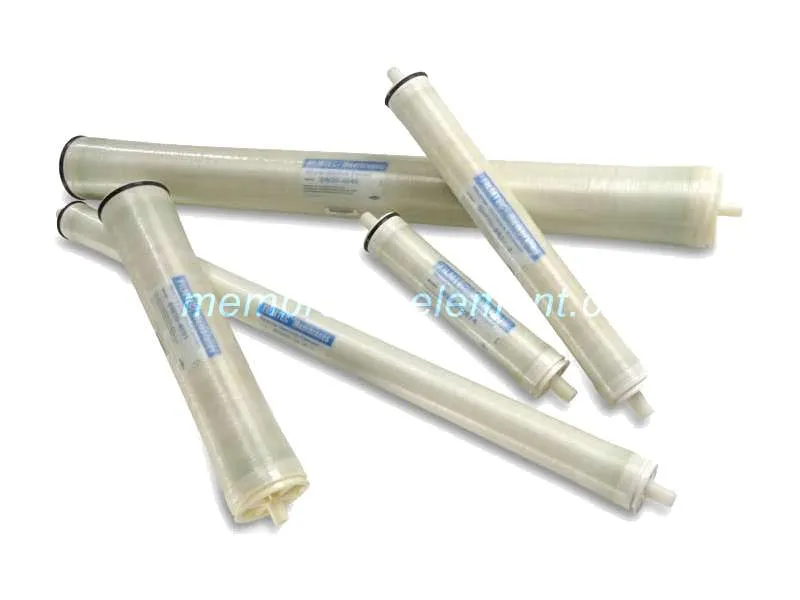
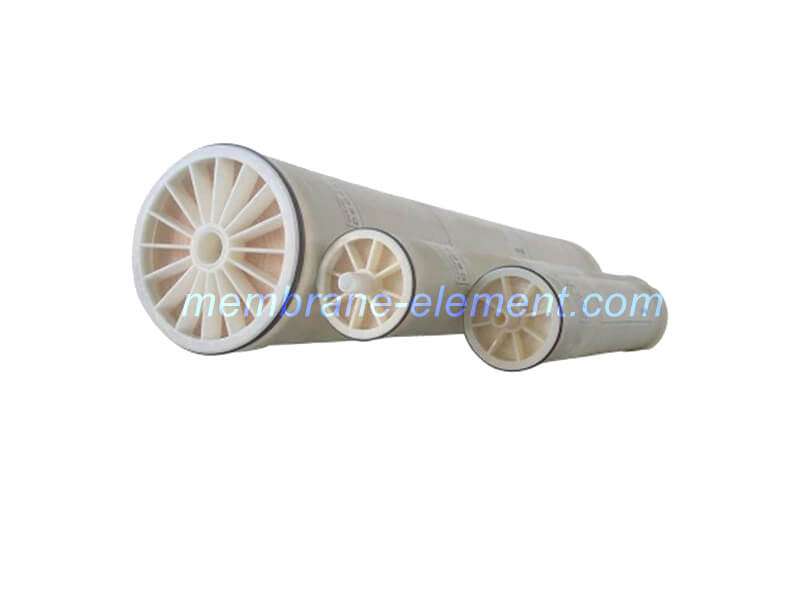
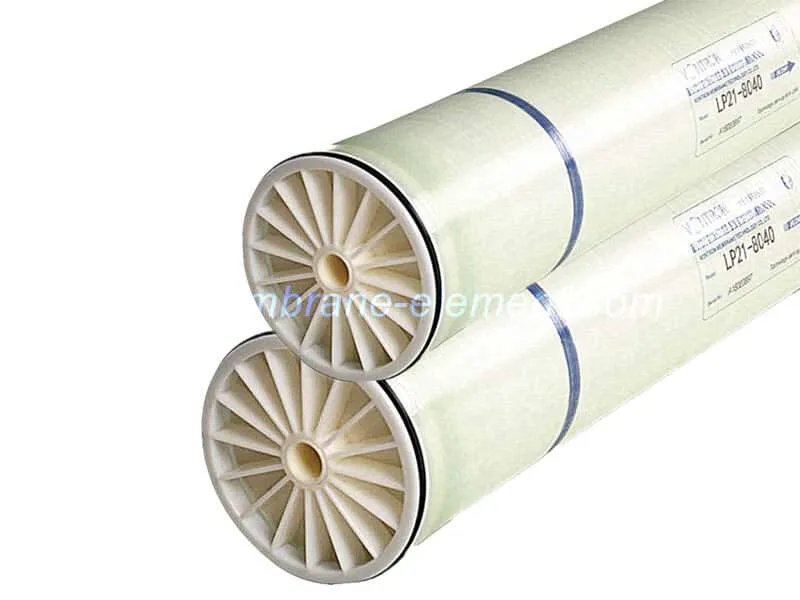
FILMTEC Element Features and Warranty
Dow FILMTEC membrane elements are renowned for their advanced design and superior performance:
- Wide pH range — operational pH range from 2 to 11 and cleaning pH range from 1 to 12.
- Consistent water flux — shorter membrane blades reduce pressure disparities and enhance uniform water flux.
- Automated bonding — ensures precise, consistent sealing lines for improved physical integrity.
- Higher effective membrane area — advanced blade assembly technology maximizes the effective area without sacrificing performance.
- Wider inlet flow channels — allow better flow management and reduced fouling risk.
Manufacturing involves two key steps: FT30 membrane creation (producing the flat film diaphragm using proprietary processes) and membrane element assembly (rolling the diaphragm and other materials into spiral-wound elements), all controlled by advanced computer diagnostics. These elements carry a three-year global limited warranty.
For the full family comparison, see our types of RO membrane elements guide.
Pressure Drop and Organic Removal
Two operating characteristics complete the picture:
- Pressure drop — the loss of pressure between the inlet and the concentrate side of an RO component or pressure vessel. For FILMTEC elements, normal pressure drop is typically between 4 and 5 psi (0.3 bar). A high pressure drop indicates potential fouling or clogging, leading to reduced efficiency, and can cause the telescope phenomenon, where membrane elements deform under pressure. The maximum allowable pressure drop for a 6-core system is 60 psi (4.2 bar); keeping within this limit is crucial for optimal operation — track it in the RO membrane maintenance monitoring routine.
- Organic compound removal — FILMTEC membranes are highly effective at removing medium-molecular-weight organic compounds like trihalomethanes (THMs), commonly found in disinfected water sources, and carbon tetrachloride (CTC), often present in wastewater and contaminated groundwater. Both RO and nanofiltration (NF) membranes exhibit high removal rates for these compounds.
Conclusion
The RO membrane pretreatment process is the cheapest insurance an RO plant can buy: five disciplined steps — coarse filtration, oxidant addition, precision filtration, dechlorination, and security filtration — keep particles, microbes, and oxidants away from the polyamide skin. Respect the silica and chromium limits, watch the pressure drop, and the membrane train delivers its rated life with minimal maintenance.
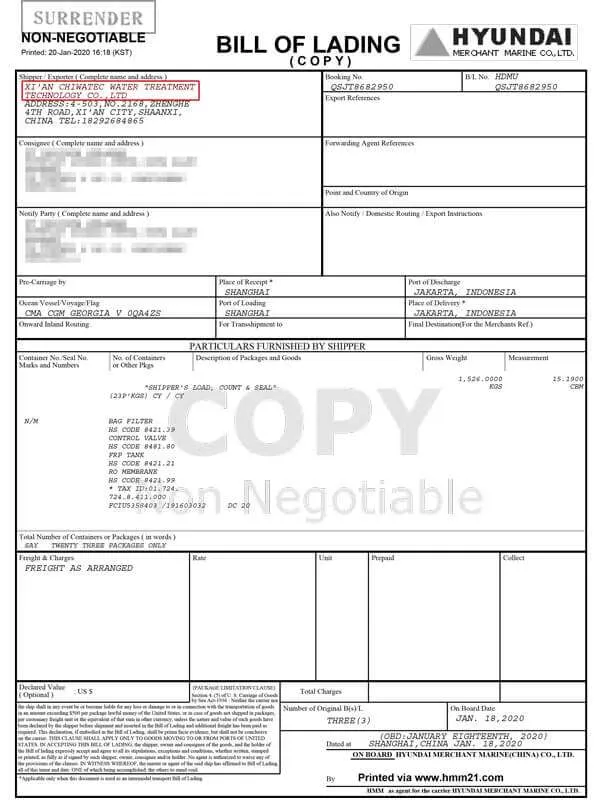
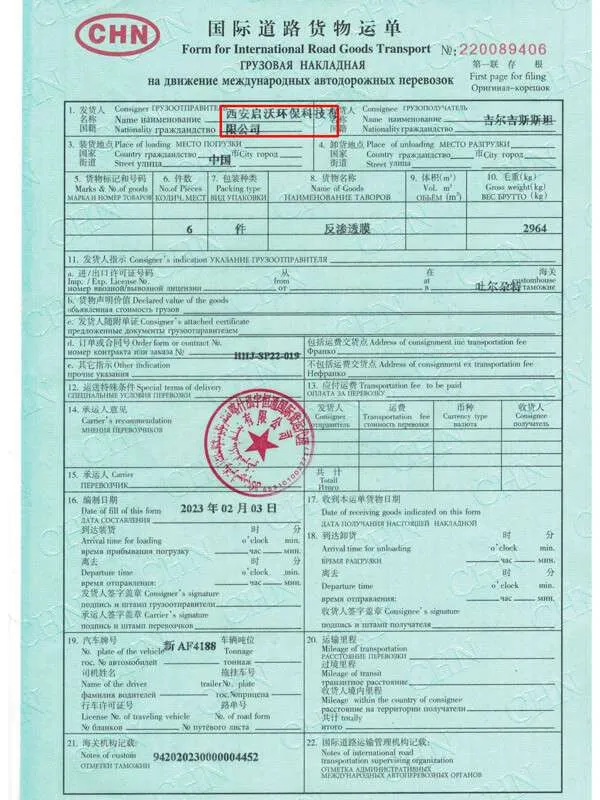
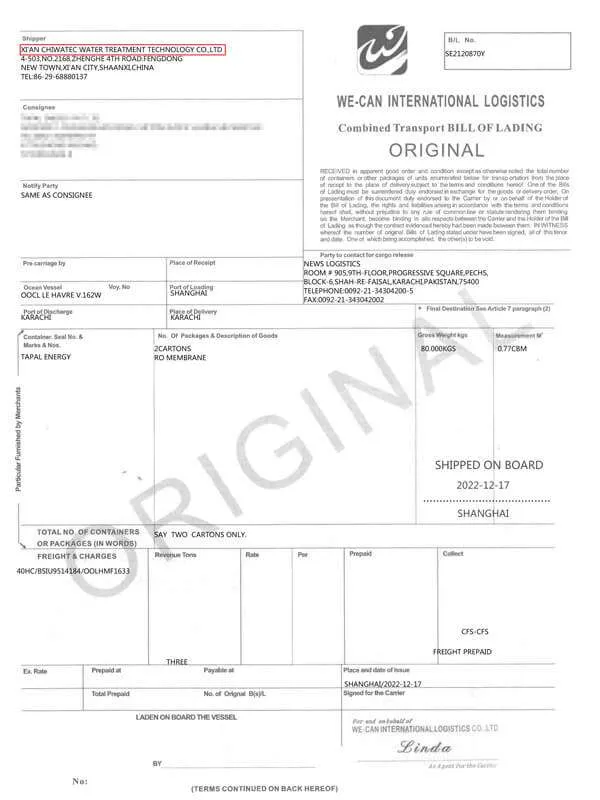
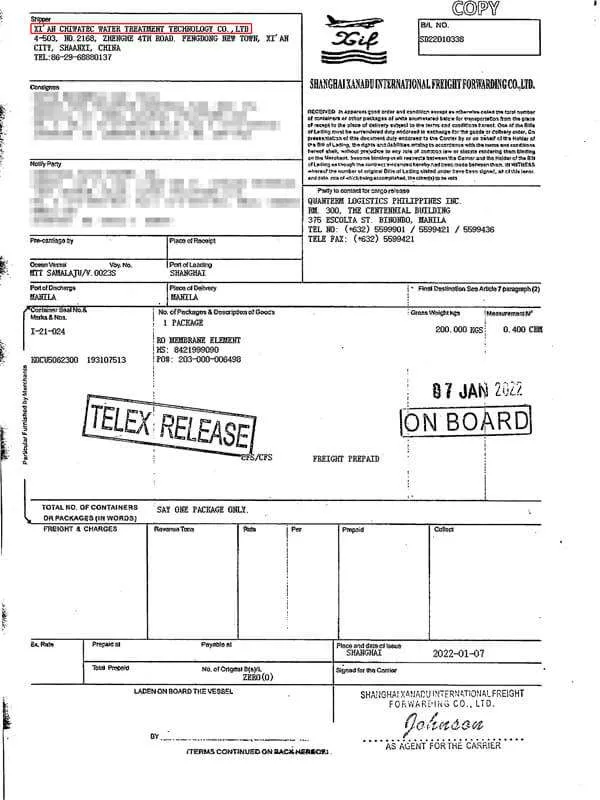
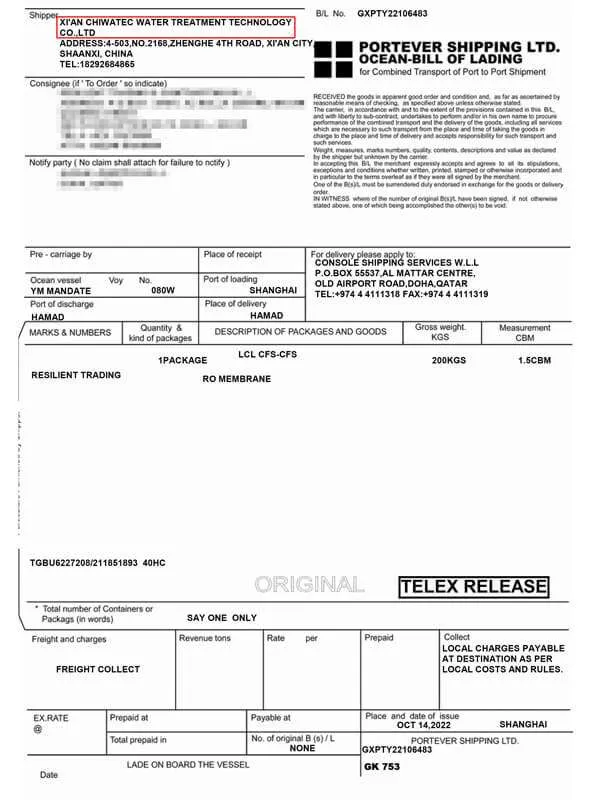
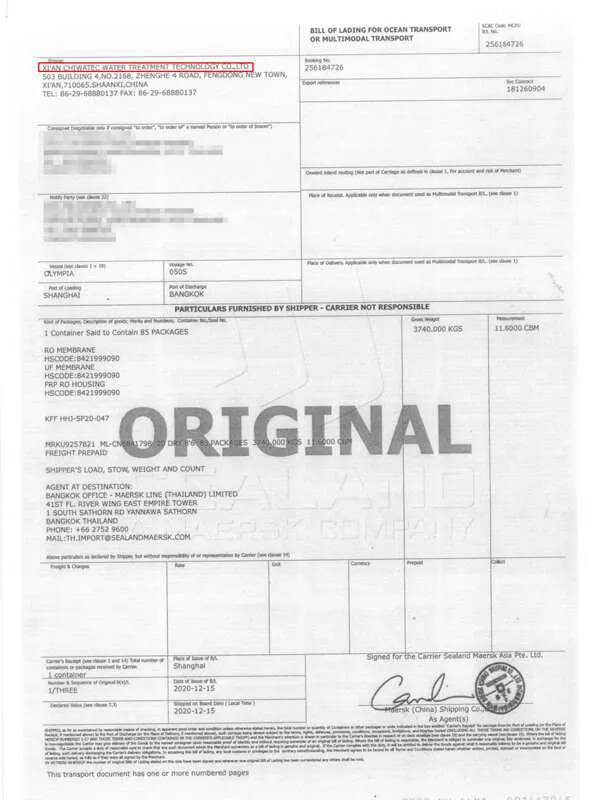
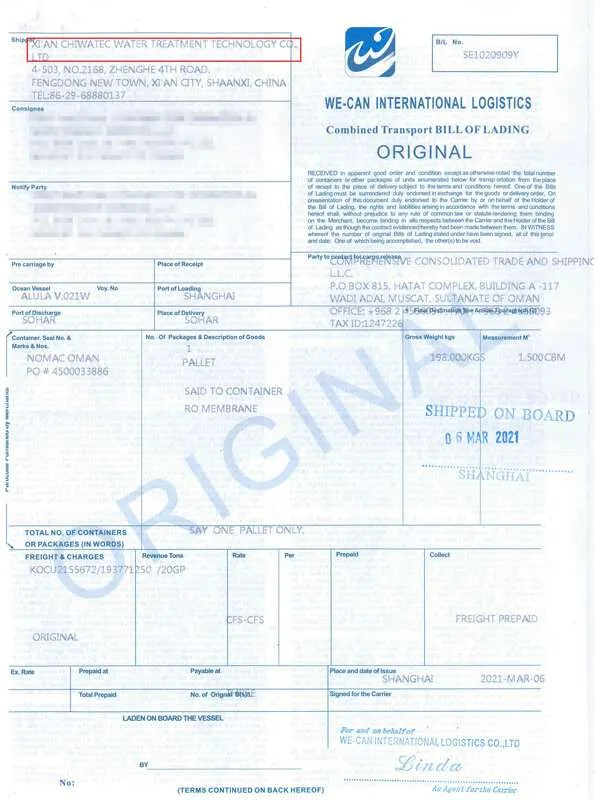
CHIWATEC supplies Daltonen, Dupont, Toray, CSM, Nitto, LG, and Vontron RO membranes with more than ten years of export experience. Contact us at [email protected], [email protected], or [email protected] for pretreatment design and membrane selection.
FAQ:
What are the steps of the RO membrane pretreatment process?
The RO membrane pretreatment process has five steps: coarse filtration (~80 µm) to remove large particles, oxidant addition (sodium hypochlorite) to control microbes, precision filtration (multi-media filter or clarifier) for finer particles, dechlorination (sodium bisulfite), and security filtration (5 µm cartridge) before the high-pressure pump.
What is the maximum silica concentration allowed in RO feed water?
Without scale inhibitors, the maximum allowable silica concentration in the concentrate is typically 100 ppm. With advanced scale inhibitors, concentrations up to 240 ppm can be tolerated. The limit depends on temperature, pH, and the inhibitor used.
How do I dechlorinate RO feed water?
Sodium bisulfite addition is the preferred dechlorination method. Activated carbon adsorption also works but can cause carbon powdering that must be managed, and ammonium bisulfite is used in some industrial applications. Verify residual chlorine is below 0.1 ppm at the membrane inlet.
What is a normal pressure drop across RO elements?
For FILMTEC elements, normal pressure drop is typically 4–5 psi (0.3 bar). A high pressure drop signals fouling or clogging and can cause the telescope phenomenon. The maximum allowable pressure drop for a 6-core system is 60 psi (4.2 bar).
Xi’an CHIWATEC Water Treatment Technology provide the RO membrane to clients both inland and oversea with more than 10years experience. We manufacture our own brand Daltonen RO membrane and we are also the official distributor of Dupont, Toray, CSM, Nitto, LG and Vontron RO membrane. Whatever product you need, we cold meet your requirement.
Contact me for more info and best price.