Operating a reverse osmosis system requires understanding key parameters that affect membrane performance, fouling potential, and cleaning schedules. This RO membrane operation FAQ addresses the most common practical questions about temperature effects, SDI monitoring, system downtime, brine seal installation, and cleaning frequency. These are the issues RO operators encounter in daily plant management.
This RO membrane operation FAQ answers ten questions across six operating areas: temperature effects, downtime and start-stop cycling, fouling and SDI monitoring, cleaning methods and frequency, system components, and energy efficiency.
Industry research valued the global RO membrane market at USD 6.8 billion in 2024. Projections place it at USD 12.4 billion by 2034, a CAGR of 6.2%. Reliable operation therefore matters more as RO systems scale across industrial and municipal plants. CHIWATEC supplies complete RO systems and replacement membranes for industrial, commercial, and municipal water treatment applications worldwide.
Last Updated: August 2026
RO Membrane Operation FAQ: Temperature and System Performance
Temperature effects open this RO membrane operation FAQ.
11. How does feed water temperature affect RO membrane water production?
Temperature has a direct and significant effect on RO membrane water production. Membrane permeability rises by approximately 3% per °C increase in feed water temperature. Reduced water viscosity and increased polymer chain mobility in the active layer drive this gain. For example, operating at 25 °C versus 15 °C produces roughly 30% more permeate at the same applied pressure. Lower temperatures reduce water production proportionally. The temperature correction factor (TCF) standardizes performance data. Most membrane manufacturers provide TCF tables or equations in their design guidelines. When operating at higher temperatures, reduce the applied pressure to maintain constant permeate flow. At temperatures above 45 °C, standard polyamide membranes may suffer permanent damage. For cold water applications below 10 °C, consider larger membrane arrays or higher-pressure pumps to compensate for reduced flux. Our evaluation indices guide explains how normalized performance tracking works.
RO System Downtime and Start-Stop Operation
Downtime limits follow in this RO membrane operation FAQ.
13. What is the maximum allowable RO system downtime without flushing?
Maximum allowable downtime depends on antiscalant use and feed water temperature. With antiscalant, the limit is approximately 4 hours at 20-38 °C and 8 hours below 20 °C. Without antiscalant, the limit extends to approximately 24 hours. Beyond these limits, scale precipitation and microorganism growth can occur on membrane surfaces. For any shutdown exceeding 4 hours, flush the system with permeate or pretreated water at low pressure (3-5 bar). This displaces the high-concentration brine that contains scale-forming ions. Keep both permeate and concentrate valves fully open during flushing to prevent backpressure. For shutdowns exceeding 48 hours, preserve the membranes chemically with a 1% sodium bisulfite solution. The same SBS preservation logic applies in our membrane storage guide.
15. Can an RO system be started and stopped frequently?
RO membrane systems suit continuous operation, yet frequent start-stop cycles work fine with proper procedures. Start each startup with low-pressure flushing at 3-5 bar for 5-10 minutes, with permeate diverted to drain. This removes air from the pressure vessels and stabilizes the membrane. Use a gradual pressure ramp of 20-30 seconds to reach operating pressure. This prevents hydraulic shock to membrane elements. Frequent cycling increases wear on the high-pressure pump, valves, and instrumentation. For systems cycling more than 3-4 times per day, install a permeate storage tank to buffer demand fluctuations. Alternatively, fit a variable frequency drive (VFD) on the high-pressure pump for smooth ramp-up.
Fouling Monitoring: Particle Fouling and SDI Measurement
Fouling monitoring and SDI measurement are the water-quality core of this RO membrane operation FAQ.
12. What is particle and colloid fouling and how is it measured?
Particle and colloid fouling occurs when suspended solids, colloidal silica, metal corrosion products, or bacteria accumulate on the membrane surface. Pretreatment chemical precipitates such as polymerized alum, ferric chloride, and cationic polyelectrolytes add to the load. Early symptoms include rising pressure drop (ΔP) across the membrane array. Normalized permeate flow then declines, and severe cases show reduced salt rejection. The standard measurement for colloidal fouling potential is the Silt Density Index (SDI), per ASTM D4189-82. The test measures how fast a 0.45-micron filter plugs under 2.07 bar (30 psi) over 15 minutes. Calculate the SDI15 value as SDI15 = (1 – t1/t2) × 100 / 15. Here t1 is the initial collection time and t2 is the final collection time. RO feed water must hold SDI15 at or below 5, while manufacturers recommend SDI15 ≤ 3 for optimal performance. Effective pretreatment to reduce SDI includes multimedia filtration, ultrafiltration (UF), and microfiltration (MF). Coagulant or polyelectrolyte dosing upstream of the filter enhances these options. Our feed water requirements guide lists the full SDI specification.
20. What is SDI and why is it critical for RO operation?
The Silt Density Index (SDI, also known as the Fouling Index) is the most widely accepted parameter for colloidal fouling potential in RO and NF feed water. SDI is a mandatory measurement before RO system design, and operators must monitor it routinely. For surface water sources, test 2-3 times per day. An SDI15 above 5 indicates insufficient pretreatment, and membrane fouling will then accelerate dramatically. SDI of 3-5 requires frequent cleaning, every 2-3 months. SDI below 3 allows extended cleaning intervals of 6-12 months. To reduce SDI, upgrade the pretreatment system. Add coagulant dosing before multimedia filters, replace conventional media filters with UF membranes, or install self-cleaning screen filters. Inline SDI monitors enable continuous real-time tracking. They provide early warning of pretreatment degradation before membrane damage occurs. UF membrane application covers the UF-based SDI reduction route.
RO Membrane Cleaning Method Selection
Cleaning method selection is a core RO membrane operation FAQ concern.
18. How do you choose the right RO membrane cleaning method?
Selecting the correct cleaning agent and procedure is critical. The wrong cleaning chemical can permanently damage the membrane or worsen fouling. Use acidic cleaners at pH 2-3, typically citric acid or hydrochloric acid, for inorganic scale fouling. This covers calcium carbonate, calcium sulfate, barium sulfate, and metal oxides. Use alkaline cleaners at pH 11-12 for organic fouling, biofouling, and silica. Typical formulations combine sodium hydroxide with detergents and EDTA or SDS. For combined fouling, clean with the alkaline solution first. Rinse thoroughly with permeate to pH neutral, then follow with acid cleaning. Recirculate each cleaning at low pressure (2-4 bar) for 30-60 minutes at 30-35 °C. Follow with a soak period of 1-4 hours. Always flush thoroughly with permeate between different chemical stages. Our cleaning agent selection guide matches cleaners to foulants in detail.
RO Membrane Cleaning Frequency and Triggers
Cleaning frequency is the second cleaning question in this RO membrane operation FAQ.
19. How often should the RO system be cleaned?
Cleaning frequency ties directly to feed water quality and pretreatment effectiveness. Watch these key triggers for RO membrane cleaning:
- Normalized permeate flow drops by 10-15%.
- Normalized salt passage increases by 10-15%.
- Pressure difference (ΔP) between stages increases by 10-15%.
With SDI15 below 3 and well-designed pretreatment, cleaning typically runs 2-4 times per year. At SDI15 of 3-5, cleaning frequency may increase to 4-8 times per year. Systems treating challenging feed water, such as high organics, high iron, or wastewater reuse, may require monthly cleaning. A well-maintained log of normalized performance parameters helps operators identify trends. This enables preventive cleaning before performance degradation becomes severe. Between chemical cleanings, periodic forward flushing of 5-10 minutes daily can extend cleaning intervals. It removes loosely attached foulants. Our cleaning frequency guide and cleaning trigger guide cover scheduling in depth.
Brine Seal Ring Installation on RO Membrane Elements
Brine seal installation is one of the most practical RO membrane operation FAQ questions.
16. How should the brine seal ring be installed on RO membrane elements?
The brine seal ring, also known as the salt water seal or brine seal, is a U-cup rubber seal. It sits on the feed end of each RO membrane element. Position the seal so the open lip faces the incoming feed water direction. When feed water enters the pressure vessel, hydraulic pressure forces the seal lip outward. The lip presses against the inner wall of the pressure vessel. This creates a positive seal that prevents feed water from bypassing the membrane element. A correctly installed brine seal ensures all feed water passes through the element. None flows along the gap between the element and the vessel wall. Inspect brine seals during each element replacement. Replace cracked, deformed, or hardened seals immediately. After installation, verify the direction by checking the flexible lip. It must point toward the feed adapter at the vessel end. RO membrane element types details the associated hardware.
What Impurities Can RO Membranes Remove
Contaminant removal completes the component section of this RO membrane operation FAQ.
17. What impurities can RO membranes remove?
RO membranes provide the broadest contaminant removal of any pressure-driven membrane technology.
| Contaminant Category | Removal Rate | Typical Effluent Level |
| Dissolved salts (TDS) | 95-99% | < 50 mg/L from 1,000 mg/L feed |
| Total organic carbon (TOC) | ≥99% | < 0.5 mg/L for organic > 100 MW |
| Bacteria and viruses | >99.99% | Below detection limit |
| Colloidal particles | >99% | < 1 NTU |
| Heavy metals (Pb, Cu, As) | 95-99% | Below drinking water limits |
| Pesticides and herbicides | 95-99% | Below detection limit |
| Endocrine disruptors | >90% | Significantly reduced |
Nanofiltration membranes have lower removal capability. They achieve approximately 20-80% for monovalent salts and 90-98% for divalent salts. Organic removal runs 90-95% for molecules above 200-400 MW. For microorganism removal specifics, see our RO virus and bacteria removal guide.
Reducing RO Membrane System Energy Consumption
Energy efficiency closes this RO membrane operation FAQ.
14. How can RO membrane system energy consumption be reduced?
Energy consumption typically accounts for 30-50% of total RO operating costs. Key strategies to reduce energy use include:
- Low-energy membrane elements: operate at 5-8 bar versus 10-15 bar for standard brackish membranes, cutting specific energy consumption by 20-30%. They show slightly lower salt rejection, typically 97-98% versus 99-99.5%.
- Energy recovery devices (ERDs): for systems above 50 m³/h, especially seawater, they recover 25-60% of concentrate-stream energy. Options include Pelton wheel turbines, pressure exchangers (PX), and turbochargers.
- Variable frequency drives (VFDs): on the high-pressure pump, they allow precise pressure control based on temperature and feed water quality. This saves 10-20% versus fixed-speed operation with throttling valves.
- Optimal staging: operating at the minimum recovery rate that meets production reduces the osmotic pressure differential and required feed pressure.
- Temperature optimization: operating at 20-25 °C, where feasible, balances membrane flux and energy consumption.
Implementing these measures can reduce specific energy consumption from 0.5-1.0 kWh/m³ for standard brackish water RO to 0.3-0.6 kWh/m³. Our low energy RO membrane elements guide covers element selection, and seawater desalination equipment details ERD integration.
Conclusion
This RO membrane operation FAQ has covered ten practical questions across temperature, downtime, fouling, cleaning, components, and energy. Operators who track TCF, SDI15, and normalized performance catch problems early. Proper flushing, brine seal care, and matched cleaning chemistry extend membrane life and cut energy use.
CHIWATEC supplies complete RO systems and replacement membranes for industrial, commercial, and municipal water treatment applications worldwide. Contact our team for operation support, element selection, or system design: [email protected], [email protected], and [email protected].
FAQ: RO System Operation and Maintenance
Q1: What is the temperature correction factor (TCF)?
TCF standardizes membrane performance data to a reference temperature, typically 25 °C. Flux rises about 3% per °C, so manufacturers publish TCF tables or equations to compare results across temperatures.
Q2: How long can an RO system stay idle with antiscalant?
With antiscalant, about 4 hours at 20-38 °C and 8 hours below 20 °C. Without antiscalant, the limit extends to roughly 24 hours. Shutdowns beyond 48 hours call for 1% SBS preservation.
Q3: What cleaning frequency does an SDI15 of 3-5 imply?
SDI15 of 3-5 typically requires cleaning every 2-3 months. Below 3, intervals extend to 6-12 months. Above 5, pretreatment is insufficient and fouling accelerates dramatically.
Q4: Which way does the brine seal lip face?
The open lip faces the incoming feed water direction. Hydraulic pressure then forces the lip outward against the vessel wall, creating a positive seal that prevents feed bypass.
Q5: How much energy can an ERD recover?
Energy recovery devices recover 25-60% of the energy in the concentrate stream. They suit systems above 50 m³/h, especially seawater plants using Pelton turbines, pressure exchangers, or turbochargers.
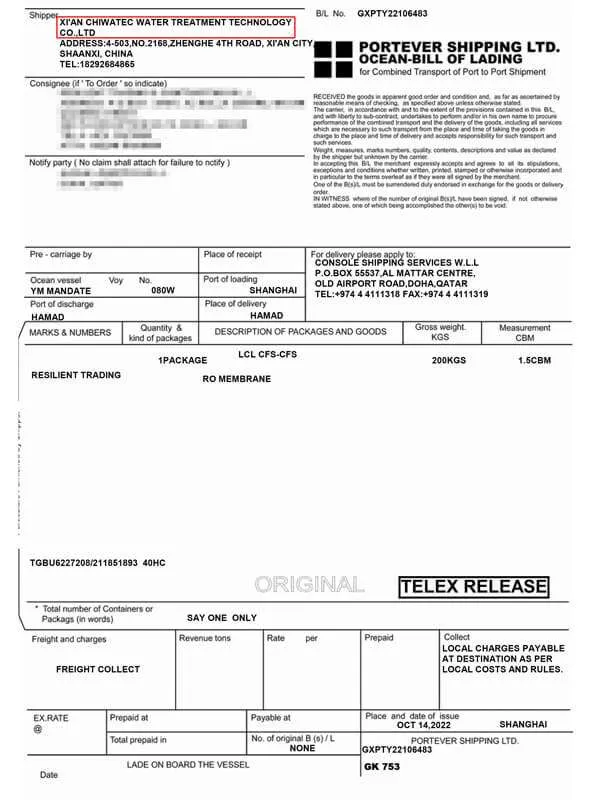
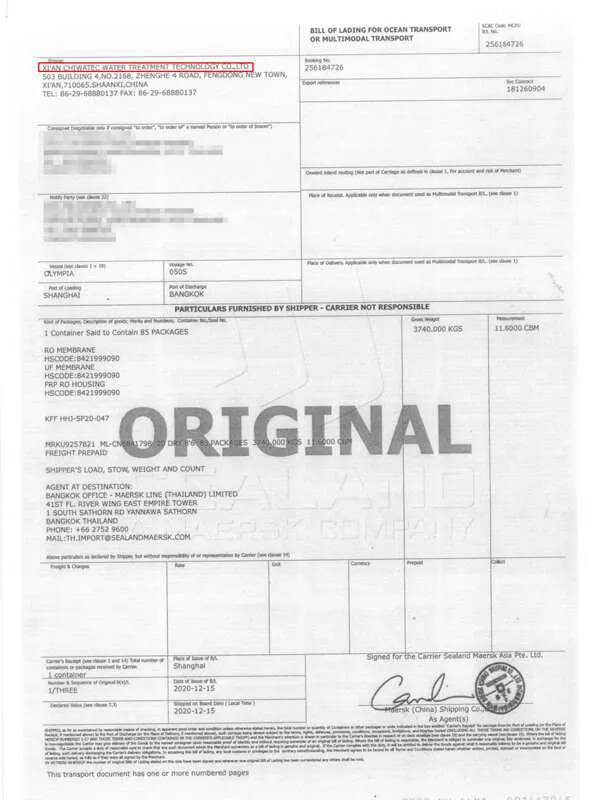
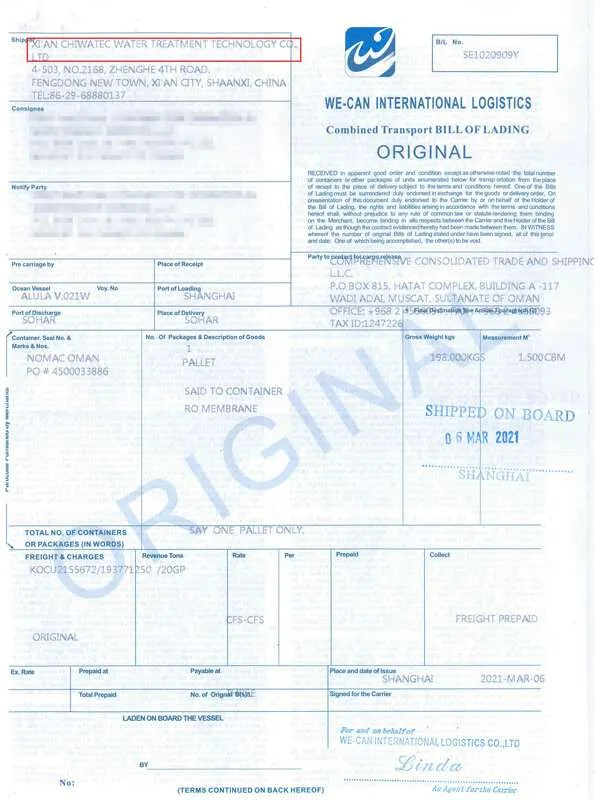
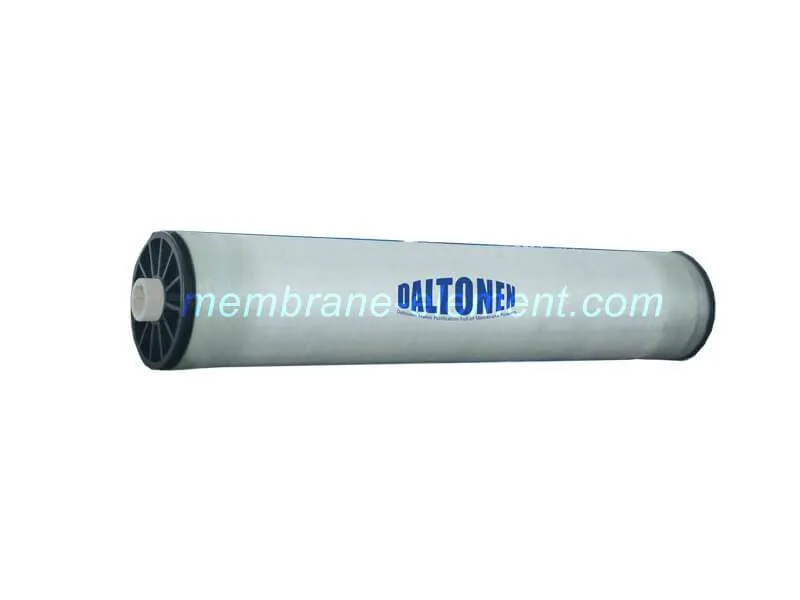
Xi’an CHIWATEC Water Treatment Technology provide the RO membrane to clients both inland and oversea with more than 10years experience. We manufacture our own brand Daltonen RO membrane and we are also the official distributor of Dupont, Toray, CSM, Nitto, LG and Vontron RO membrane. Whatever product you need, we cold meet your requirement.
Contact me for more info and best price.