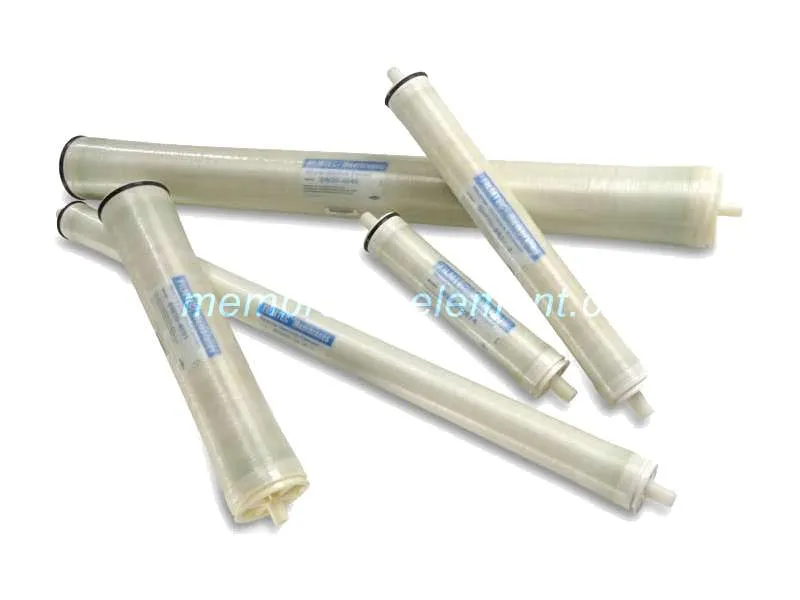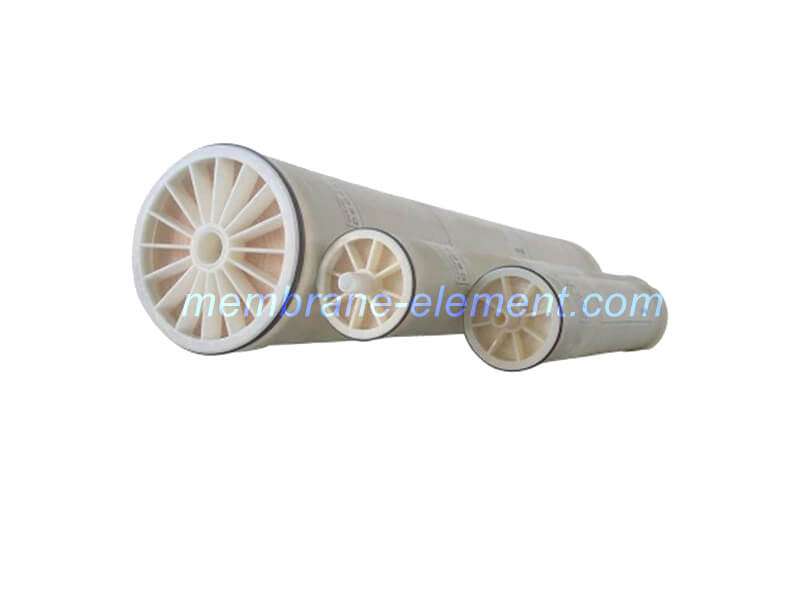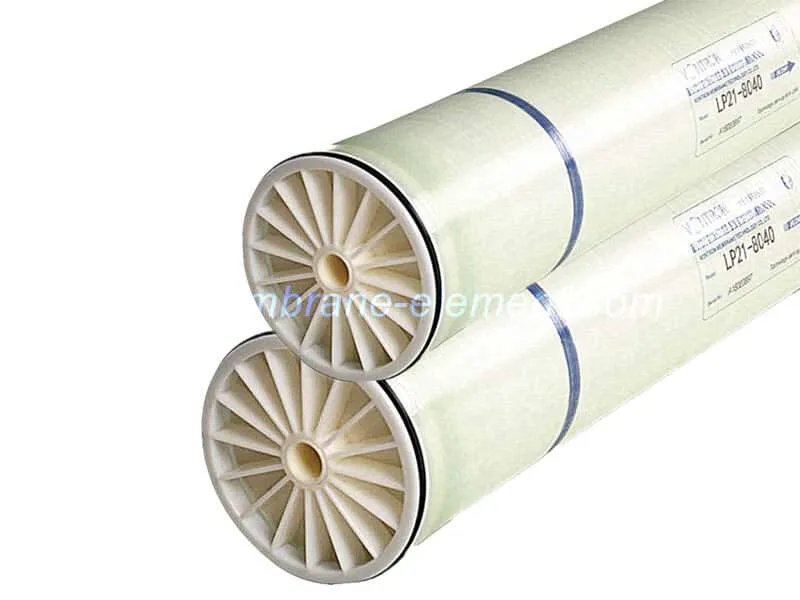
Low energy RO membrane elements cut the energy cost of reverse osmosis dramatically — Dow FILMTEC XLE elements consume only about 50% of the energy of standard brackish water membranes, at the price of a slightly lower desalination rate. Choosing between LE, LP, and XLE elements is an economic trade-off between power consumption and product water quality. This guide explains when to choose between these element types, how TDS and conductivity data feed into design, and how to store, test, and protect the elements you choose.
Low Energy RO Membrane Elements: When to Choose LE, LP, and XLE
Low energy RO membrane elements are the answer when electricity dominates operating cost. Dow FILMTEC offers low-energy membrane elements (LE and LP types) and extremely low-energy XLE elements. These are ideal for customers prioritizing minimal energy consumption while maintaining high desalination rates and water production. For example, XLE elements consume only 50% of the energy compared with standard BW products, albeit with slightly lower desalination rates.
| Membrane Type | Energy vs Standard BW | Desalination Rate |
| XLE (extremely low energy) | ~50% of standard BW | Slightly lower |
| LE / LP (low energy) | Reduced | Slightly lower |
| Standard BW (brackish water) | Baseline | Highest |
The working principle of an RO membrane explains the trade-off: lower-energy elements use a thinner or more permeable skin layer, so they need less feed pressure — but a more permeable skin also passes slightly more salt.
Energy Reduction Strategies for RO Systems
Beyond element selection, the whole system contributes to energy consumption:
- Low-energy elements — utilize low-energy or extremely low-energy membrane elements (LP, BWLE, XLE) to reduce energy consumption, noting their slightly lower desalination rates.
- Energy recovery devices — in seawater systems, isobaric energy recovery (pressure exchangers) recovers 90%+ of the concentrate pressure energy and can cut total energy use by more than half.
- High-efficiency pumps — IE4/IE5 class high-pressure pumps add a few percent of efficiency at the same operating point.
- Variable frequency drives — match pump speed to actual demand instead of throttling with a valve.
Choosing low-energy elements is the first step; combining them with energy recovery and pump efficiency delivers the full saving.
TDS and Conductivity Conversion for Design
To input conductivity values into software design, they must be converted to TDS values. The typical conductivity/TDS ratio ranges from 1.2 to 1.7. For ROSA design, ratios of 1.4 for seawater and 1.3 for brackish water are used, ensuring accurate conversion rates.
- Ratio varies with water chemistry — the 1.2–1.7 range reflects different ionic compositions; chloride-dominated waters sit at the lower end.
- Seawater: 1.4 — the standard ROSA conversion factor for ocean water.
- Brackish water: 1.3 — the standard ROSA conversion factor for most well and surface waters.
- Never design from conductivity alone — always convert to TDS with the correct ratio, or the feed water requirements and recovery calculations will be wrong.
Detecting Contamination and Testing Membrane Performance
Common pollution symptoms include decreased water production under standard pressure, increased operating pressure requirements, and changes in membrane element weight or removal rate. To check for contamination, pour water on the inlet side of the membrane element; if it does not flow through, contamination may be present.
- Production drop at constant pressure — the first and most reliable fouling signal.
- Rising feed pressure — the system compensates for fouling by increasing pressure, raising energy use.
- Weight change — heavily fouled elements can weigh more than double their clean weight; compare with the specification table below.
- Per-vessel TDS testing — detecting reduced desalination rates requires assessing individual pressure vessel TDS values and membrane element performance; refer to the manual for specific testing methods.
These checks belong in the routine RO membrane maintenance monitoring program.
Storage, Protection, and Startup Handling
Handling rules keep elements healthy from the warehouse to the pressure vessel:
- Microorganism prevention in packaging — a cloudy protective solution indicates microbial growth; check membrane elements every three months and soak them in fresh 1% sodium bisulfite solution for about an hour if necessary.
- Wet component protection — wet elements are protected with 1% sodium bisulfite; ultrapure water polishing membrane elements require 500 ppm sodium bisulfite.
- Air expulsion at startup — air must be expelled at low pressure and flow rates (0.2–0.4 MPa) before starting, to prevent membrane damage caused by sudden pressure increases.
Storage discipline is part of the maintenance framework — see the fouling prevention guide for the complete protection strategy.
Membrane Element Weights and Pressure Vessel Requirements
Element weight is a practical specification for handling, shipping, and — usefully — for judging fouling. Dow FILMTEC element weights (kg):
| Type No. | Dry element | Wet components* |
| XLE-4040 / LP-4040 / TW30-4040 | 2.3 | 3.2 |
| BW30-4040 / BW30LE-4040 / NF90-4040 / NF270-4040 / NF200-4040 / NF-4040 | 2.7 | 3.6 |
| BW30-365 | 11.3 | 14.1 |
| BW30-400 | 11.8 | 14.5 |
| RO-390-FF / NF90-400 / NF270-400 / NF200-400 / NF-400 | / | 14.5 |
| XLE-440 / BW30LE-440 | 12.7 | 15.0 |
| SW30HR-320 | / | 13.6 |
| SW30HR-380 / SW30-380 | / | 14.1 |
* Note: wet components are the weight after draining. The degree of fouling can be judged according to the weight of the used components — the weight of some heavily fouled membrane components may more than double.
Pressure vessel requirements — pressure vessel design must comply with ASME standards, ideally obtaining ASME certification or meeting ASME standard requirements during manufacture. This protects both the elements and the operators.
Conclusion
Low energy RO membrane elements deliver up to 50% energy savings for a small loss in rejection — the right choice when electricity dominates the operating budget. Pair them with correct TDS-to-conductivity design data, routine contamination checks, sodium bisulfite storage, and ASME-compliant pressure vessels, and the system runs at the lowest sustainable cost.
CHIWATEC supplies Daltonen, Dupont, Toray, CSM, Nitto, LG, and Vontron RO membranes with more than ten years of export experience. Contact us at [email protected], [email protected], or [email protected] for low-energy membrane selection and energy audits.
FAQ:
What are low energy RO membrane elements?
Low energy RO membrane elements (LE, LP, and extremely low-energy XLE types) are designed to operate at lower feed pressure than standard brackish water membranes. XLE elements consume only about 50% of the energy of standard BW products, with a slightly lower desalination rate.
How is TDS related to conductivity in RO design?
The typical conductivity/TDS ratio ranges from 1.2 to 1.7 depending on water chemistry. For ROSA design software, use 1.4 for seawater and 1.3 for brackish water when converting conductivity readings to TDS.
How can I tell if my RO membrane is contaminated?
Look for decreased water production at standard pressure, increased operating pressure requirements, and changes in element weight or removal rate. A simple field check: pour water on the inlet side of the element — if it does not flow through, contamination may be present.
How are RO membrane elements stored and protected?
Wet elements are protected with 1% sodium bisulfite (500 ppm for ultrapure water polishing elements). Check elements every three months; if the protective solution looks cloudy, soak the elements in fresh 1% sodium bisulfite for about an hour.
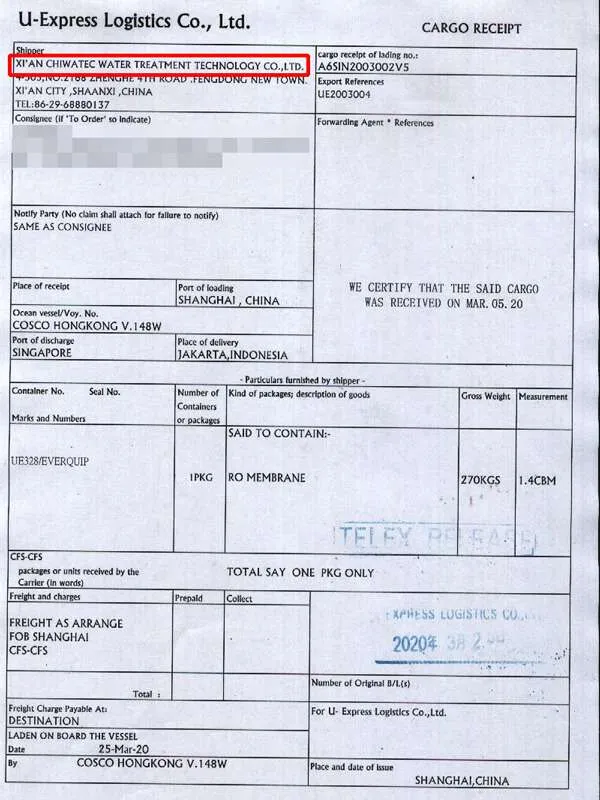
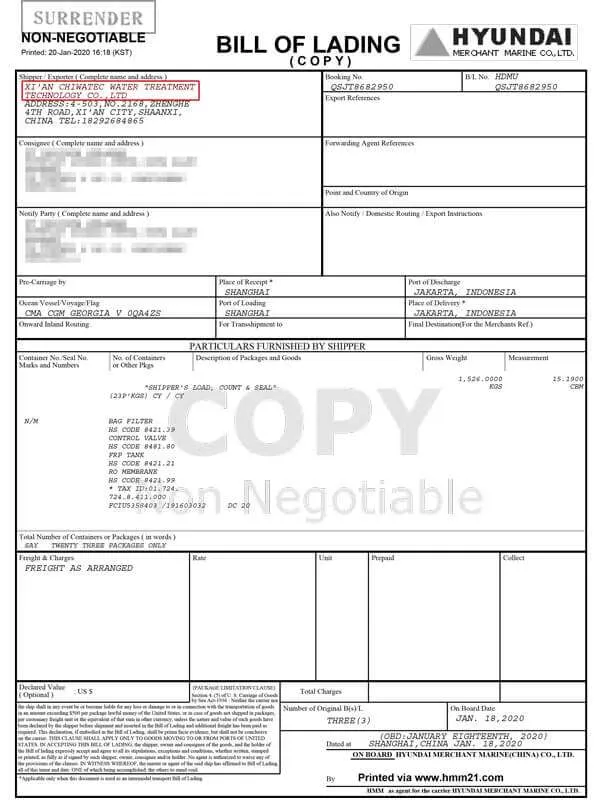
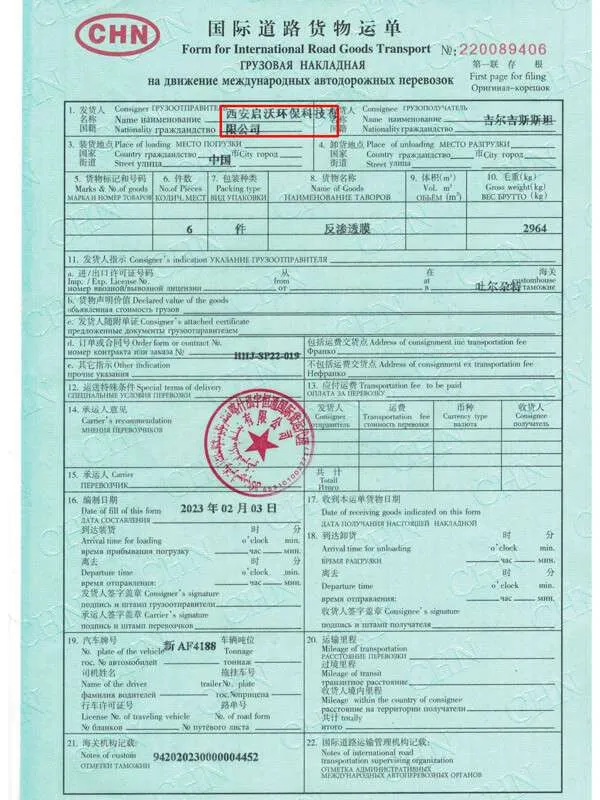
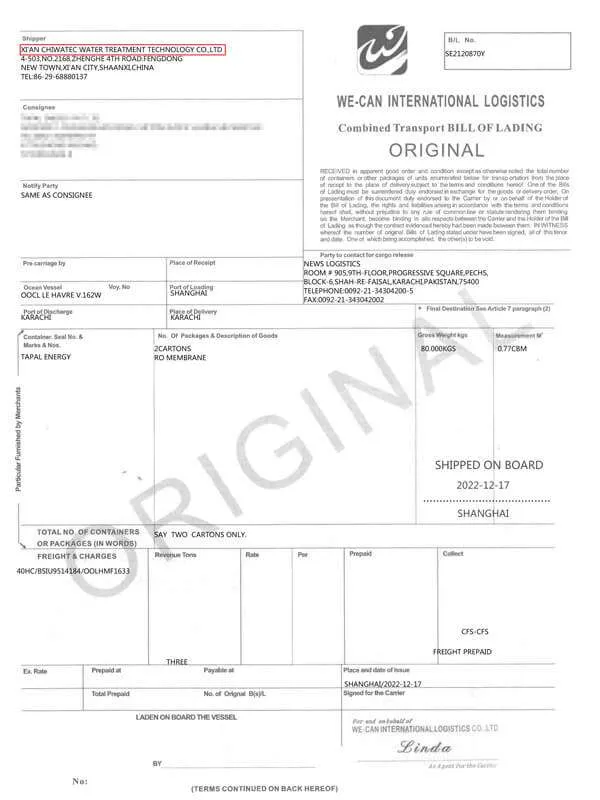
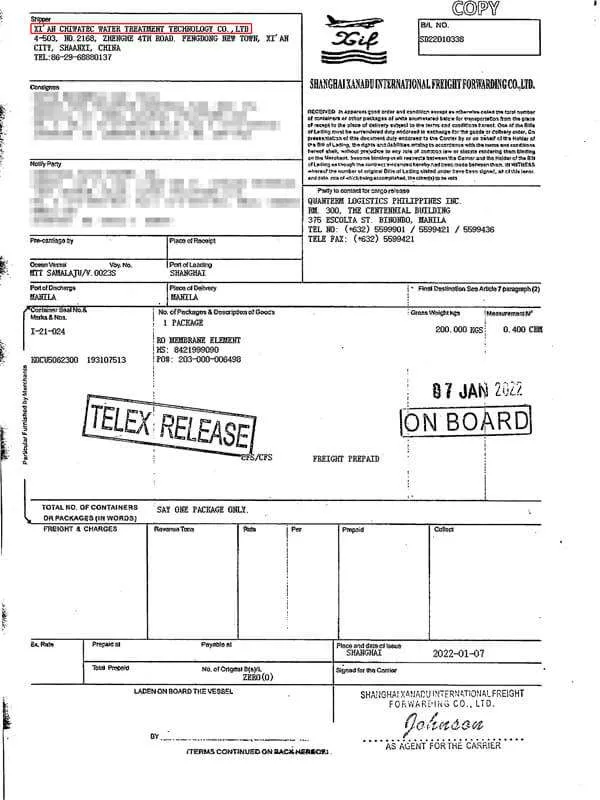
Xi’an CHIWATEC Water Treatment Technology provide the RO membrane to clients both inland and oversea with more than 10years experience. We manufacture our own brand Daltonen RO membrane and we are also the official distributor of Dupont, Toray, CSM, Nitto, LG and Vontron RO membrane. Whatever product you need, we cold meet your requirement.
Contact me for more info and best price.