Reverse osmosis membrane cleaning machine technology restores membrane performance, extends element life and keeps permeate quality steady. Over time, RO membranes collect scale, organic foulants, colloidal deposits and microorganisms. Permeate flow then falls, salt passage rises and differential pressure climbs. Each of those signals points to one conclusion: chemical cleaning is due. The machine side of that work follows a fixed order. First, run data normalization sets a trustworthy baseline. Next, cleaning agent selection matches the chemistry to the foulant. Then pH and temperature control keeps the polyamide skin intact. Finally, trigger conditions decide the exact moment to clean. Follow that order and the array returns to near-original performance without irreversible damage. CHIWATEC builds advanced RO membrane cleaning systems and supports industrial, commercial and municipal water treatment plants.
What Is Reverse Osmosis Membrane Cleaning Machine Technology?
This cleaning technology restores membrane performance through controlled chemical cleaning. Physical methods, such as backwashing or pulse cleaning (ultrafiltration membrane cleaning), lift loose deposits but cannot dissolve scale or biofilm. Chemical cleaning circulates a formulated solution through the elements at a set pH, temperature and flow rate. As a result, absorbed foulants dissolve and flush out of the feed channels.
In addition, a modern cleaning machine combines several subsystems on one skid. The table below lists the core components and what each one contributes.
| Subsystem | Function in the Cleaning Cycle |
| Temperature-controlled tank | Holds the cleaning solution inside the 21-40 °C working window |
| Circulation pump | Delivers the design flow rate across every element in the array |
| Chemical dosing pump | Adds YS-1 or YS-2 to hold the pH setpoint |
| Multi-stage filtration | Traps particles flushed out of the elements before they re-enter |
| pH and temperature instruments | Track solution condition continuously and drive automatic correction |
| Control system | Runs the circulate, soak and rinse steps without operator intervention |
Three factors decide whether a cycle succeeds, and hardware alone secures none of them.
- Pre-cleaning data analysis — the normalized baseline that proves cleaning is due and that later proves it worked
- Agent selection — the chemistry matched to the dominant foulant rather than to habit
- pH and temperature discipline — strict control that protects the polyamide skin throughout the cycle
Run Data Normalization: The Baseline Behind Every Cleaning Decision
Run data normalization turns raw instrument readings into numbers that compare across seasons and operating conditions. At commissioning, record three values for each stage: permeate flow rate, salt permeability and pressure drop. Pressure drop equals inlet pressure minus concentrate pressure. Those three numbers become the baseline for the life of the element.
Salt permeability comes from conductivity or total dissolved solids (TDS) measurements. The formulas are simple, and the table below lists them.
| Parameter | Calculation |
| Average TDS | (TDS feed water + TDS concentrate) ÷ 2 |
| Salt permeability (%) | (TDS permeate × 100) ÷ average TDS |
| Differential pressure | Inlet pressure – concentrate pressure |
However, temperature changes every reading. Permeate flow moves by roughly 3% for each 1 °C shift, because warm water has lower viscosity. A temperature correction factor (TCF) removes that effect, so a winter reading compares directly with a summer baseline. Reliable reverse osmosis membrane cleaning machine technology therefore starts with normalized data. An uncorrected reading hides fouling behind a seasonal change and delays the cleaning that a fouled element needs.
- In addition, normalize weekly on critical systems, and again after every cleaning, element replacement or pump change
- Log automatically — automated data logging cuts transcription error by 40-60% against manual recording
- Compare like with like — normalize to 25 °C and a common feed pressure before judging any trend
Check the normalized values against the RO membrane evaluation indices and the standards in RO membrane performance parameters.
Cleaning Agent Selection: Matching the Chemistry to the Foulant
Cleaning agent selection is the most consequential decision in any reverse osmosis membrane cleaning machine technology program. The wrong chemistry leaves the foulant in place. Worse, a strong acid applied to a biofilm can harden it. The rule is simple: identify the foulant first, then choose the agent.
| Contaminant Type | Preferred Cleaning Agent | Application Note |
| Inorganic colloidal contaminants | YS-2 (weak wash), YS-1 (strong wash) | Removes silica, iron and manganese colloids |
| Calcium carbonate and sulfate scale | YS-1 (weak wash), YS-2 (strong wash) | Dissolves carbonate, sulfate, barium and strontium scale |
| Microorganisms and natural organic matter | YS-2 (weak wash), YS-1 (strong wash) | Breaks down biofilm and adsorbed organic layers |
YS-1 targets scale. It works best on the carbonate and sulfate deposits that form on the concentrate side of the element. YS-2 targets microorganisms and organic pollutants. It breaks biofilm apart and lifts adsorbed natural organic matter off the surface.
The standard sequence runs YS-1 first, then YS-2. When the dominant foulant is organic or biological, reverse that order: YS-2, then YS-1, then a final YS-2 rinse. Two habits keep the sequence honest.
- Confirm the foulant with a feed water analysis, an element autopsy, or the workflow in RO membrane contamination diagnosis
- Never guess — a mixed foulant needs the two-agent sequence, not a stronger single dose
Pairing rules and removal results appear in RO membrane cleaning agent selection and RO membrane pollutant cleaning.
YS-1 and YS-2: Dosage, pH Range and Solution Preparation
Therefore, prepare every cleaning solution in clean water. Use RO permeate or deionized water that is free of free chlorine and hardness. A standard batch uses 25 gallons (100 liters) of water as the solvent base. Add the agent, mix thoroughly, then confirm pH and temperature before the solution reaches the elements.
| Agent | Form | Batch Base | Target pH | Maximum Temperature |
| YS-1 | Powder (100%) | 100 L | 2-3 | 40 °C |
| YS-2 | Granular (100%) | 100 L | 9-11 | 40 °C |
The conventional cycle runs 1 hour of circulation followed by 1 hour of soaking. Repeat the pair when fouling is heavy. Contaminants consume the chemicals as they dissolve, so pH drifts during the cycle.
- Monitor pH continuously — dose more chemical once the reading moves more than 0.5 from the setpoint
- Read drift as a signal — a shift beyond 0.5 means the solution is partly exhausted
- Automate the correction — machines with automatic pH control cut chemical consumption by 15-25% against manual dosing
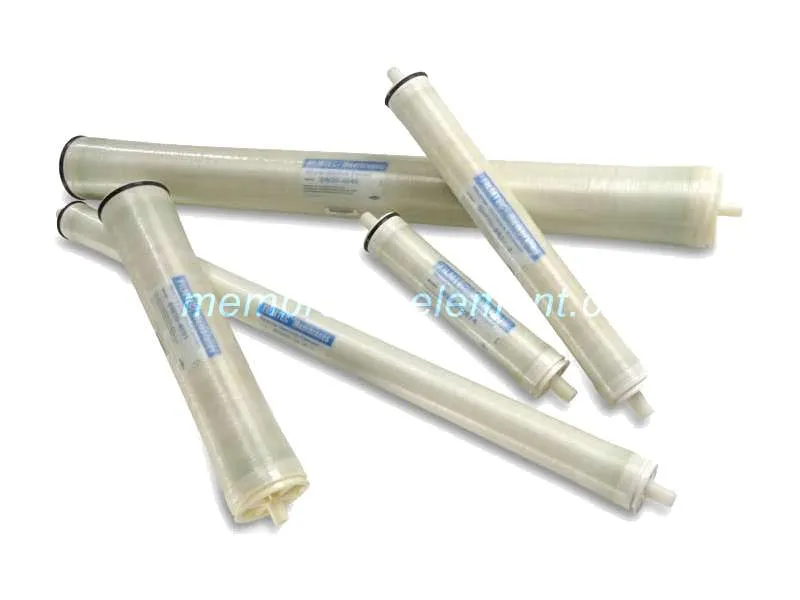
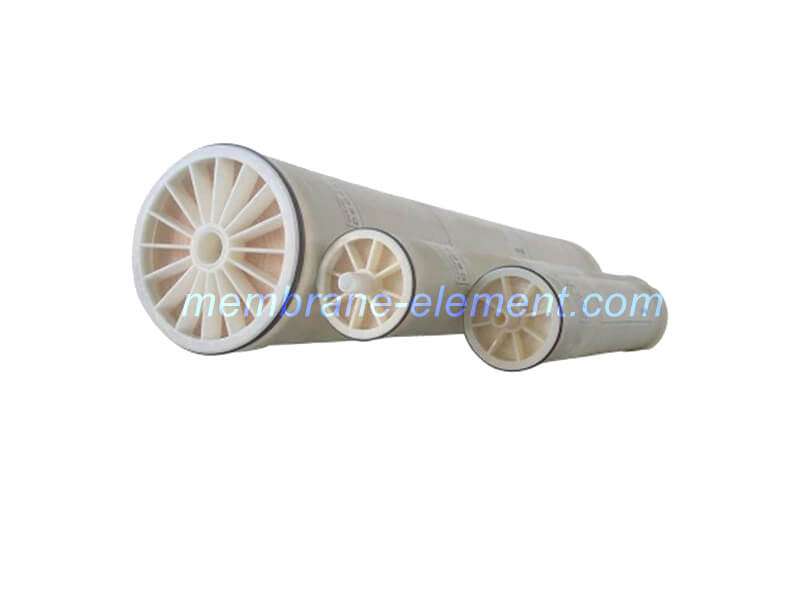
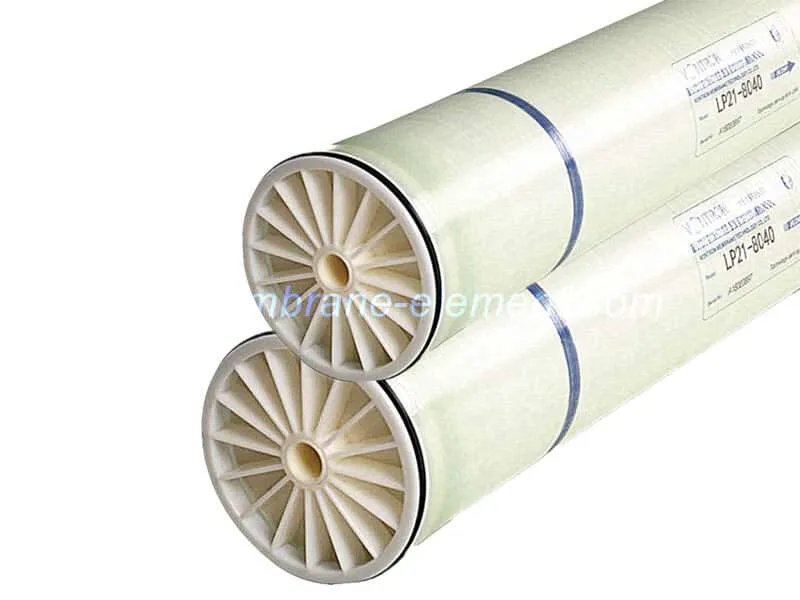
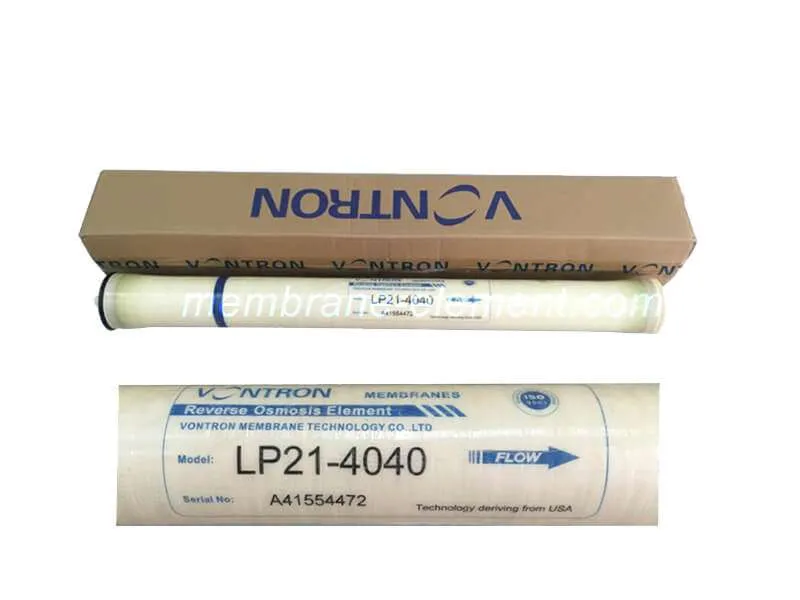
Any reverse osmosis membrane cleaning machine technology depends on fully dissolved chemistry. Undissolved particles scratch the polyamide skin and raise salt passage permanently. Dissolve the agent completely before opening the feed valve. The same discipline applies to every element in the array. A Vontron LP21 4040 RO membrane needs the same care as a low-pressure 4040 or a seawater 8040 (types of RO membrane elements). The RO membrane cleaning solution preparation guide covers batch records and mixing detail.
pH and Temperature Limits in Reverse Osmosis Membrane Cleaning Machine Technology
Every element carries a pH and temperature envelope, and one excursion beyond it can be permanent. The envelope widens as the solution cools and narrows as it heats. The table below gives the limits for standard 4040 and 8040 thin-film composite elements.
| Cleaning Solution Temperature | Permissible pH Range | Practical Note |
| Below 30 °C | 2.0-12.0 | Widest chemical window, but the reaction runs slower |
| 30-35 °C | 2.0-11.5 | Best balance of cleaning speed and membrane safety |
| 35-45 °C | 2.0-10.0 | Never pair with the widest pH values |
The minimum cleaning temperature is 21 °C. Below that point the reaction slows sharply. At 15 °C, cleaning efficiency can fall 30-50% compared with 25 °C. Heat above the envelope is more dangerous than cold. A hot solution at an extreme pH attacks the polyamide layer directly. That damage voids the manufacturer warranty.
- Heat first, then adjust pH — never leave a warming solution sitting at an extreme pH
- Cap the temperature at 40 °C for YS-1 and YS-2 cycles, safely inside the envelope
- Record every excursion — a logged deviation explains performance loss months later
Machines hold both variables automatically with a tank heater and a pH probe. However, confirm the element datasheet for the exact window, and see RO membrane chemical cleaning rules for the full compliance list.
When to Clean: Trigger Conditions Read from Normalized Data
Consequently, timing decides how much of the original performance returns. Foulants compact and harden when cleaning is delayed, and a hardened layer resists even a correct solution. Compare normalized data with the baseline, then act when any one signal crosses its threshold.
| Trigger Signal | Threshold vs Baseline | What It Means |
| Normalized permeate flow | 10-15% decline | The fouling layer is restricting flux |
| Normalized salt passage | 10-15% increase | The skin layer is losing selectivity |
| Normalized differential pressure | 15-20% increase | Feed channels are partly blocked |
Read a sudden change carefully. A step change in salt passage often signals a mechanical fault instead. A failed O-ring or a leaking seal lets concentrate bypass the element. Cleaning will not fix that. Test the mechanical cause first, before preparing a batch.
- Clean at the first trigger — proactive cleaning reduces total cleaning frequency by 20-30% over the element lifetime
- Expect a life gain — acting at the first signal extends element life by 12-18 months
- Log the reason for every cycle, so the next decision rests on data rather than memory
Automated reverse osmosis membrane cleaning machine technology flags these crossings without manual checking. Pair it with the trigger framework in RO membrane cleaning triggers and the schedule in RO membrane cleaning frequency. Then set flow and pressure from RO membrane cleaning parameters.
Precautions Before Starting a Cleaning Cycle
In practice, preparation protects the operator and the membrane at the same time. It also decides how well a reverse osmosis membrane cleaning machine technology performs. Work through the checklist below before opening any chemical container.
- Read the safety data sheet and the product instructions for every agent before handling it
- Wear personal protective equipment — safety glasses, chemical-resistant gloves and protective clothing
- Calibrate the pH meter with fresh buffer solutions before measuring the cleaning solution
- Estimate the solution volume from element count, vessel dimensions and piping volume
- Dissolve the chemical completely before the solution enters the membrane system
- Verify temperature and pH against the envelope for the element type being cleaned
In addition, machine-side checks matter just as much. Drain and rinse the tank, confirm the cartridge filter is clean, and verify the valve lineup before the pump starts. Never use chlorine-based chemicals: free chlorine above 0.1 ppm oxidizes polyamide irreversibly. Then follow the step-by-step sequence in RO membrane cleaning steps. For in-place work, use the skid design and routing guidance in RO membrane CIP cleaning.
Conclusion
Reverse osmosis membrane cleaning machine technology turns a fouled array back into a productive asset. The sequence matters more than the hardware. Normalize the data. Identify the foulant. Match the agent. Hold pH and temperature inside the envelope. Clean at the first trigger. Consequently, each step protects the next. Run them in order and every cycle recovers close to the original flux and rejection. Skip one and no machine can compensate.
CHIWATEC supplies RO membrane cleaning machines, YS-1 and YS-2 cleaning agents and ongoing technical support. Our engineers serve industrial, commercial and municipal plants. Send your normalized data and fouling diagnosis, and we will recommend the right cleaning program. To understand how the elements behave under cleaning, start with how does RO membrane work.
Contact us: [email protected] | [email protected] | [email protected]
FAQ: Cleaning Machine Operation and Data Normalization
Q1: What is run data normalization and why does it matter?
Run data normalization corrects raw readings for temperature and pressure. That correction lets operators compare today’s performance with the commissioning baseline. Permeate flow moves about 3% for every 1 °C. Without normalization a summer-to-winter drop looks like fouling, and a real decline can hide behind a warm spell.
Q2: Which cleaning agent should I use first, YS-1 or YS-2?
Start with YS-1, the scale remover, then follow with YS-2 for organics and microorganisms. When a biofilm or organic layer dominates, reverse the order. Run YS-2 first, then YS-1, then a final YS-2 rinse. That last rinse carries the loosened organics out of the element.
Q3: What is the minimum temperature for RO membrane cleaning?
Keep the solution at or above 21 °C. At 15 °C, cleaning efficiency can drop 30-50% compared with 25 °C. The reaction between the agent and the foulant simply slows down. Stay at or below 40 °C for YS-1 and YS-2 cycles.
Q4: How long does one cleaning cycle take?
The conventional cycle runs 1 hour of circulation plus 1 hour of soaking. Heavy fouling may need a repeat. Watch the pH instead of the clock. Once the reading holds steady, the chemicals have stopped being consumed and the soak has done its work.
Q5: Can I clean on a fixed schedule and skip normalization?
No. A fixed schedule either cleans too early or too late. Early cleaning wastes chemicals and shortens element life. Late cleaning lets foulants compact and harden. Cleaning at the first normalized trigger cuts total cleaning frequency by 20-30% and extends element life by 12-18 months.
Related Resources
Recommended Membrane Technology Guides
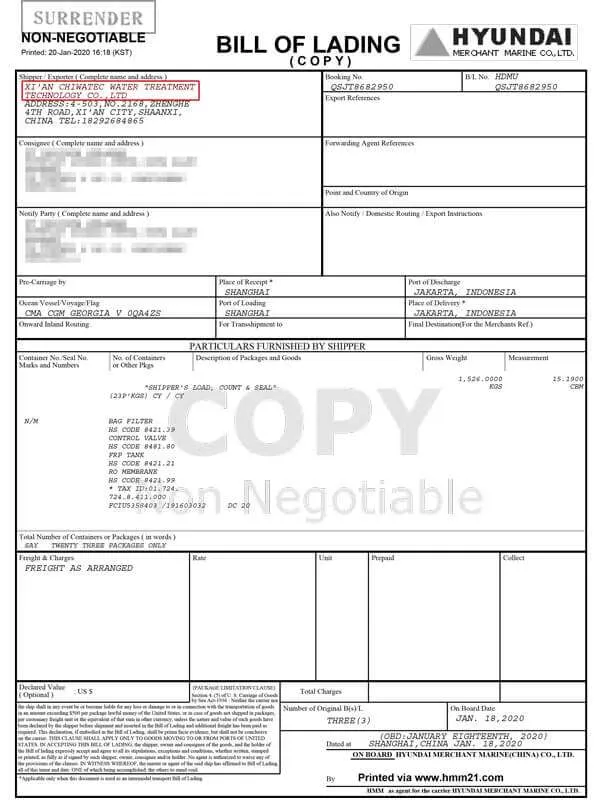
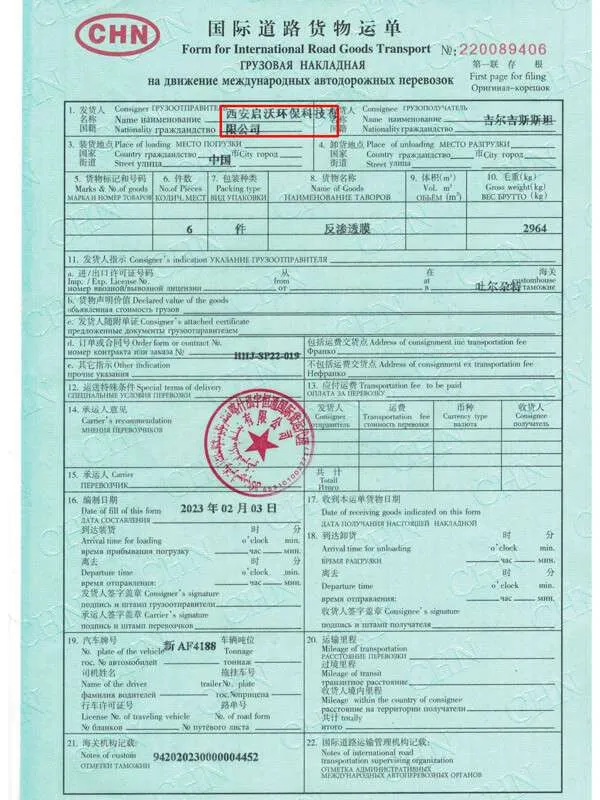
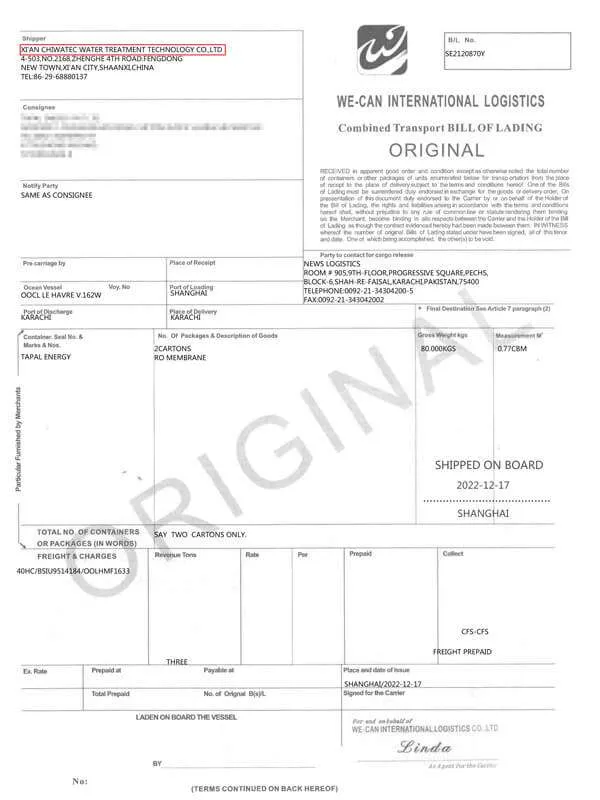
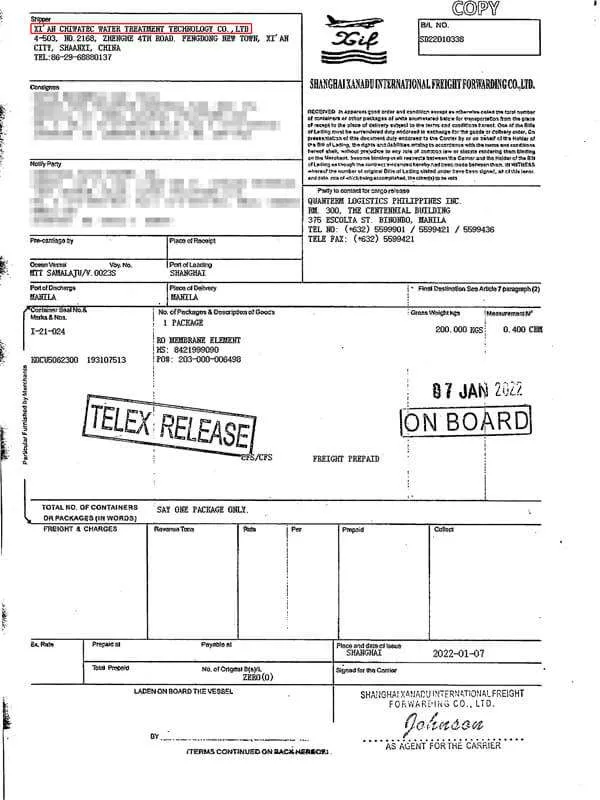
Xi’an CHIWATEC Water Treatment Technology provide the RO membrane to clients both inland and oversea with more than 10years experience. We manufacture our own brand Daltonen RO membrane and we are also the official distributor of Dupont, Toray, CSM, Nitto, LG and Vontron RO membrane. Whatever product you need, we cold meet your requirement.
Contact me for more info and best price.